Review
. 2015 May;128(9):527-35.
doi: 10.1042/CS20140432.

Therapeutic targeting of aldosterone: a novel approach to the treatment of glomerular disease

Affiliations
Review

Therapeutic targeting of aldosterone: a novel approach to the treatment of glomerular disease

Andrew S Brem et al. Clin Sci (Lond). 2015 May.

Abstract

Numerous studies have established a role for mineralocorticoids in the development of renal fibrosis. Originally, the research focus for mineralocorticoid-induced fibrosis was on the collecting duct, where 'classical' mineralocorticoid receptors (MRs) involved with electrolyte transport are present. Epithelial cells in this segment can, under selected circumstances, also respond to MR activation by initiating pro-fibrotic pathways. More recently, 'non-classical' MRs have been described in kidney cells not associated with electrolyte transport, including mesangial cells and podocytes within the glomerulus. Activation of MRs in these cells appears to lead to glomerular sclerosis. Mechanistically, aldosterone induces excess production of reactive oxygen species (ROS) and oxidative stress in glomerular cells through activation of NADPH oxidase. In mesangial cells, aldosterone also has pro-apoptotic, mitogenic and pro-fibrogenic effects, all of which potentially promote active remodelling and expansion of the mesangium. Although mitochondrial dysfunction seems to mediate the aldosterone-induced mesangial apoptosis, the ROS dependent epithelial growth factor receptor (EGFR) transactivation is probably responsible for aldosterone-induced mesangial mitosis and proliferation. In podocytes, mitochondrial dysfunction elicited by oxidative stress is an early event associated with aldosterone-induced podocyte injury. Both the p38 MAPK (p38 mitogen-activated protein kinase) signalling and the redox-sensitive glycogen synthase kinase (GSK)3β pathways are centrally implicated in aldosterone-induced podocyte death. Aldosterone-induced GSK3β over-activity could potentially cause hyperphosphorylation and over-activation of putative GSK3β substrates, including structural components of the mitochondrial permeability transition (MPT) pore, all of which lead to cell injury and death. Clinically, proteinuria significantly decreases when aldosterone inhibitors are included in the treatment of many glomerular diseases further supporting the view that mineralocorticoids are important players in glomerular pathology.


Figures
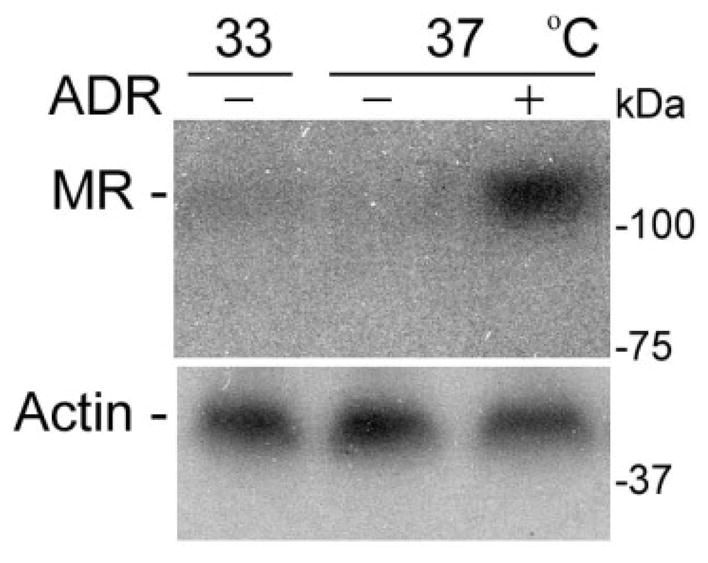
Figure 1
Figure 1. De novo expression of mineralocorticoid receptors (MR) in glomerular podocytes
Conditionally immortalized mouse podocytes were cultured under permissive condition at 33°C or induced to differentiate at 37°C. Podocytes were treated with adriamycin (ADR - 0.25μg/ml) or saline for 48 hours before the cells were prepared for Western immunoblot analysis for MR using an anti-MR antibody kindly provided by Dr. Celso Gomez-Sanchez. MR expression was barely detected in podocytes under basal conditions but was markedly amplified after 48 hours of ADR-induced injury.
Figure 2
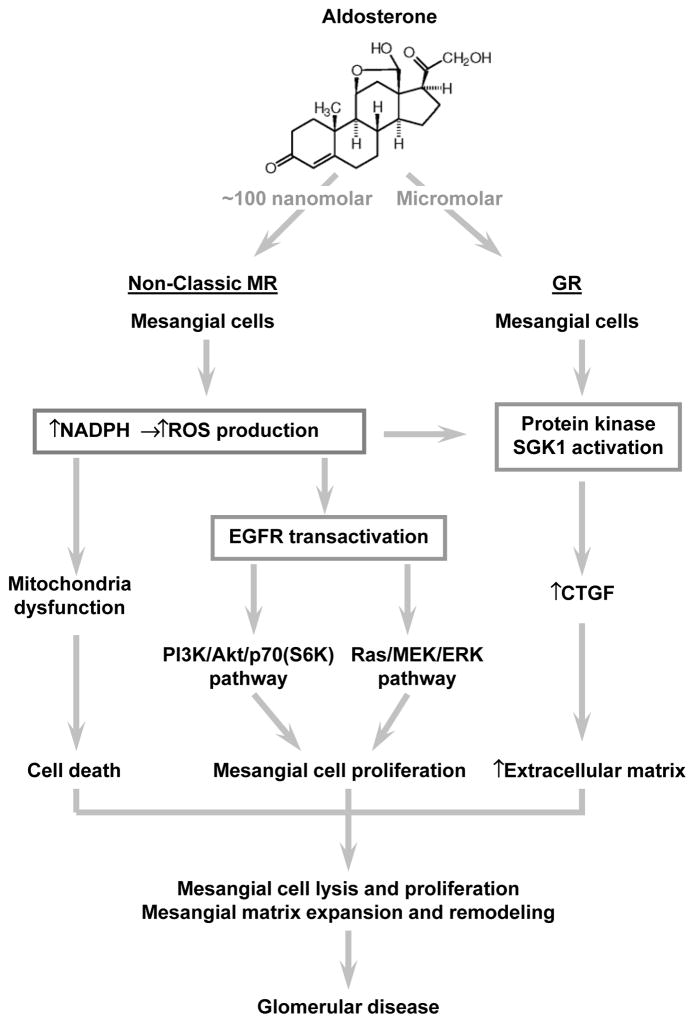
Figure 2. Aldosterone is centrally implicated in the pathogenesis of mesangial injuries in glomerular disease
Mechanistically, aldosterone likely via the non-classic mineralocorticoid receptor (MR) induces reactive oxygen species (ROS) overproduction and oxidative stress in glomerular cells possibly by activating nicotinamide adenine dinucleotide phosphate (NADPH). In glomerular mesangial cells, aldosterone has both proapoptotic and mitogenic effects in addition to a profibrogenic activity and thereby potentially promotes active remodeling and expansion of glomerular mesangium. While mitochondria dysfunction seems to mediate the aldosterone induced mesangial cell death, the ROS dependent epithelial growth factor receptor (EGFR) transactivation together with the ensuing PI3K/Akt/p70(S6K) and Ras/MEK/ERK pathways is likely responsible for aldosterone induced mesangial mitosis and proliferation. The profibrogenic activity of aldosterone might involve a glucocorticoid receptor (GR) dependent as well as an MR/serum-and glucocorticoid-induced protein kinase (SGK)1 responsive mechanism, which amplifies connective tissue growth factor (CTGF) expression and results in overproduction of extracellular matrix. Collectively, all these mechanisms eventually lead to mesangial injury characterized by mesangial cell lysis and proliferation as well as mesangial matrix expansion and remodeling.
Figure 3
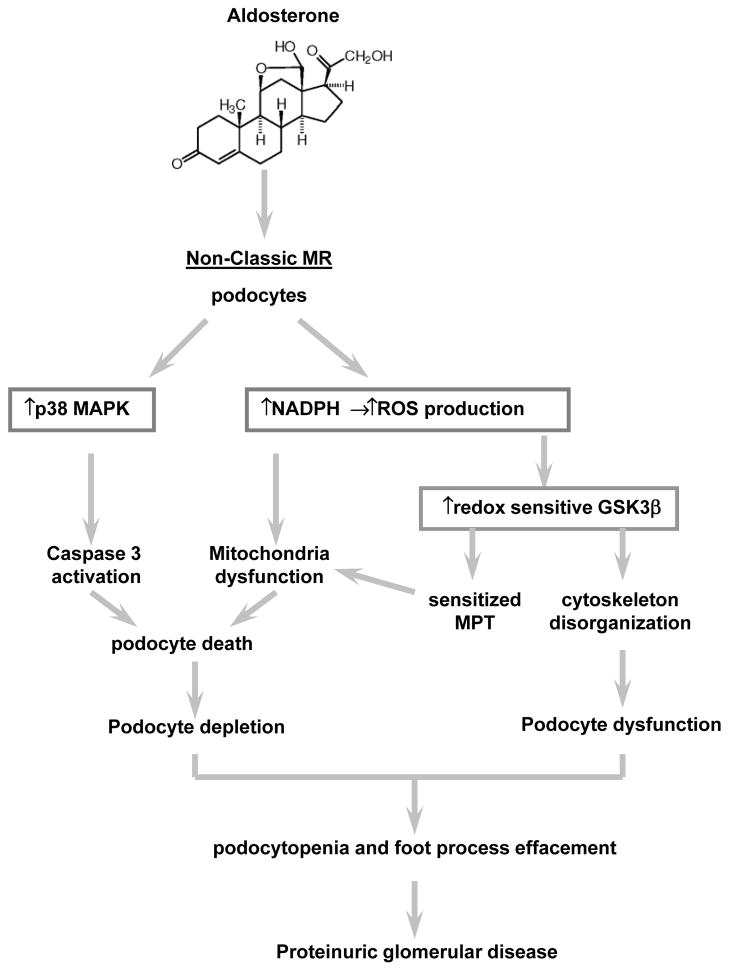
Figure 3. Schematic diagram depicting the mechanisms underlying the pathogenic role of aldosterone in podocyte injury
In glomerular podocytes, mitochnodrial dysfunction elicited by oxidative stress is an early event associated with aldosterone-induced podocytopathy likely via the non-classic mineralocorticoid receptor (MR). Both the p38MAPK signaling and the redox sensitive glycogen synthase kinase (GSK) 3β pathways are centrally implicated in aldosterone-induced podocyte injury. On one hand, activation of p38MAPK could induce podocyte apoptotic death via triggering the caspase death pathway. On the other hand, aldosterone-induced overactivity of the redox sensitive GSK3β could potentially cause hyperphosphorylation and overactivation of putative GSK3β substrates, including structural components of the mitochondrial permeability transition (MPT) pore. This accounts for the sensitized MPT, mitochondria dysfunction and potentiated podocyte death, resulting in podocytopenia. In addition, GSK3β overactivity is also a culprit for the disruption of both actin and microtubule cytoskeleton integrity and lead to podocyte shrinkage and foot process effacement, eventually culminating in proteinuria and progressive glomerular sclerosis. Other abbreviations: MAPK, Mitogen-activated protein kinase; NADPH, Nicotinamide adenine dinucleotide phosphate ROS, reactive oxygen species.

References

    1. Selye H. Anticortisol action of aldosterone. Science. 1955;121:368–369. - PubMed
    1. Porter GA, Edelman IS. The Action of Aldosterone and Related Corticosteroids On Sodium Transport Across the Toad Bladder. J Clin Invest. 1964;43:611–620. - PMC - PubMed
    1. Funder JW, Feldman D, Edelman IS. The roles of plasma binding and receptor specificity in the mineralocorticoid action of aldosterone. Endocrinology. 1973;92:994–1004. - PubMed
    1. Farman N, Kusch M, Edelman IS. Aldosterone receptor occupancy and sodium transport in the urinary bladder of Bufo marinus. Am J Physiol. 1978;235:C90–96. - PubMed
    1. Rossier BC, Wilce PA, Edelman IS. Spironolactone antagonism of aldosterone action on Na+ transport and RNA metabolism in toad bladder epithelium. J Membr Biol. 1977;32:177–194. - PubMed

Publication types

MeSH terms

Substances