


The effect of chronotype on sleepiness, fatigue, and psychomotor vigilance of ICU nurses during the night shift
- PMID: 25672276
- PMCID: PMC4392115
- DOI: 10.1007/s00134-015-3667-7
The effect of chronotype on sleepiness, fatigue, and psychomotor vigilance of ICU nurses during the night shift
Abstract
Purpose: In general, sleeping and activity patterns vary between individuals. This attribute, known as chronotype, may affect night shift performance. In the intensive care unit (ICR), night shift performance may impact patient safety. We have investigated the effect of chronotype and social demographics on sleepiness, fatigue, and night shift on the performance of nurses.
Methods: This was a prospective observational cohort study which assessed the performance of 96 ICU night shift nurses during the day and night shifts in a mixed medical-surgical ICU in the Netherlands. We determined chronotype and assessed sleeping behaviour for each nurse prior to starting shift work and before free days. The level of sleepiness and fatigue of nurses during the day and night shifts was determined, as was the effect of these conditions on psychomotor vigilance and mathematical problem-solving.
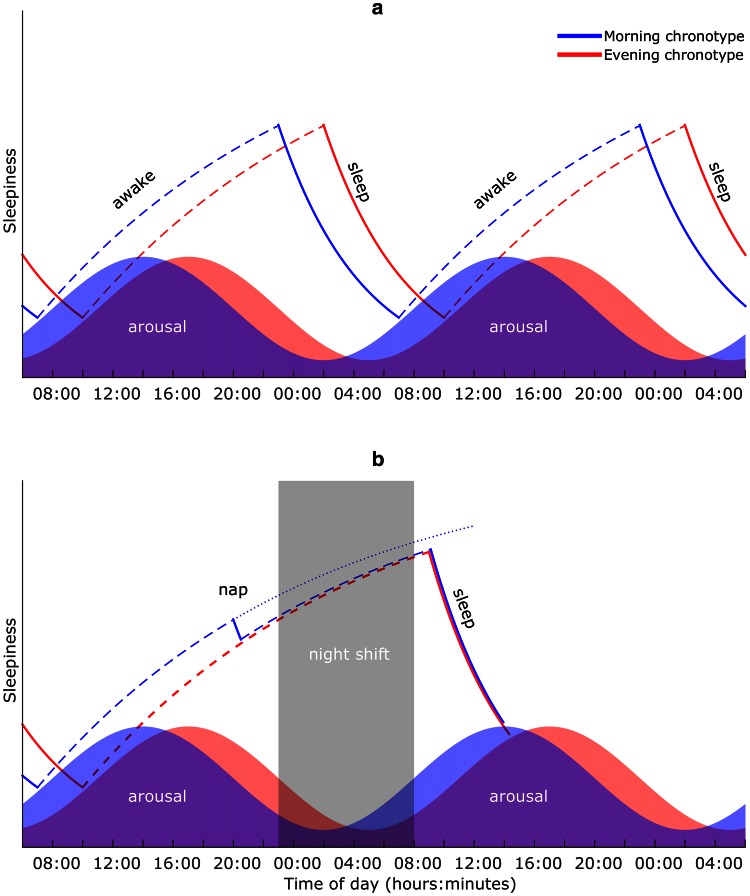
Results: The majority of ICU nurses had a preference for early activity (morning chronotype). Compared to their counterparts (i.e. evening chronotypes), they were more likely to nap before commencing night shifts and more likely to have young children living at home. Despite increased sleepiness and fatigue during night shifts, no effect on psychomotor vigilance was observed during night shifts. Problem-solving accuracy remained high during night shifts, at the cost of productivity.
Conclusions: Most of the ICU night shift nurses assessed here appeared to have adapted well to night shift work, despite the high percentage of morning chronotypes, possibly due to their 8-h shift duration. Parental responsibilities may, however, influence shift work tolerance.
Figures

Comment in
-
Chronotypes, night shifts and intensive care.Intensive Care Med. 2015 Apr;41(4):698-700. doi: 10.1007/s00134-015-3711-7. Epub 2015 Mar 3. Intensive Care Med. 2015. PMID: 25731637 No abstract available.
References
Publication types
MeSH terms
LinkOut - more resources
Full Text Sources
Other Literature Sources
Medical
Research Materials
