


Where is the UK's pollinator biodiversity? The importance of urban areas for flower-visiting insects
- PMID: 25673686
- PMCID: PMC4345454
- DOI: 10.1098/rspb.2014.2849
Where is the UK's pollinator biodiversity? The importance of urban areas for flower-visiting insects
Abstract
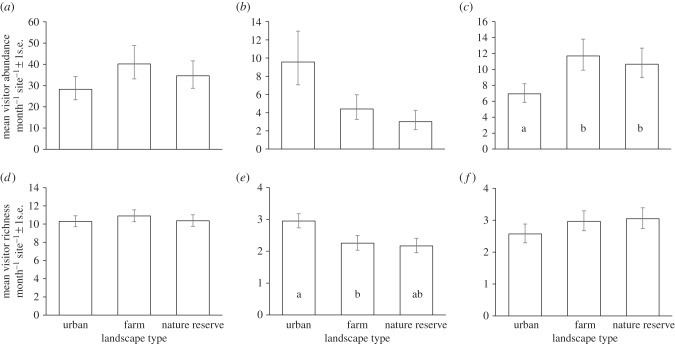
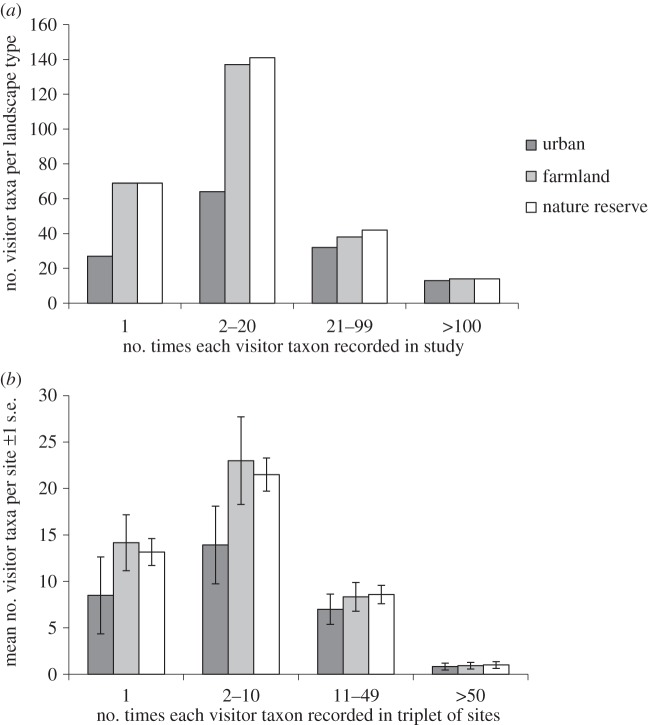
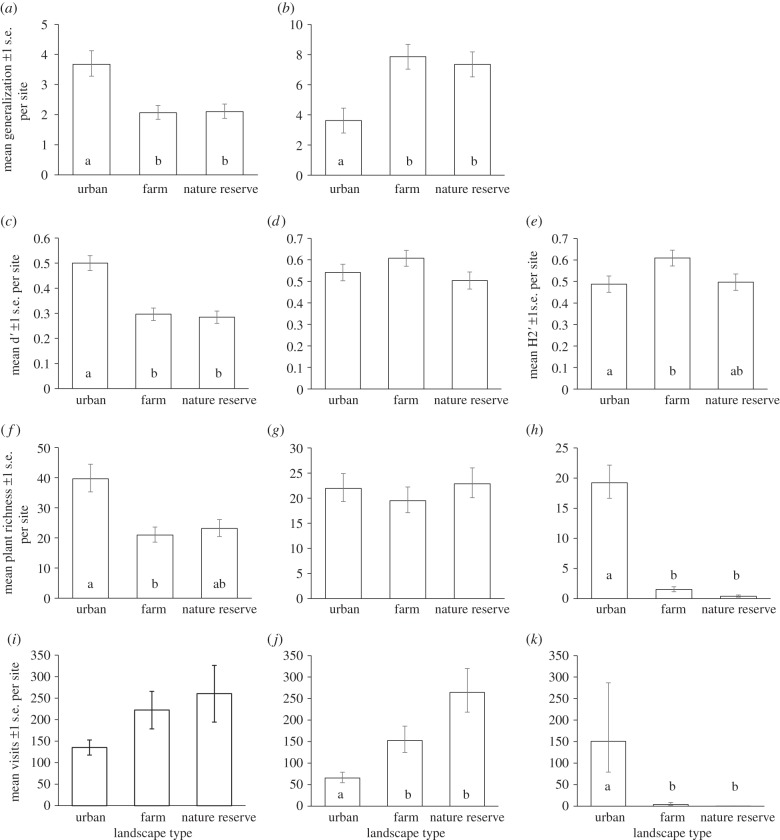
Insect pollinators provide a crucial ecosystem service, but are under threat. Urban areas could be important for pollinators, though their value relative to other habitats is poorly known. We compared pollinator communities using quantified flower-visitation networks in 36 sites (each 1 km(2)) in three landscapes: urban, farmland and nature reserves. Overall, flower-visitor abundance and species richness did not differ significantly between the three landscape types. Bee abundance did not differ between landscapes, but bee species richness was higher in urban areas than farmland. Hoverfly abundance was higher in farmland and nature reserves than urban sites, but species richness did not differ significantly. While urban pollinator assemblages were more homogeneous across space than those in farmland or nature reserves, there was no significant difference in the numbers of rarer species between the three landscapes. Network-level specialization was higher in farmland than urban sites. Relative to other habitats, urban visitors foraged from a greater number of plant species (higher generality) but also visited a lower proportion of available plant species (higher specialization), both possibly driven by higher urban plant richness. Urban areas are growing, and improving their value for pollinators should be part of any national strategy to conserve and restore pollinators.
Keywords: networks; pollinators; urban.
Figures
References
-
- Ollerton J, Winfree R, Tarrant S. 2011. How many flowering plants are pollinated by animals? Oikos 120, 321–326. ( 10.1111/j.1600-0706.2010.18644.x) - DOI
-
- Gallai N, Salles J, Settele J, Vassiere BE. 2009. Economic valuation of the vulnerability of world agriculture confronted with pollinator decline. Ecol. Econ. 68, 810–821. ( 10.1016/j.ecolecon.2008.06.014) - DOI
-
- Breeze T, Roberts SPM, Potts SG. 2012. Decline of England's bees: policy review and recommendations. Friends of the Earth report Reading, UK: University of Reading.
Publication types
MeSH terms
Grants and funding
LinkOut - more resources
Full Text Sources
Other Literature Sources
