


Role of spinal metabotropic glutamate receptor 5 in pudendal inhibition of the nociceptive bladder reflex in cats
- PMID: 25673810
- PMCID: PMC4398836
- DOI: 10.1152/ajprenal.00623.2014
Role of spinal metabotropic glutamate receptor 5 in pudendal inhibition of the nociceptive bladder reflex in cats
Abstract
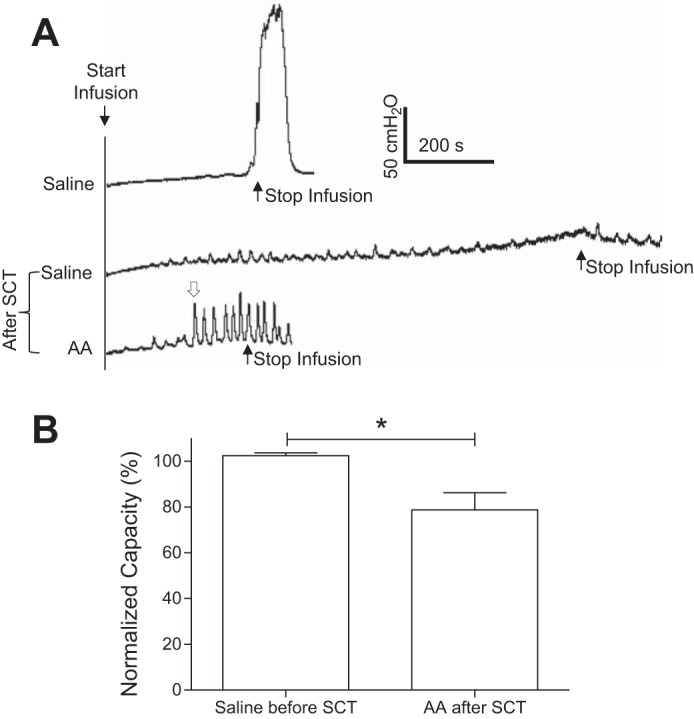
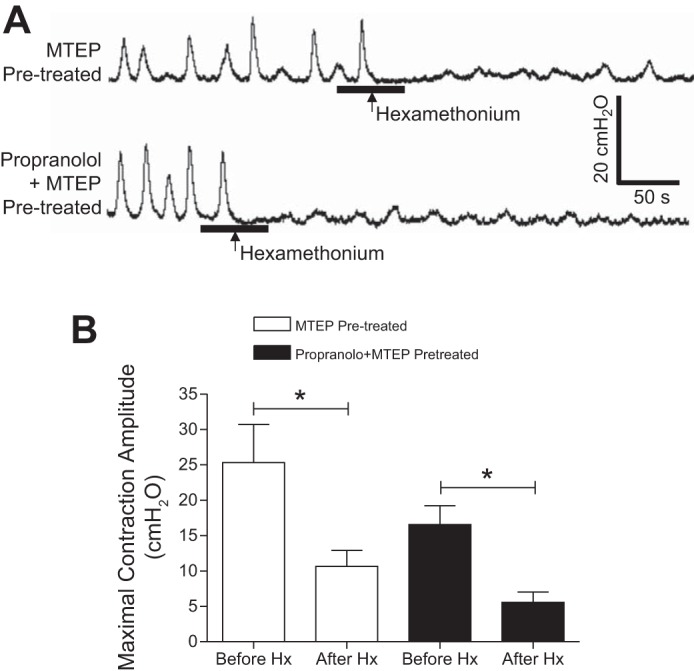
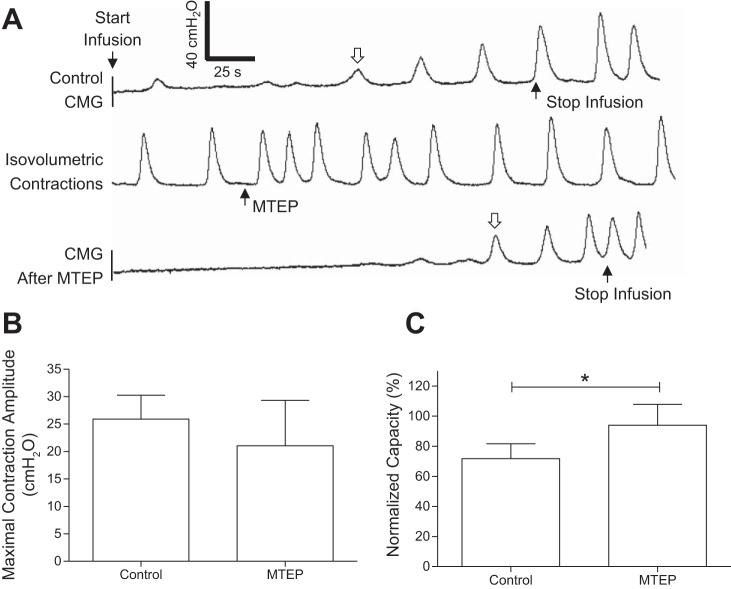
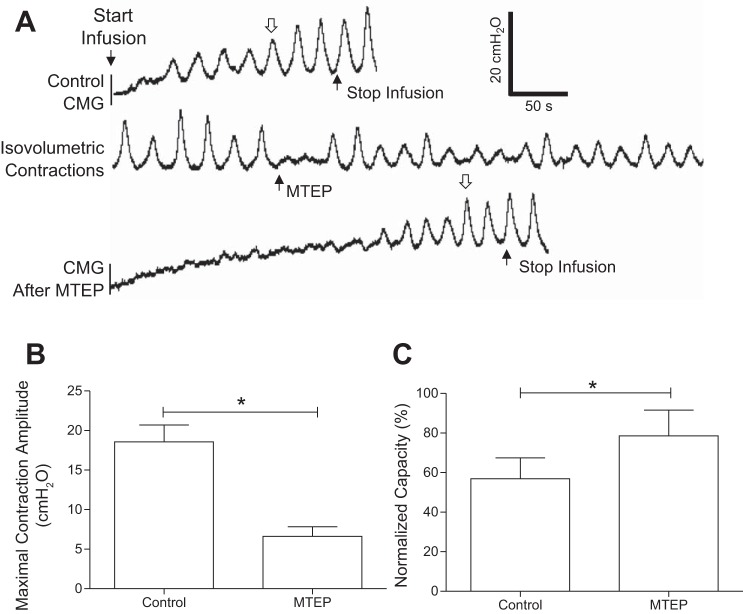
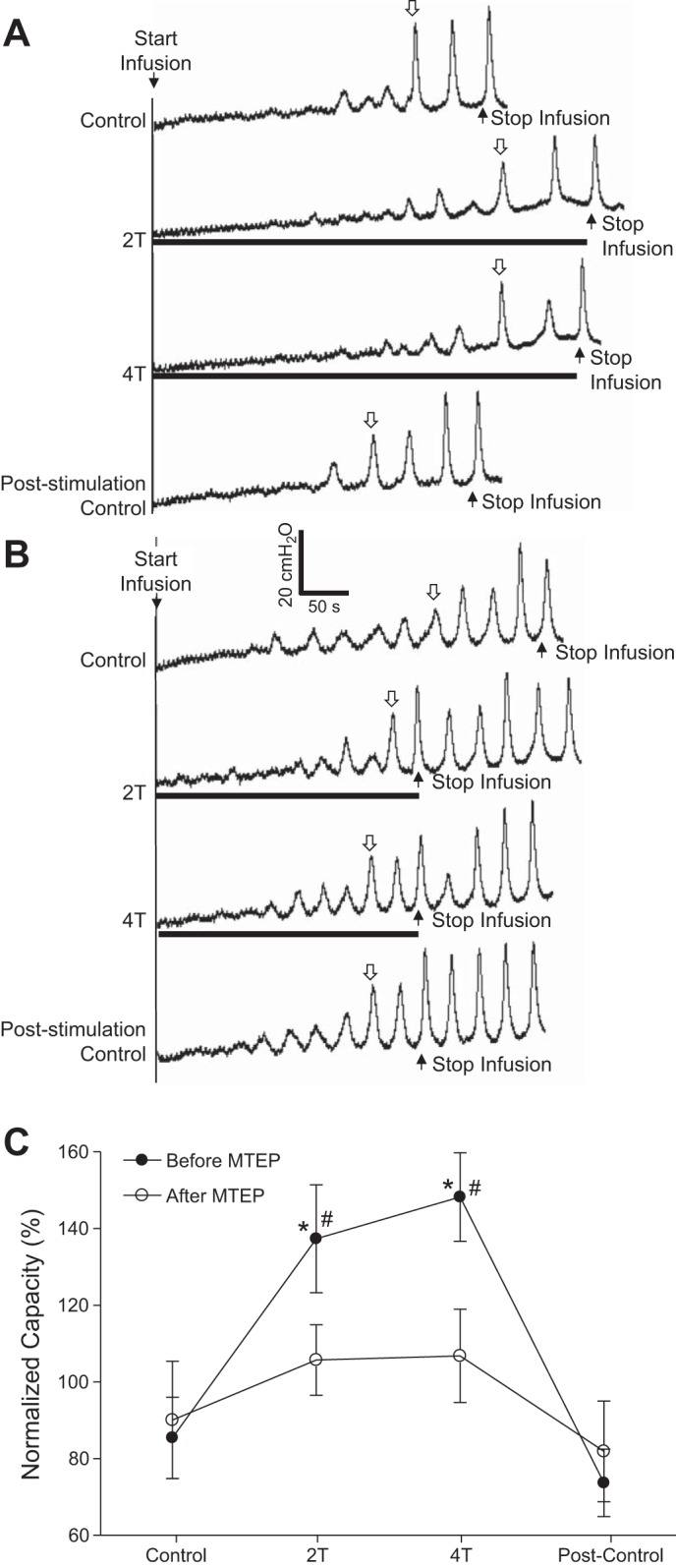
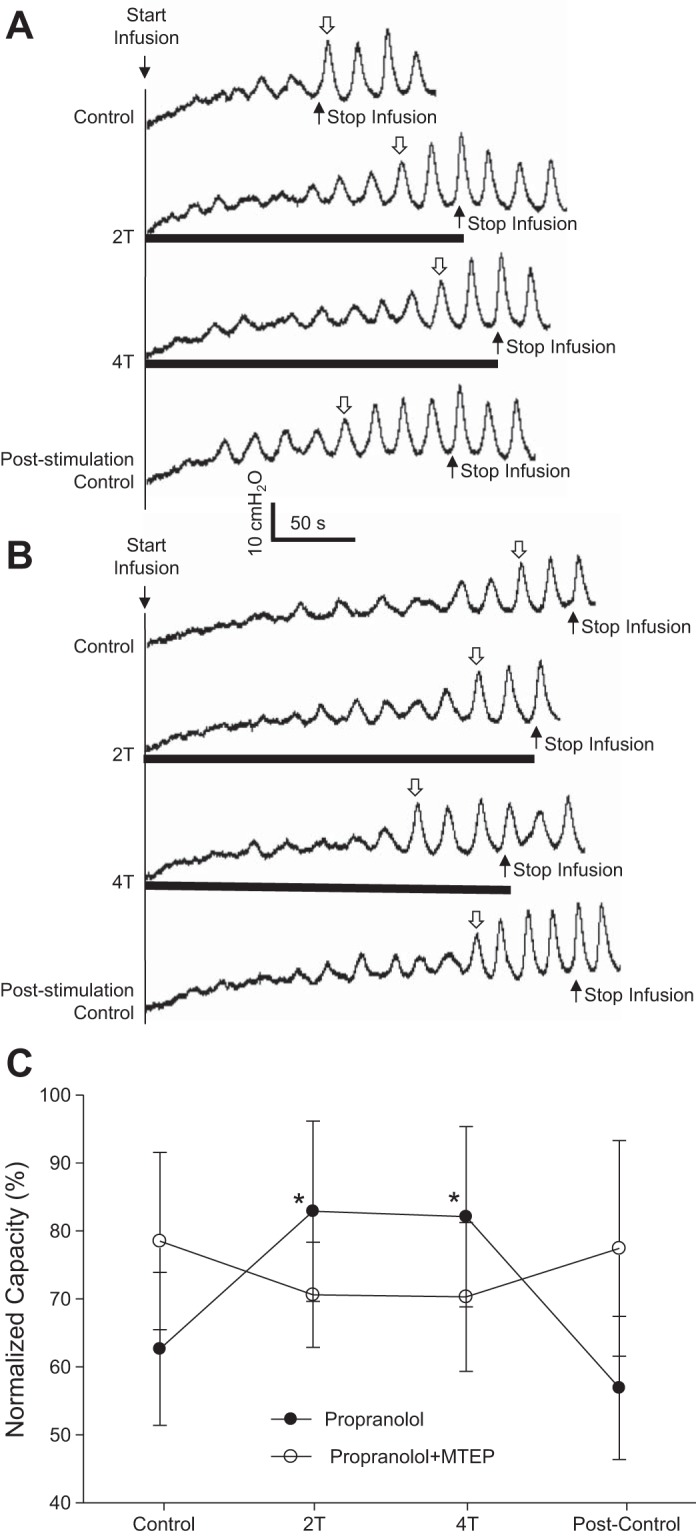
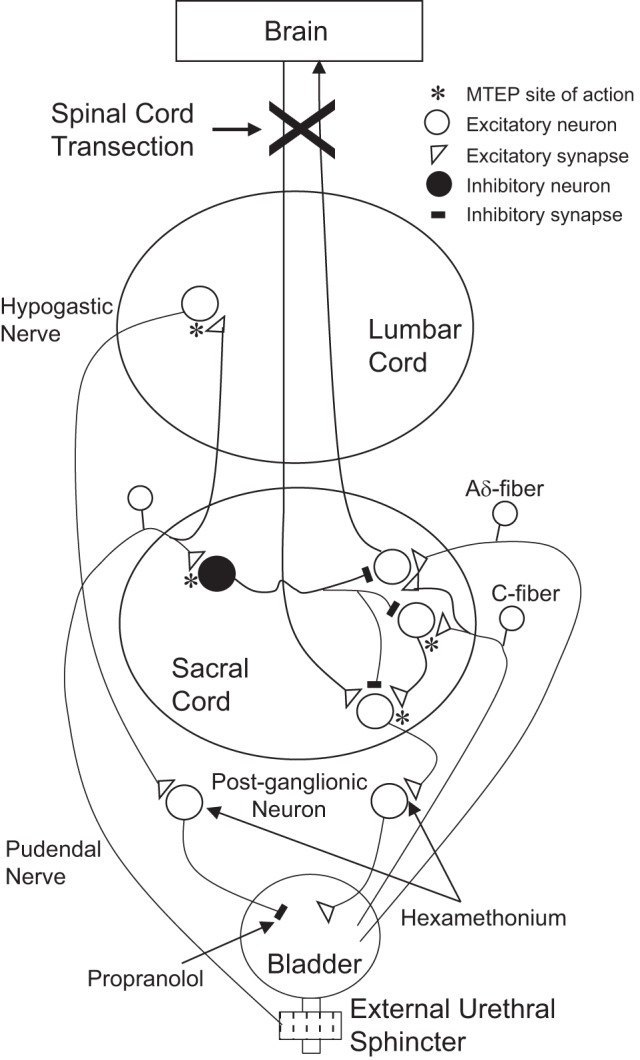
This study examined the role of spinal metabotropic glutamate receptor 5 (mGluR5) in the nociceptive C-fiber afferent-mediated spinal bladder reflex and in the inhibtion of this reflex by pudendal nerve stimulation (PNS). In α-chloralose-anesthetized cats after spinal cord transection at the T9/T10 level, intravesical infusion of 0.25% acetic acid irritated the bladder, activated nociceptive C-fiber afferents, and induced spinal reflex bladder contractions of low amplitude (<50 cmH2O) and short duration (<20 s) at a smaller bladder capacity ∼80% of saline control capacity. PNS significantly (P < 0.01) increased bladder capacity from 85.5 ± 10.1 to 137.3 ± 14.1 or 148.2 ± 11.2% at 2T or 4T stimulation, respectively, where T is the threshold intensity for PNS to induce anal twitch. MTEP {3-[(2-methyl-4-thiazolyl)ethynyl]pyridine; 3 mg/kg iv, a selective mGluR5 antagonist} completely removed the PNS inhibition and significantly (P < 0.05) increased bladder capacity from 71.8 ± 9.9 to 94.0 ± 13.9% of saline control, but it did not change the bladder contraction amplitude. After propranolol (3 mg/kg iv, a β1/β2-adrenergic receptor antagonist) treatment, PNS inhibition remained but MTEP significantly (P < 0.05) reduced the bladder contraction amplitude from 18.6 ± 2.1 to 6.6 ± 1.2 cmH2O and eliminated PNS inhibition. At the end of experiments, hexamethonium (10 mg/kg iv, a ganglionic blocker) significantly (P < 0.05) reduced the bladder contraction amplitude from 20.9 ± 3.2 to 8.1 ± 1.5 cmH2O on average demonstrating that spinal reflexes were responsible for a major component of the contractions. This study shows that spinal mGluR5 plays an important role in the nociceptive C-fiber afferent-mediated spinal bladder reflex and in pudendal inhibition of this spinal reflex.
Keywords: bladder; cat; glutamate; neuromodulation; pudendal.
Copyright © 2015 the American Physiological Society.
Figures
References
-
- Abrams P, Cardozo L, Fall M, Griffiths D, Rosier P, Ulmsten U, van Kerrebroeck PE, Victor A, Wein AJ. The standardisation of terminology of lower urinary tract function: report from the Standardisation Sub-committee of the International Continence Society. Neurourol Urodyn 21: 167–178, 2002. - PubMed
-
- Andersson KE, Pehrson R. CNS involvement in overactive bladder: pathophysiology and opportunities for pharmacological intervention. Drugs 63: 2595–2611, 2003. - PubMed
-
- Bhave G, Karim F, Carlton SM, Gereau RWT. Peripheral group I metabotropic glutamate receptors modulate nociception in mice. Nat Neurosci 4: 417–423, 2001. - PubMed
-
- Chapple CR, Khullar V, Gabriel Z, Muston D, Bitoun CE, Weinstein D. The effects of antimuscarinic treatments in overactive bladder: an update of a systematic review and meta-analysis. Eur Urol 54: 543–562, 2008. - PubMed
Publication types
MeSH terms
Substances
Grants and funding
LinkOut - more resources
Full Text Sources
Other Literature Sources
Medical
Research Materials
Miscellaneous
