


Wound healing and cancer stem cells: inflammation as a driver of treatment resistance in breast cancer
- PMID: 25674014
- PMCID: PMC4315129
- DOI: 10.4137/CGM.S11286
Wound healing and cancer stem cells: inflammation as a driver of treatment resistance in breast cancer
Abstract
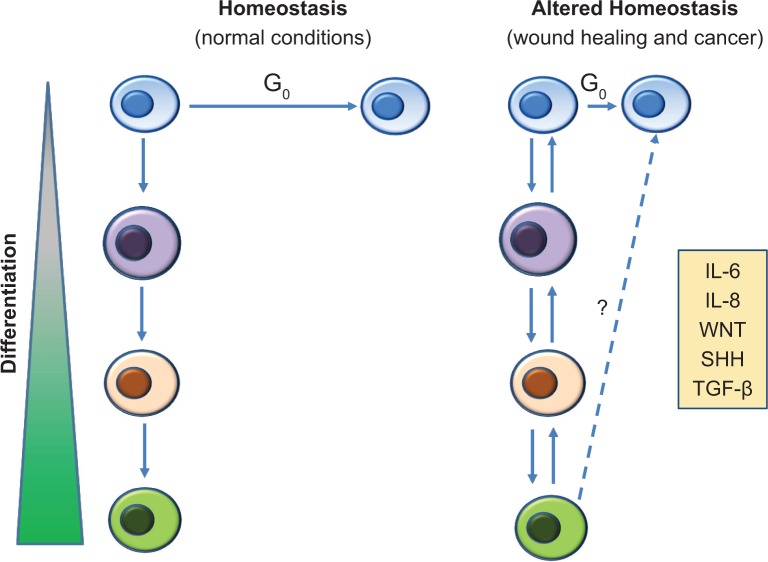
The relationship between wound healing and cancer has long been recognized. The mechanisms that regulate wound healing have been shown to promote transformation and growth of malignant cells. In addition, chronic inflammation has been associated with malignant transformation in many tissues. Recently, pathways involved in inflammation and wound healing have been reported to enhance cancer stem cell (CSC) populations. These cells, which are highly resistant to current treatments, are capable of repopulating the tumor after treatment, causing local and systemic recurrences. In this review, we highlight proinflammatory cytokines and developmental pathways involved in tissue repair, whose deregulation in the tumor microenvironment may promote growth and survival of CSCs. We propose that the addition of anti-inflammatory agents to current treatment regimens may slow the growth of CSCs and improve therapeutic outcomes.
Keywords: cancer stem cells; developmental pathways; inflammation; tumor microenvironment.
Figures
References
-
- Dvorak HF. Tumors: wounds that do not heal. Similarities between tumor stroma generation and wound healing. N Engl J Med. 1986;315(26):1650–1659. - PubMed
-
- Eming SA, Krieg T, Davidson JM. Inflammation in wound repair: molecular and cellular mechanisms. J Invest Dermatol. 2007;127(3):514–525. - PubMed
-
- Werner S, Grose R. Regulation of wound healing by growth factors and cytokines. Physiol Rev. 2003;83(3):835–870. - PubMed
-
- Singer AJ, Clark RA. Cutaneous wound healing. N Engl J Med. 1999;341(10):738–746. - PubMed
Publication types
Grants and funding
LinkOut - more resources
Full Text Sources
