


Quality of Life After Bariatric Surgery
- PMID: 25676156
- PMCID: PMC4522031
- DOI: 10.1007/s11695-015-1601-2
Quality of Life After Bariatric Surgery
Abstract
Introduction and purpose: Morbid obesity together with obesity-related diseases has a negative impact on the quality of life. The aim of the study was to assess the quality of life amongst patients with morbid obesity as well as the impact of bariatric treatment on body weight and obesity-related diseases in addition to conducting an analysis of changes in the quality of life after surgical treatments, in the context of the surgical procedure type and degree of body weight loss.
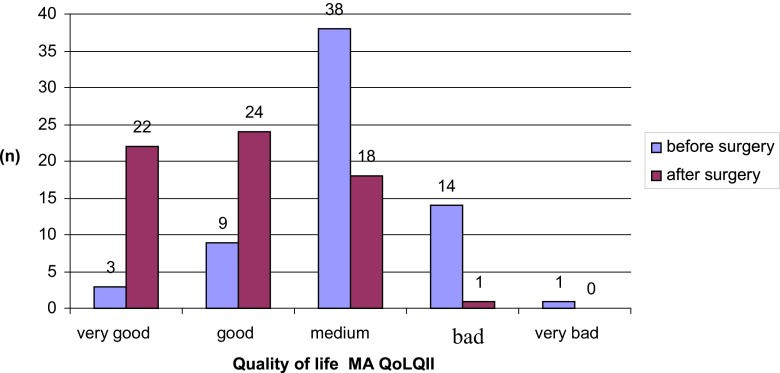
Material and methods: Sixty-five patients were treated for morbid obesity. The sample group consisted of 34 patients treated with laparoscopic sleeve gastrectomy (LSG) and 31 persons qualified for laparoscopic Roux-en-Y gastric bypass (LRYGB). The average body weight before the procedure was 146.2 kg. In the sample group, 89 % of persons qualified for the surgical treatments were diagnosed with hypertension and 52 % persons that were operated on were diagnosed with diabetes type 2 before the surgical procedure. Before commencement of the surgical treatment, the quality of life was assessed, which in both groups qualified for given types of bariatric procedures was considerably low.
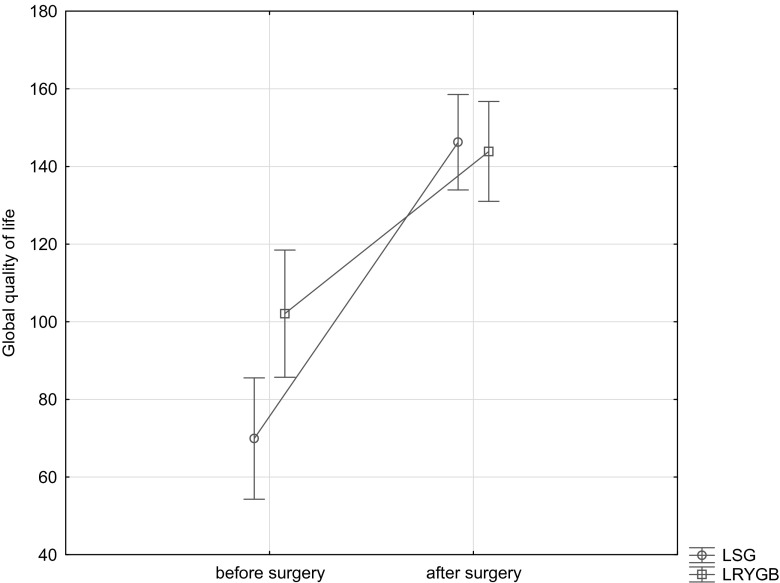
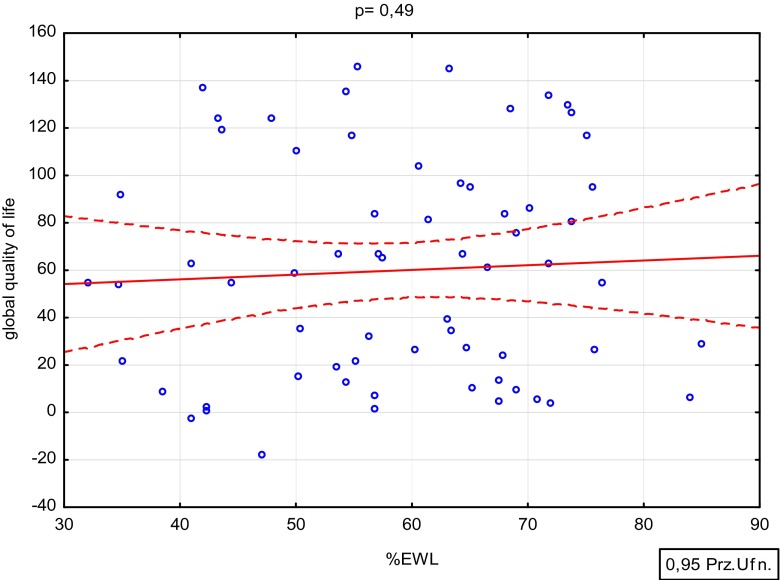
Results and conclusions: Percentage excessive weight loss (%EWL) was 58.8 %. No significant differences in body weight loss were noted between the two types of procedures. Improvement was observed in the treatment of obesity-related diseases. Also, the quality of life was enhanced significantly. No differences were noted in terms of the quality of life improvement between particular types of surgical procedures. No significant differences were observed during the analysis of body weight loss impact on the quality of life improvement.
Conflict of interest statement
There are no actual or potential conflicts of interest in relation to this research.
Figures
References
-
- Organisation WH. Obesity and overweight. Fact Sheet, 2006. No. 311.
MeSH terms
LinkOut - more resources
Full Text Sources
Other Literature Sources
Medical
Research Materials
