


Sex differences in perceived stress and early recovery in young and middle-aged patients with acute myocardial infarction
- PMID: 25679303
- PMCID: PMC4652932
- DOI: 10.1161/CIRCULATIONAHA.114.012826
Sex differences in perceived stress and early recovery in young and middle-aged patients with acute myocardial infarction
Abstract
Background: Younger age and female sex are both associated with greater mental stress in the general population, but limited data exist on the status of perceived stress in young and middle-aged patients presenting with acute myocardial infarction.
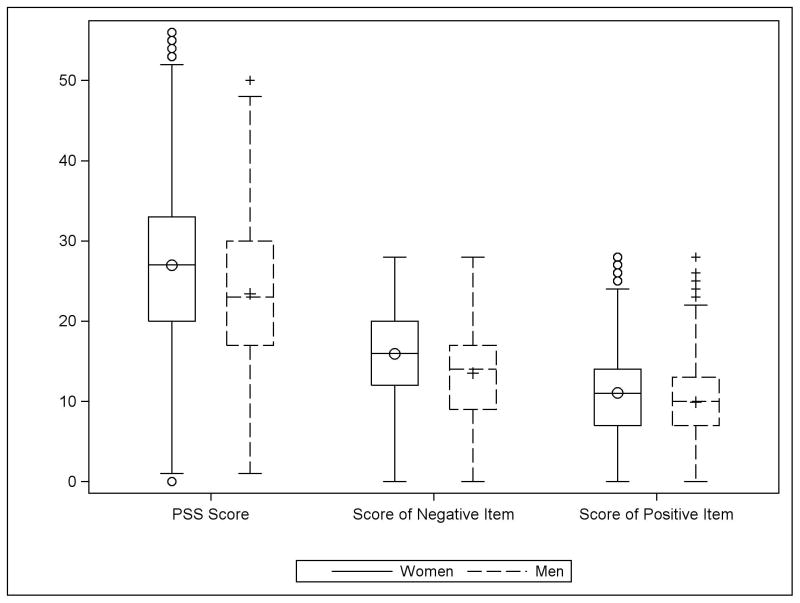
Methods and results: We examined sex difference in stress, contributing factors to this difference, and whether this difference helps explain sex-based disparities in 1-month recovery using data from 3572 patients with acute myocardial infarction (2397 women and 1175 men) 18 to 55 years of age. The average score of the 14-item Perceived Stress Scale at baseline was 23.4 for men and 27.0 for women (P<0.001). Higher stress in women was explained largely by sex differences in comorbidities, physical and mental health status, intrafamily conflict, caregiving demands, and financial hardship. After adjustment for demographic and clinical characteristics, women had worse recovery than men at 1 month after acute myocardial infarction, with mean differences in improvement score between women and men ranging from -0.04 for EuroQol utility index to -3.96 for angina-related quality of life (P<0.05 for all). Further adjustment for baseline stress reduced these sex-based differences in recovery to -0.03 to -3.63, which, however, remained statistically significant (P<0.05 for all). High stress at baseline was associated with significantly worse recovery in angina-specific and overall quality of life, as well as mental health status. The effect of baseline stress on recovery did not vary between men and women.
Conclusions: Among young and middle-aged patients, higher stress at baseline is associated with worse recovery in multiple health outcomes after acute myocardial infarction. Women perceive greater psychological stress than men at baseline, which partially explains women's worse recovery.
Keywords: myocardial infarction; recovery of function; sex characteristics; stress, psychological.
© 2015 American Heart Association, Inc.
Figures
References
-
- Leifheit-Limson EC, Reid KJ, Kasl SV, Lin H, Jones PG, Buchanan DM, Parashar S, Peterson PN, Spertus JA, Lichtman JH. The role of social support in health status and depressive symptoms after acute myocardial infarction: Evidence for a stronger relationship among women. Circ Cardiovasc Qual Outcomes. 2010;3:143–150. - PMC - PubMed
-
- Rosengren A, Hawken S, Ounpuu S, Sliwa K, Zubaid M, Almahmeed WA, Blackett KN, Sitthi-amorn C, Sato H, Yusuf S. Association of psychosocial risk factors with risk of acute myocardial infarction in 11119 cases and 13648 controls from 52 countries (the interheart study): Case-control study. Lancet. 2004;364:953–962. - PubMed
Publication types
MeSH terms
Grants and funding
LinkOut - more resources
Full Text Sources
Medical
Molecular Biology Databases
