


The role of mobile technologies in health care processes: the case of cancer supportive care
- PMID: 25679446
- PMCID: PMC4342745
- DOI: 10.2196/jmir.3757
The role of mobile technologies in health care processes: the case of cancer supportive care
Abstract
Background: Health care systems are gradually moving toward new models of care based on integrated care processes shared by different care givers and on an empowered role of the patient. Mobile technologies are assuming an emerging role in this scenario. This is particularly true in care processes where the patient has a particularly enhanced role, as is the case of cancer supportive care.
Objective: This paper aims to review existing studies on the actual role and use of mobile technology during the different stages of care processes, with particular reference to cancer supportive care.
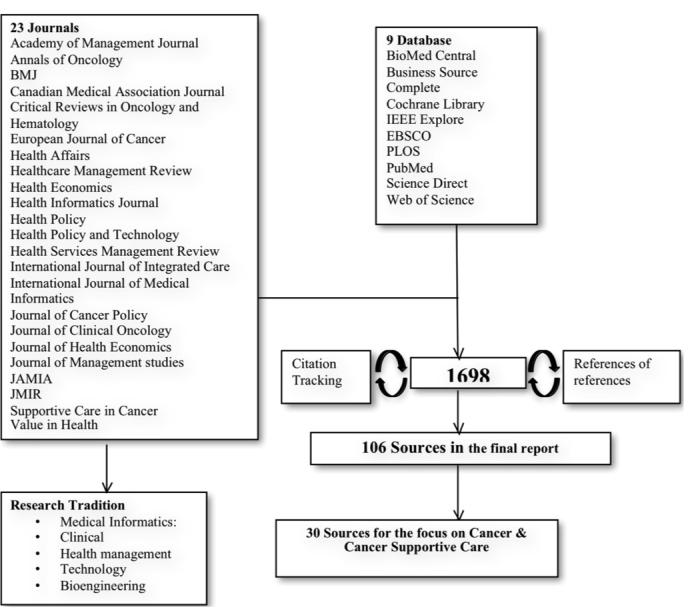
Methods: We carried out a review of literature with the aim of identifying studies related to the use of mHealth in cancer care and cancer supportive care. The final sample size consists of 106 records.
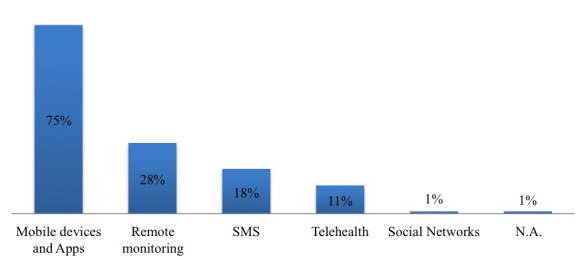
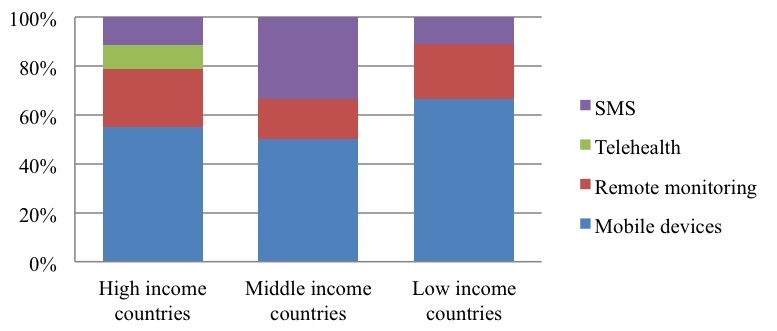
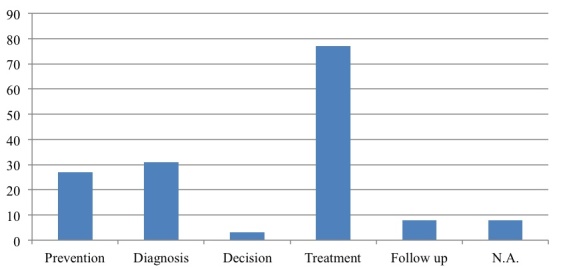
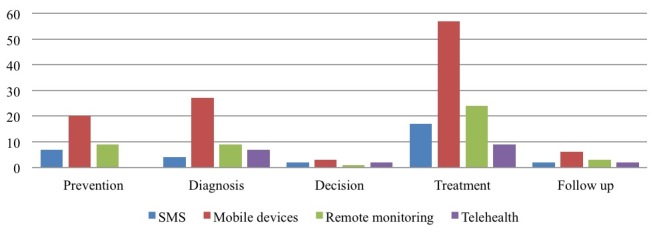
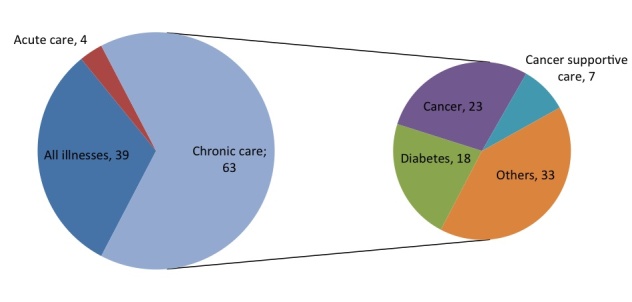
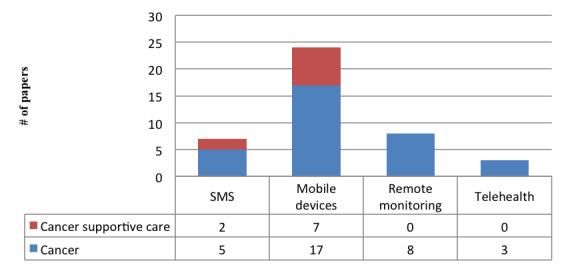
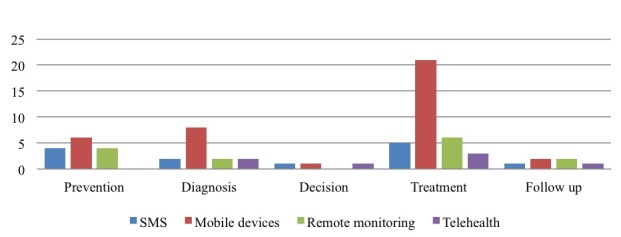
Results: There is scant literature concerning the use of mHealth in cancer supportive care. Looking more generally at cancer care, we found that mHealth is mainly used for self-management activities carried out by patients. The main tools used are mobile devices like mobile phones and tablets, but remote monitoring devices also play an important role. Text messaging technologies (short message service, SMS) have a minor role, with the exception of middle income countries where text messaging plays a major role. Telehealth technologies are still rarely used in cancer care processes. If we look at the different stages of health care processes, we can see that mHealth is mainly used during the treatment of patients, especially for self-management activities. It is also used for prevention and diagnosis, although to a lesser extent, whereas it appears rarely used for decision-making and follow-up activities.
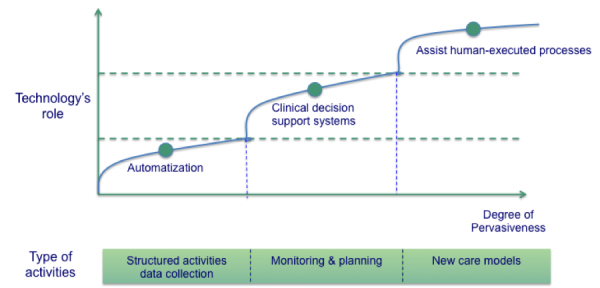
Conclusions: Since mHealth seems to be employed only for limited uses and during limited phases of the care process, it is unlikely that it can really contribute to the creation of new care models. This under-utilization may depend on many issues, including the need for it to be embedded into broader information systems. If the purpose of introducing mHealth is to promote the adoption of integrated care models, using mHealth should not be limited to some activities or to some phases of the health care process. Instead, there should be a higher degree of pervasiveness at all stages and in all health care delivery activities.
Keywords: cancer care; cancer supportive care; care delivery value chain; health care process; integrated care; mhealth; new models of care.
Conflict of interest statement
Conflicts of Interest: None declared.
Figures


References
-
- Gröne O, Garcia-Barbero M, WHO European Office for Integrated Health Care Services Integrated care: a position paper of the WHO European Office for Integrated Health Care Services. Int J Integr Care. 2001;1:e21. http://europepmc.org/abstract/MED/16896400 - PMC - PubMed
-
- Palliative or supportive care. American Cancer Society; [2014-08-04]. 6RZyNTGrL http://www.cancer.org/treatment/treatmentsandsideeffects/palliativecare/....
-
- Ham C, Dixon A, Brooke B. Transforming the delivery of health and social care. The case for fundamental change. London: The King’s Fund; 2012.
-
- Porter ME, Lee TH. The strategy that will fix health care. Harvard Business Review. 2013;91:50–70. http://hbr.org/product/the-strategy-that-will-fix-health-care/an/R1310B-... - PubMed
-
- Porter M, Teisberg E. Redefining health care. Boston, MA: Harvard Business School Press; 2006.
Publication types
MeSH terms
LinkOut - more resources
Full Text Sources
Other Literature Sources
Medical
