Genetic and Pharmacological Screens Converge in Identifying FLIP, BCL2, and IAP Proteins as Key Regulators of Sensitivity to the TRAIL-Inducing Anticancer Agent ONC201/TIC10
- PMID: 25681273
- PMCID: PMC4541796
- DOI: 10.1158/0008-5472.CAN-14-2356
Genetic and Pharmacological Screens Converge in Identifying FLIP, BCL2, and IAP Proteins as Key Regulators of Sensitivity to the TRAIL-Inducing Anticancer Agent ONC201/TIC10
Abstract
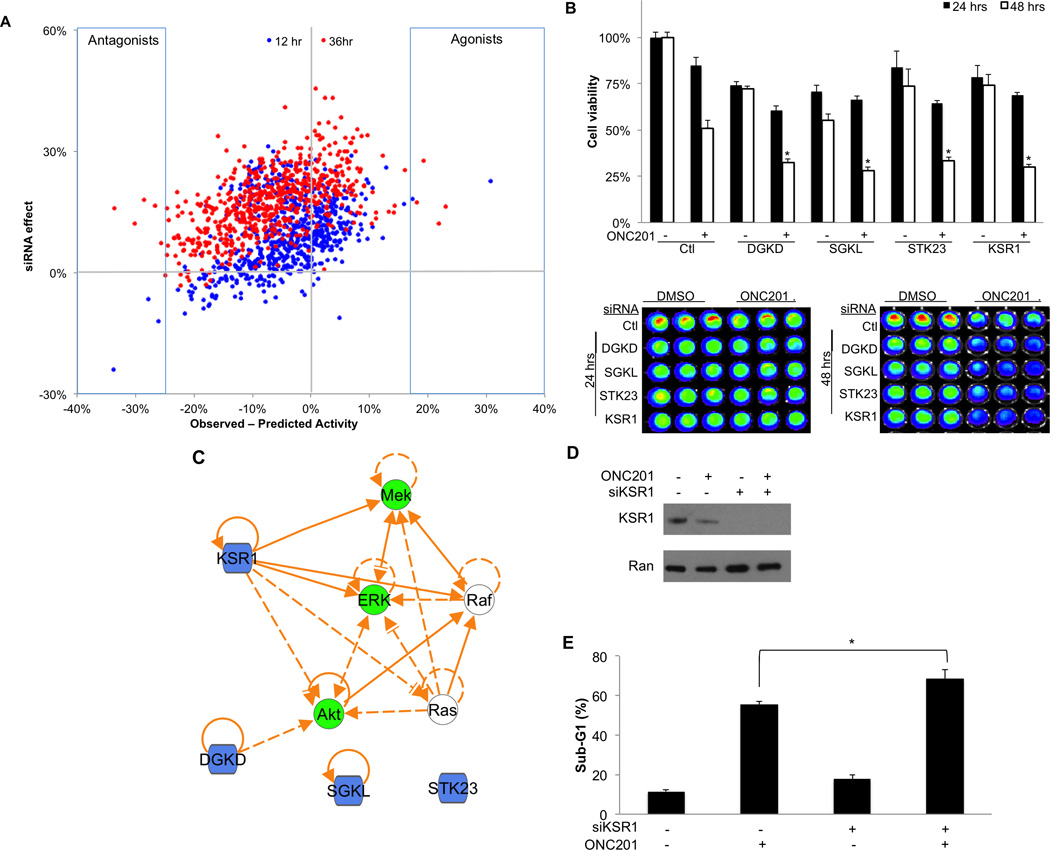
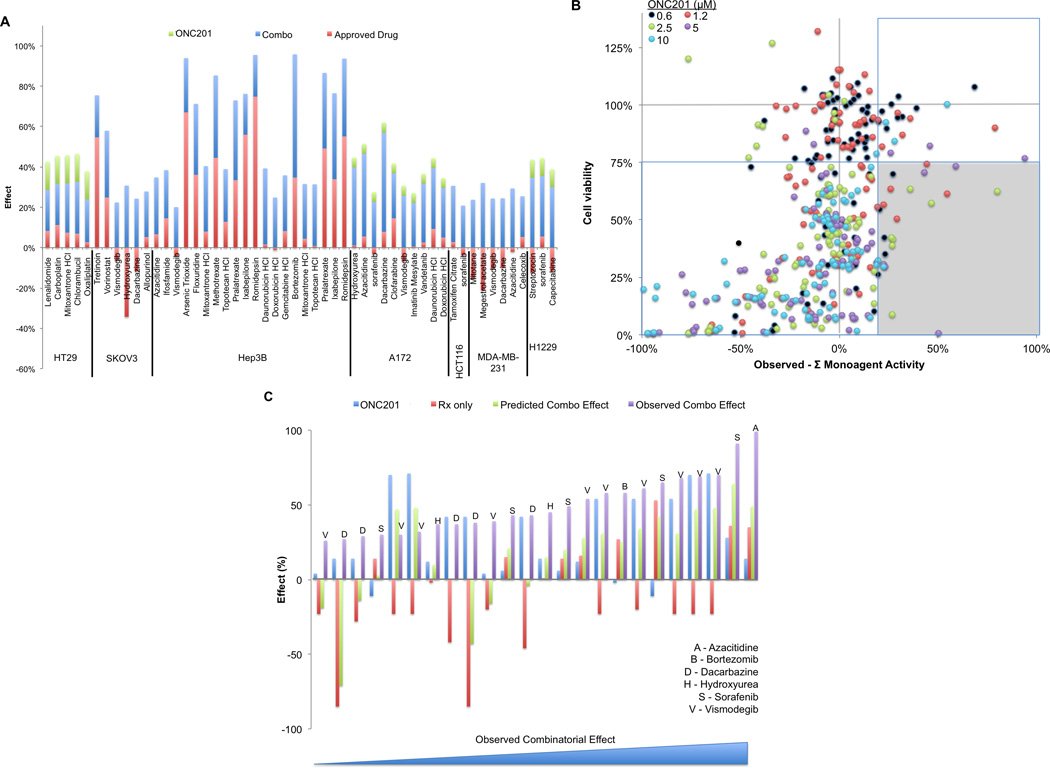
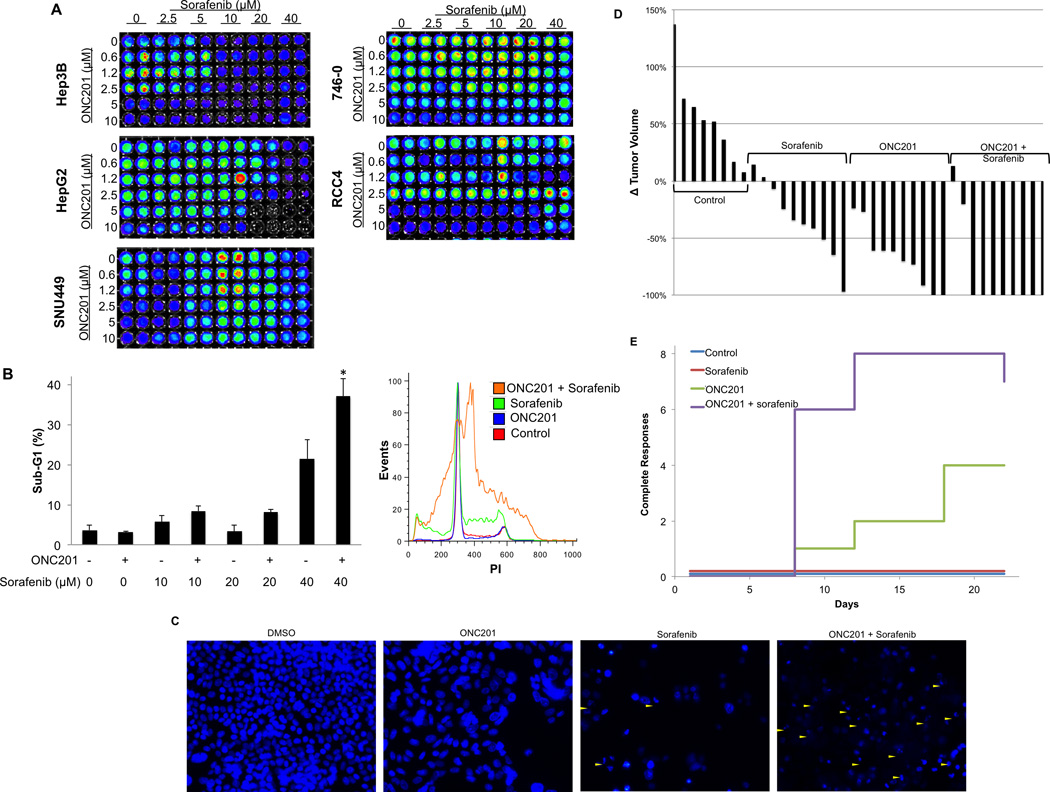
ONC201/TIC10 is a small-molecule inducer of the TRAIL gene under current investigation as a novel anticancer agent. In this study, we identify critical molecular determinants of ONC201 sensitivity offering potential utility as pharmacodynamic or predictive response markers. By screening a library of kinase siRNAs in combination with a subcytotoxic dose of ONC201, we identified several kinases that ablated tumor cell sensitivity, including the MAPK pathway-inducer KSR1. Unexpectedly, KSR1 silencing did not affect MAPK signaling in the presence or absence of ONC201, but instead reduced expression of the antiapoptotic proteins FLIP, Mcl-1, Bcl-2, cIAP1, cIAP2, and survivin. In parallel to this work, we also conducted a synergy screen in which ONC201 was combined with approved small-molecule anticancer drugs. In multiple cancer cell populations, ONC201 synergized with diverse drug classes, including the multikinase inhibitor sorafenib. Notably, combining ONC201 and sorafenib led to synergistic induction of TRAIL and its receptor DR5 along with a potent induction of cell death. In a mouse xenograft model of hepatocellular carcinoma, we demonstrated that ONC201 and sorafenib cooperatively and safely triggered tumor regressions. Overall, our results established a set of determinants for ONC201 sensitivity that may predict therapeutic response, particularly in settings of sorafenib cotreatment to enhance anticancer responses.
©2015 American Association for Cancer Research.
Conflict of interest statement
Figures

References
-
- Burns TF, El-Deiry WS. Identification of Inhibitors of TRAIL-induced Death (ITIDs) in the TRAIL-sensitive Colon Carcinoma Cell Line SW480 Using a Genetic Approach. Journal of Biological Chemistry. 2001 Oct 12;276(41):37879–37886. 2001. - PubMed
-
- Ricci MS, Kim S-H, Ogi K, Plastaras JP, Ling J, Wang W, et al. Reduction of TRAIL-Induced Mcl-1 and cIAP2 by c-Myc or Sorafenib Sensitizes Resistant Human Cancer Cells to TRAIL-Induced Death. Cancer cell. 2007;12(1):66–80. - PubMed
-
- Therrien M, Michaud NR, Rubin GM, Morrison DK. KSR modulates signal propagation within the MAPK cascade. Genes & Development. 1996 Nov 1;10(21):2684–2695. 1996. - PubMed
Publication types
MeSH terms
Substances
Grants and funding
LinkOut - more resources
Full Text Sources
Other Literature Sources
Medical
Research Materials
Miscellaneous