Characterization of three alternative transcripts of the BRCA1 gene in patients with breast cancer and a family history of breast and/or ovarian cancer who tested negative for pathogenic mutations
- PMID: 25683334
- PMCID: PMC4356434
- DOI: 10.3892/ijmm.2015.2103
Characterization of three alternative transcripts of the BRCA1 gene in patients with breast cancer and a family history of breast and/or ovarian cancer who tested negative for pathogenic mutations
Abstract
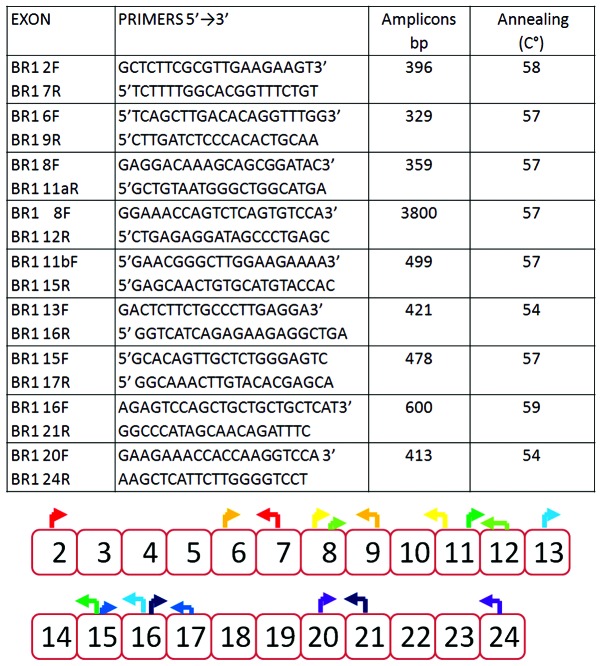
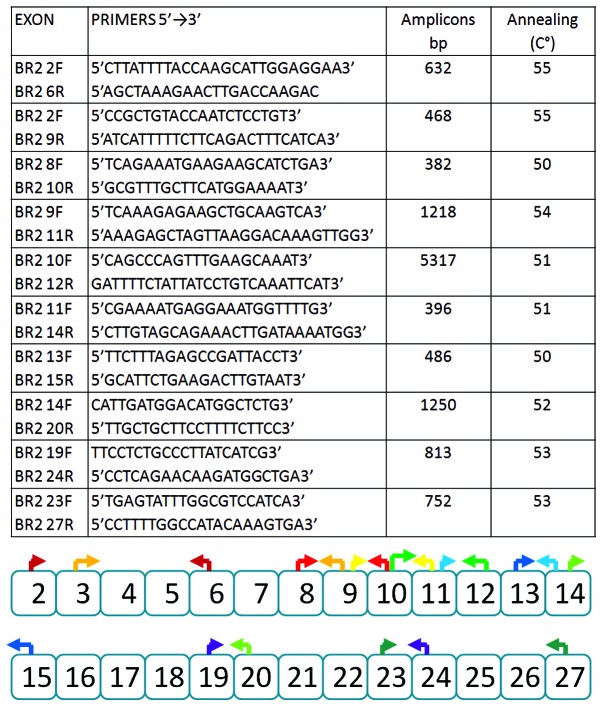
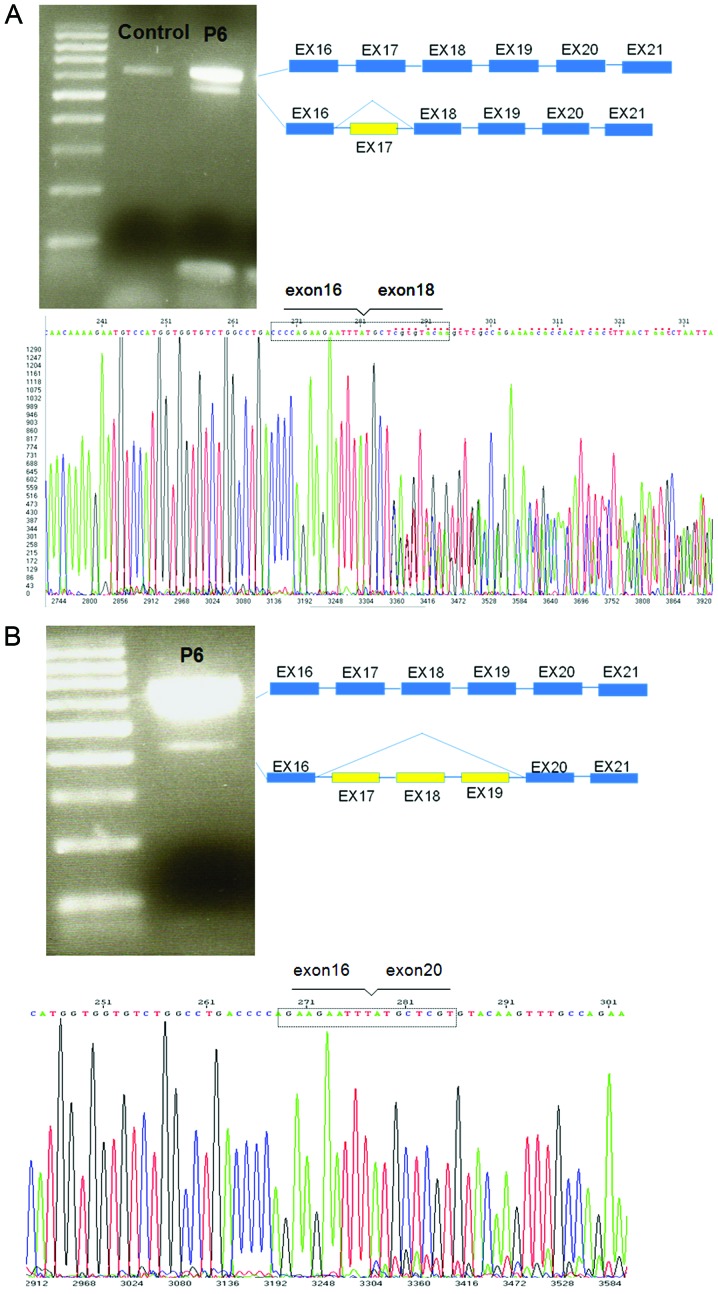
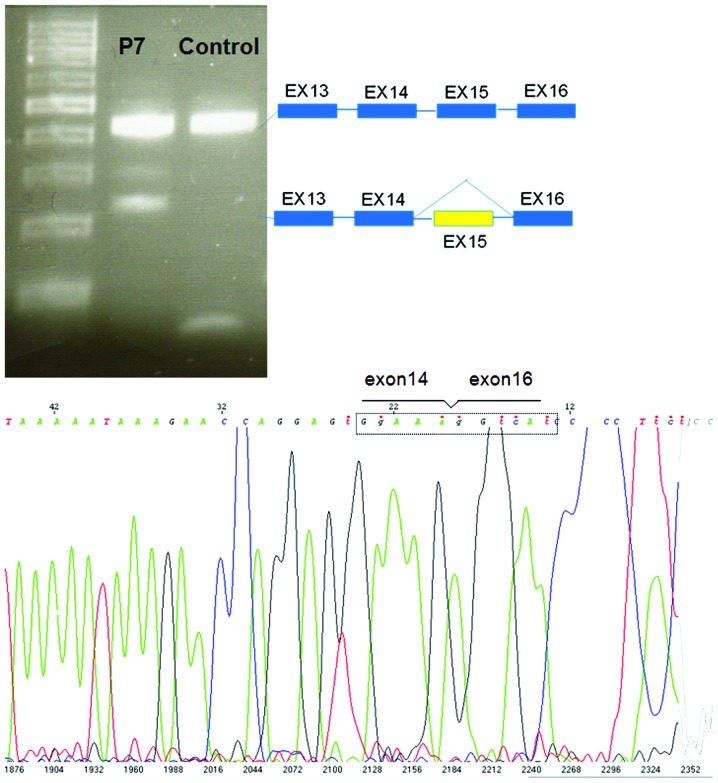
The study of BRCA1 and BRCA2 genes and their alterations has been essential to the understanding of the development of familial breast and ovarian cancers. Many of the variants identified have an unknown pathogenic significance. These include variants which determine alternative mRNA splicing, identified in the intronic regions and those are capable of destroying the splicing ability. The aim of this study was to detect BRCA1/BRCA2 aberrant transcripts resulting from alternative splicing, in women with a known family history and/or early onset of breast and/or ovarian cancer, tested wild-type for BRCA1 and BRCA2. The identification and characterization of aberrant transcripts through the analysis of mRNA levels in blood lymphocytes may help us to recognize families otherwise misclassified as wild-type BRCA1 and BRCA2. Blood samples were collected from 13 women that had a family history of breast and/or ovarian cancer and tested negative for pathogenic mutations in the BRCA1 and BRCA2 genes. Total RNA was analyzed for the presence of BRCA1 and BRCA2 naturally occurring and pathological transcripts using RT-PCR. In 2 out of the 13 samples, 2 alternative transcripts of the BRCA1 gene were identified. These were probably pathogenic as they lacked exon 17 and exon 15, respectively, giving rise to a truncated protein. In addition to these, we identified the Δ17-19 transcript in 1 patient, which gives rise to a protein with an in-frame deletion of 69 amino acids. In conclusion, this study on alternative transcripts of the BRCA1 and BRCA2 genes revealed the presence of isoforms (prevalence of 15%) in blood samples from women with breast and ovarian cancer that were probably pathogenic, that were not detected by conventional methods of mutation screening based on direct sequencing of all coding regions, intron-exons junctions and MLPA analysis.
Figures
References
-
- Sanz DJ, Acedo A, Infante M, Durán M, Pérez-Cabornero L, Esteban-Cardeñosa E, Lastra E, Pagani F, Miner C, Velasco EA. A high proportion of DNA variants of BRCA1 and BRCA2 is associated with aberrant splicing in breast/ovarian cancer patients. Clin Cancer Res. 2010;16:1957–1967. doi: 10.1158/1078-0432.CCR-09-2564. - DOI - PubMed
Publication types
MeSH terms
Substances
LinkOut - more resources
Full Text Sources
Other Literature Sources
Medical
Miscellaneous