


The Serum Immunoglobulin G Glycosylation Signature of Gastric Cancer
- PMID: 25685702
- PMCID: PMC4322429
- DOI: 10.1016/j.euprot.2014.11.002
The Serum Immunoglobulin G Glycosylation Signature of Gastric Cancer
Abstract
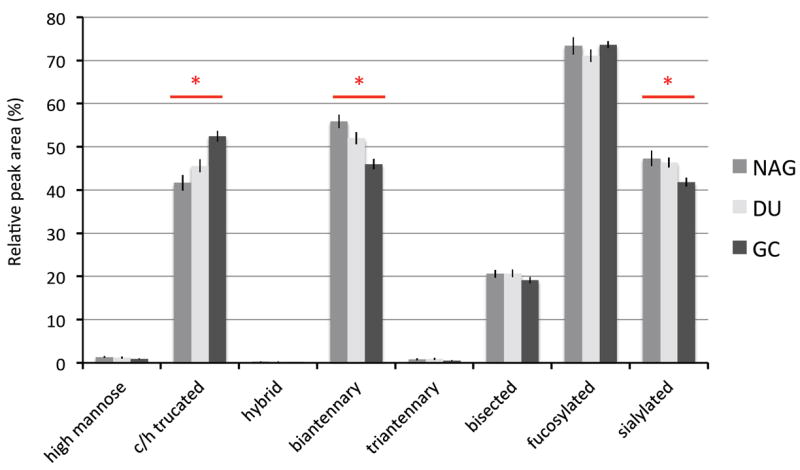
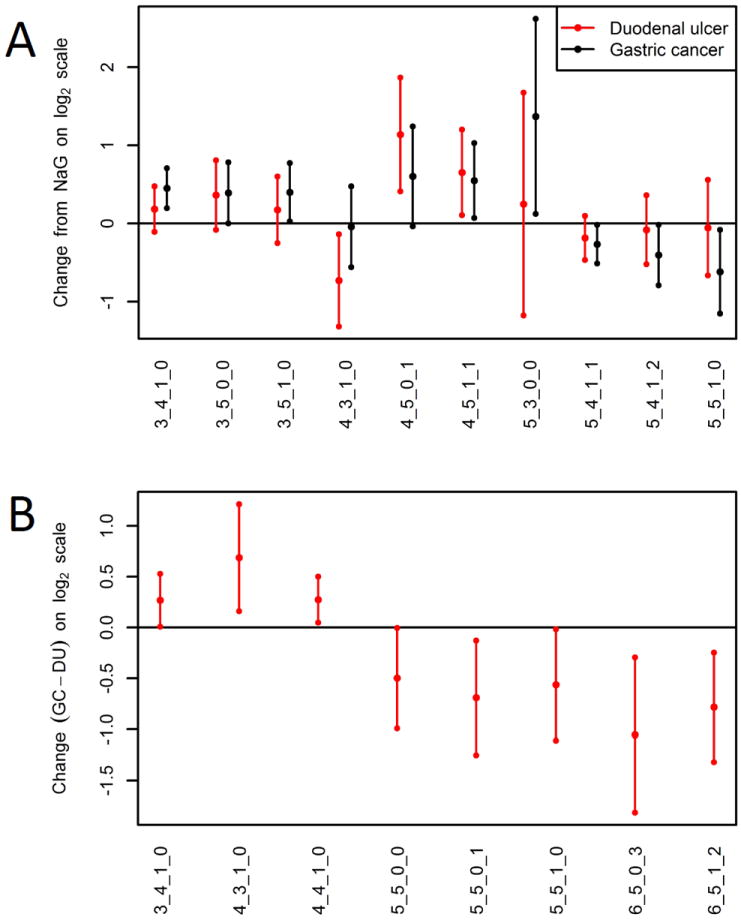
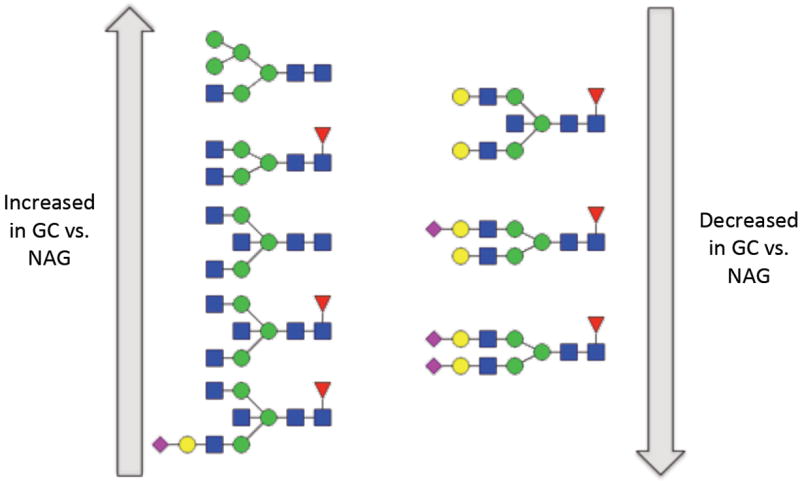
Biomarkers may facilitate detection of gastric cancer at an earlier stage and reduce mortality. Here we sought to determine if the glycosylation profile of serum immunoglobulin G (IgG) could distinguish patients with non-atrophic gastritis (NAG), duodenal ulcer (DU) and gastric cancer (GC). Serum IgG was released and analyzed using nano-LC-TOF mass spectrometry. Statistically significant false discovery rate (FDR)-adjusted p-values were observed for 18 glycans, eight that differed significantly between NAG and GC, three that distinguished NAG from DU, and eight that differed between DU and GC. The IgG glycosylation signature may be useful as a predictive marker for gastric cancer.
Keywords: Gastric cancer; N-glycan; duodenal ulcer; gastritis; nanoLC-MS; serum.
Conflict of interest statement
The authors declare no conflict of interest.
Figures
References
-
- Fuchs CS, Mayer RJ. Gastric carcinoma. N Engl J Med. 1995;333:32–41. - PubMed
-
- Catalano V, Labianca R, Beretta GD, Gatta G, de Braud F, Van Cutsem E. Gastric cancer. Crit Rev Oncol Hematol. 2005;54:209–41. - PubMed
-
- de Martel C, Ferlay J, Franceschi S, Vignat J, Bray F, Forman D, et al. Global burden of cancers attributable to infections in 2008: a review and synthetic analysis. Lancet Oncol. 2012;13:607–15. - PubMed
-
- Lauren P. The Two Histological Main Types of Gastric Carcinoma: Diffuse and So-Called Intestinal-Type Carcinoma. An Attempt at a Histo-Clinical Classification. Acta Pathol Microbiol Scand. 1965;64:31–49. - PubMed
Grants and funding
LinkOut - more resources
Full Text Sources
Other Literature Sources
Molecular Biology Databases
Miscellaneous