


Huntingtin functions as a scaffold for selective macroautophagy
- PMID: 25686248
- PMCID: PMC4344873
- DOI: 10.1038/ncb3101
Huntingtin functions as a scaffold for selective macroautophagy
Abstract
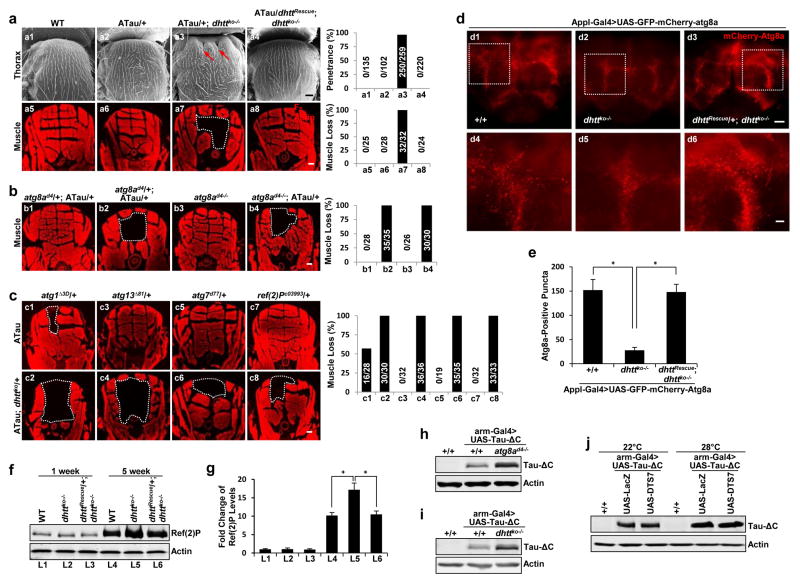
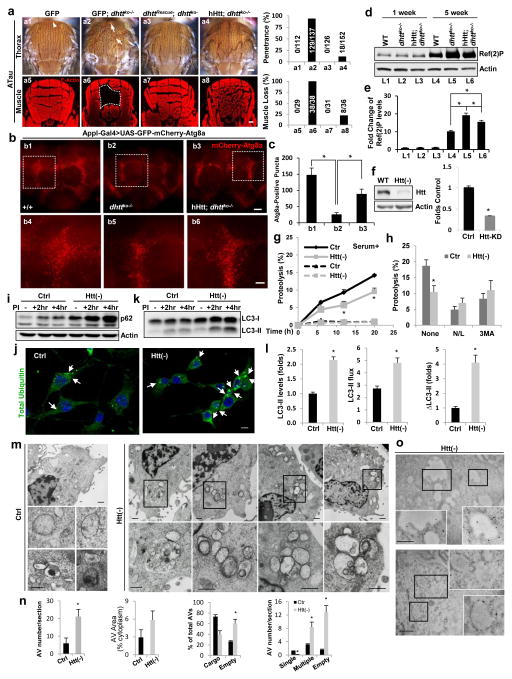
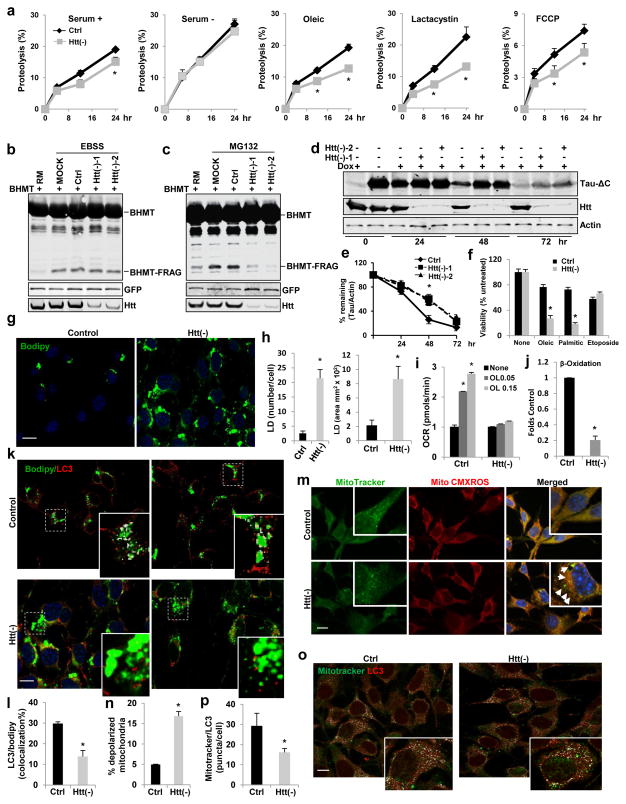
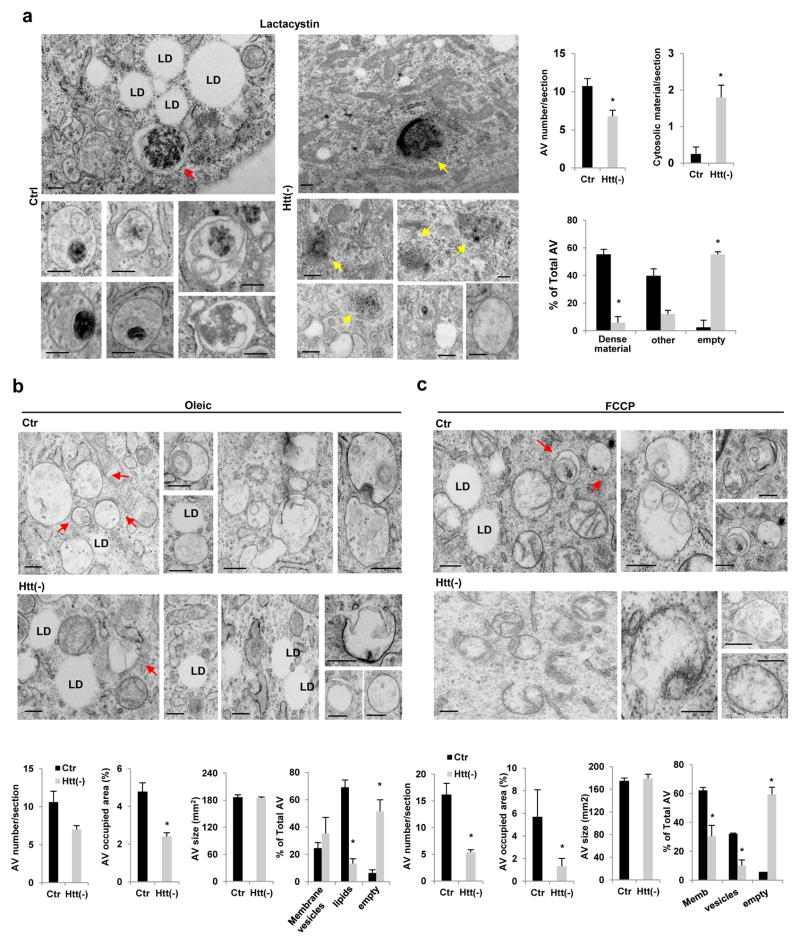
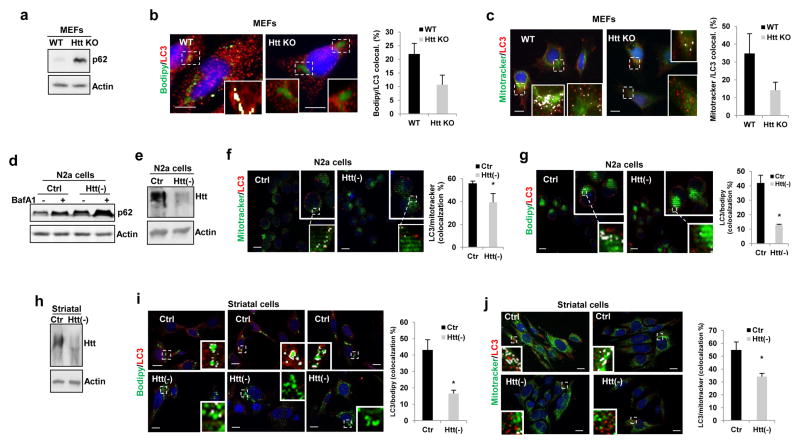
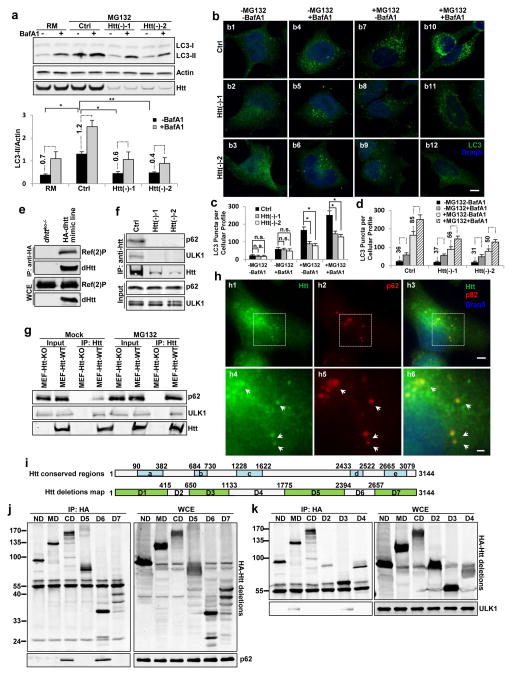
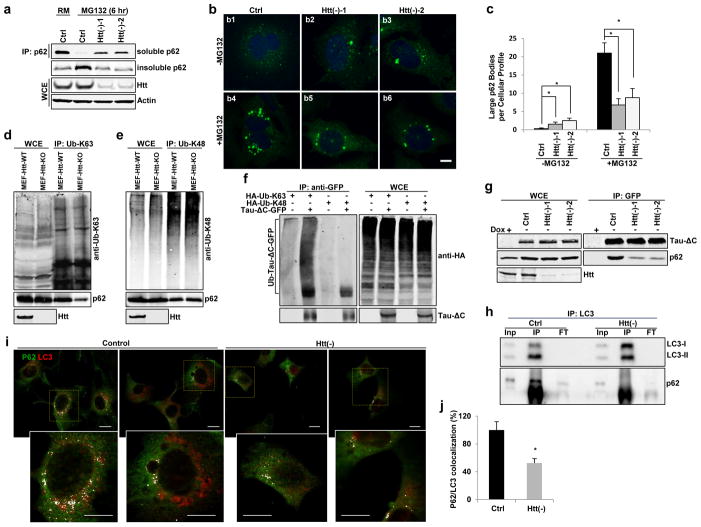
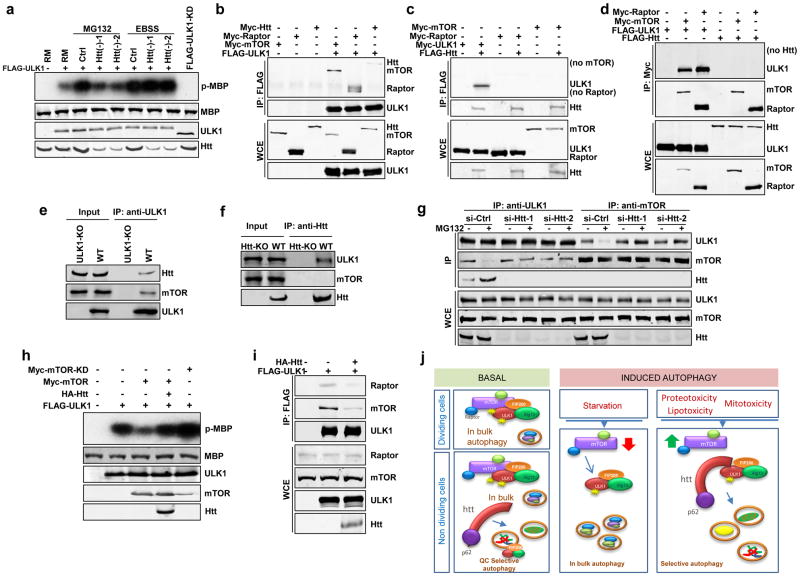
Selective macroautophagy is an important protective mechanism against diverse cellular stresses. In contrast to the well-characterized starvation-induced autophagy, the regulation of selective autophagy is largely unknown. Here, we demonstrate that Huntingtin, the Huntington disease gene product, functions as a scaffold protein for selective macroautophagy but it is dispensable for non-selective macroautophagy. In Drosophila, Huntingtin genetically interacts with autophagy pathway components. In mammalian cells, Huntingtin physically interacts with the autophagy cargo receptor p62 to facilitate its association with the integral autophagosome component LC3 and with Lys-63-linked ubiquitin-modified substrates. Maximal activation of selective autophagy during stress is attained by the ability of Huntingtin to bind ULK1, a kinase that initiates autophagy, which releases ULK1 from negative regulation by mTOR. Our data uncover an important physiological function of Huntingtin and provide a missing link in the activation of selective macroautophagy in metazoans.
Conflict of interest statement
The authors declare no competing financial interests.
Figures
Comment in
-
Huntingtin facilitates selective autophagy.Nat Cell Biol. 2015 Mar;17(3):214-5. doi: 10.1038/ncb3125. Nat Cell Biol. 2015. PMID: 25720962
References
-
- Bjorkoy G, Lamark T, Johansen T. p62/SQSTM1: a missing link between protein aggregates and the autophagy machinery. Autophagy. 2006;2:138–139. - PubMed
Publication types
MeSH terms
Substances
Grants and funding
LinkOut - more resources
Full Text Sources
Other Literature Sources
Molecular Biology Databases
Miscellaneous
