


Thromboelastography (TEG) and rotational thromboelastometry (ROTEM) for trauma induced coagulopathy in adult trauma patients with bleeding
- PMID: 25686465
- PMCID: PMC7083579
- DOI: 10.1002/14651858.CD010438.pub2
Thromboelastography (TEG) and rotational thromboelastometry (ROTEM) for trauma induced coagulopathy in adult trauma patients with bleeding
Abstract
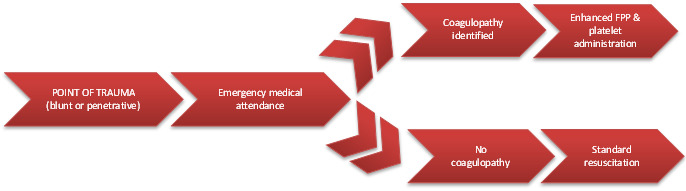
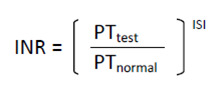
Background: Trauma-induced coagulopathy (TIC) is a disorder of the blood clotting process that occurs soon after trauma injury. A diagnosis of TIC on admission is associated with increased mortality rates, increased burdens of transfusion, greater risks of complications and longer stays in critical care. Current diagnostic testing follows local hospital processes and normally involves conventional coagulation tests including prothrombin time ratio/international normalized ratio (PTr/INR), activated partial prothrombin time and full blood count. In some centres, thromboelastography (TEG) and rotational thromboelastometry (ROTEM) are standard tests, but in the UK they are more commonly used in research settings.
Objectives: The objective was to determine the diagnostic accuracy of thromboelastography (TEG) and rotational thromboelastometry (ROTEM) for TIC in adult trauma patients with bleeding, using a reference standard of prothrombin time ratio and/or the international normalized ratio.
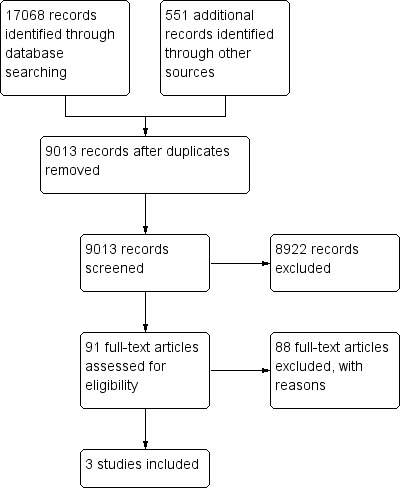
Search methods: We ran the search on 4 March 2013. Searches ran from 1970 to current. We searched The Cochrane Library, MEDLINE (OvidSP), EMBASE Classic and EMBASE, eleven other databases, the web, and clinical trials registers. The Cochrane Injuries Group's specialised register was not searched for this review as it does not contain diagnostic test accuracy studies. We also screened reference lists, conducted forward citation searches and contacted authors.
Selection criteria: We included all cross-sectional studies investigating the diagnostic test accuracy of TEG and ROTEM in patients with clinically suspected TIC, as well as case-control studies. Participants were adult trauma patients in both military and civilian settings. TIC was defined as a PTr/INR reading of 1.2 or greater, or 1.5 or greater.
Data collection and analysis: We piloted and performed all review stages in duplicate, including quality assessment using the QUADAS-2 tool, adhering to guidance in the Cochrane Handbook for Diagnostic Test Accuracy Reviews. We analysed sensitivity and specificity of included studies narratively as there were insufficient studies to perform a meta-analysis.
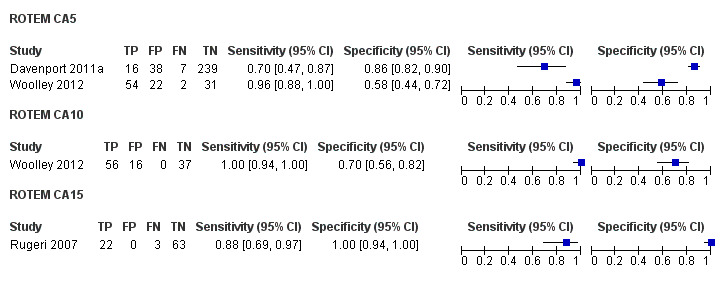
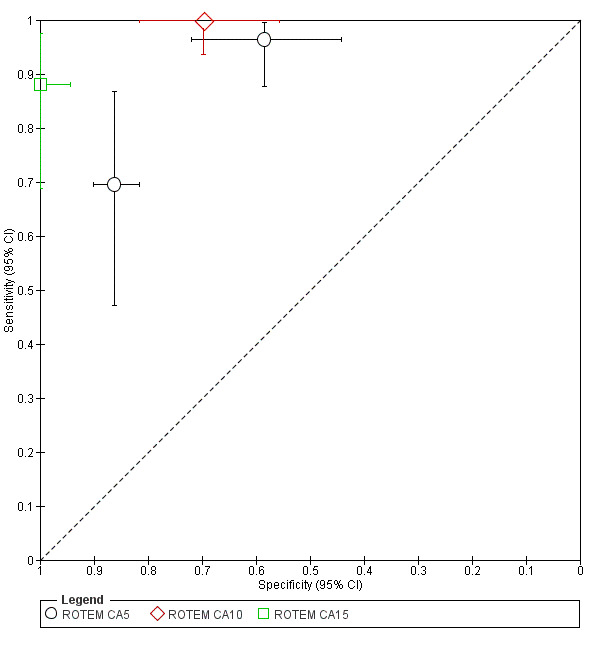
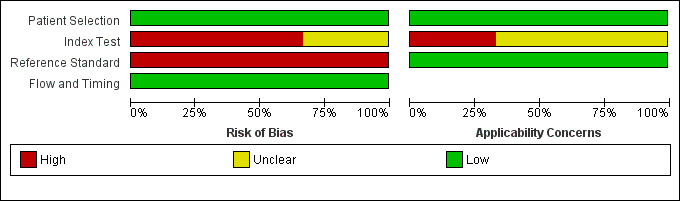
Main results: Three studies were included in the final analysis. All three studies used ROTEM as the test of global haemostatic function, and none of the studies used TEG. Tissue factor-activated assay EXTEM clot amplitude (CA) was the focus of the accuracy measurements in blood samples taken near to the point of admission. These CAs were not taken at a uniform time after the start of the coagulopathic trace; the time varied from five minutes, to ten minutes and fifteen minutes. The three included studies were conducted in the UK, France and Afghanistan in both civilian and military trauma settings. In two studies, median Injury Severity Scores were 12, inter-quartile range (IQR) 4 to 24; and 22, IQR 12 to 34; and in one study the median New Injury Severity Score was 34, IQR 17 to 43.There were insufficient included studies examining each of the three ROTEM CAs at 5, 10 and 15 minutes to make meta-analysis and investigation of heterogeneity valid. The results of the included studies are thus reported narratively and illustrated by a forest plot and results plotted on the receiver operating characteristic (ROC) plane.For CA5 the accuracy results were sensitivity 70% (95% CI 47% to 87%) and specificity 86% (95% CI 82% to 90%) for one study, and sensitivity 96% (95% CI 88% to 100%) and specificity 58% (95% CI 44% to 72%) for the other.For CA10 the accuracy results were sensitivity 100% (95% CI 94% to 100%) and specificity 70% (95% CI 56% to 82%).For CA15 the accuracy results were sensitivity 88% (95% CI 69% to 97%) and specificity 100% (95% CI 94% to 100%).No uninterpretable ROTEM study results were mentioned in any of the included studies.Risk of bias and concerns around applicability of findings was low across all studies for the patient and flow and timing domains. However, risk of bias and concerns around applicability of findings for the index test domain was either high or unclear, and the risk of bias for the reference standard domain was high. This raised concerns around the interpretation of the sensitivity and specificity results of the included studies, which may be misleading.
Authors' conclusions: We found no evidence on the accuracy of TEG and very little evidence on the accuracy of ROTEM. The value of accuracy estimates are considerably undermined by the small number of included studies, and concerns about risk of bias relating to the index test and the reference standard. We are unable to offer advice on the use of global measures of haemostatic function for trauma based on the evidence on test accuracy identified in this systematic review. This evidence strongly suggests that at present these tests should only be used for research. We consider more thoroughly what this research could be in the Discussion section.
Conflict of interest statement
Harriet Hunt: none known. Simon Stanworth: a member of the research team for included study Davenport 2011a
Figures



Update of
References
References to studies included in this review
Davenport 2011a {published and unpublished data}
Rugeri 2007 {published data only (unpublished sought but not used)}
-
- Rugeri L, Levrat A, David JS, Delecroix E, Floccard B, Gros A, et al. Diagnosis of early coagulation abnormalities in trauma patients by rotation thrombelastography. Journal of Thrombosis and Haemostasis 2007;5(2):289‐95. - PubMed
Woolley 2012 {published and unpublished data}
-
- Woolley T, Midwinter M, Spencer P, Watts S, Doran C, Kirkman E. Utility of interim ROTEM values of clot strength, A5 and A10, in predicting final assessment of coagulation status in severely injured battle patients. Injury 2013;44:593‐9. - PubMed
References to studies excluded from this review
Afshari 2011a {published data only}
-
- Afshari A. Evidence based evaluation of immuno‐coagulatory interventions in critical care. Danish Medical Bulletin 2011;58:B4316. - PubMed
Afshari 2011b {published data only}
Anonymous 2007 {published data only}
-
- Anonymous. Abstracts of Papers to be Presented at the Annual Scientific Meeting of the Trauma Association of Canada, May 10 ‐12, 2007, Ottowa, Ontario, Canada. The Journal of TRAUMA ‐ Injury, Infection & Critical Care 2007;62(3):787‐804.
Anonymous 2008 {published data only}
-
- Anonymous. Congress of the German Interdisciplinary Association of Intensive Care and Emergency Medicine 3–6 December 2008 CCH Congress Centre, Hamburg [Kongress der Deutschen Interdisziplinären Vereinigung für Intensivmedizin und Notfallmedizin 3–6 Dezember 2008 CCH Congress Center, Hamburg]. Intensivmedizin und Notfallmedizin. 2008; Vol. 45 supplement:1‐100.
Avikainen 1977 {published data only}
-
- Avikainen V. Coagulation disorders in severely and critically injured patients. Annales Chirurgiae et Gynaecologiae 1977;66:269‐77. - PubMed
Blackbourne 2012 {published data only}
-
- Blackbourne LH, Baer DG, Eastridge BJ, Renz EM, Chung KK, DuBose J, et al. Military medical revolution: deployed hospital and en route care. Journal of Trauma and Acute Care Surgery 2012;73:S378‐87. - PubMed
Cap 2011 {published data only}
-
- Cap AP, Spinella PC. Severity of head injury is associated with increased risk of coagulopathy in combat casualties. The Journal of TRAUMA ‐ Injury, Infection & Critical Care 2011;71:S78‐81. - PubMed
Carroll 2009 {published data only}
-
- Carroll R C, Craft RM, Langdon RJ, Clanton CR, Snider CC, Wellons DD, et al. Early evaluation of acute traumatic coagulopathy by thrombelastography. Translational Research 2009;154:34‐9. - PubMed
Chandler 2010 {published data only}
-
- Chandler WL, Ferrell C, Trimble S, Moody S. Development of a rapid emergency hemorrhage panel. Transfusion 2010;50:2547‐52. - PubMed
Cheng 2009 {published data only}
-
- Cheng L, Yao X. Significance of thrombelastogram in the study on coagulation disorder of patients with severe traumatic brain injury. [Chinese]. Chinese Journal of Contemporary Neurology and Neurosurgery 2009;9:270‐4.
Cotton 2011 {published data only}
-
- Cotton BA, Faz G, Hatch QM, Radwan ZA, Podbielski J, Wade C, et al. Rapid thrombelastography delivers real‐time results that predict transfusion within 1 hour of admission. The Journal of TRAUMA ‐ Injury, Infection & Critical Care 2011;71:407‐14. - PubMed
Cotton 2012a {published data only}
-
- Cotton BA, Minei KM, Radwan ZA, Matijevic N, Pivalizza E, Podbielski J, et al. Admission rapid thrombelastography predicts development of pulmonary embolism in trauma patients. Journal of Trauma and Acute Care Surgery 2012;72:1470‐7. - PubMed
Cotton 2012b {published data only}
-
- Cotton BA, Harvin JA, Kostousouv V, Minei KM, Radwan ZA, Schoechl H, et al. Hyperfibrinolysis at admission is an uncommon but highly lethal event associated with shock and prehospital fluid administration. Journal of Trauma and Acute Care Surgery 2012;73:365‐70. - PubMed
Craft 2008 {published data only}
-
- Craft R, Carroll R, Langdon R, Clanton C, Snider C, Lawson C, et al. Point‐of‐care thrombelastography assays for coagulopathy in trauma patients. Transfusion 2008;48:81A.
Curry 2011 {published data only}
-
- Curry NS, Rourke C, Khan S, Beavis J, Kingsland S, Brohi K, et al. Fibrinogen replacement in traumatic bleeding. Journal of Thrombosis and Haemostasis 2011;9:938.
Davenport 2009 {published data only}
-
- Davenport R, Coates A, Allard S, Pasi J, MacCallum P, Stanworth S, et al. Trauma haemorrhage: evolving role of ROTEM for predicting transfusion requirements. Shock 2009;32:15.
Davenport 2011b {published data only}
-
- Davenport R, Rourke C, Manson J, De'Ath H, Platton S, Coates A, et al. Activated protein C is a principle mediator of acute traumatic coagulopathy. Journal of Thrombosis and Haemostasis 2011;9:51‐2.
David 2011 {published data only}
Differding 2011 {published data only}
-
- Differding JA, Underwood SJ, Van PY, Khaki RA, Spoerke NJ, Schreiber MA. First Place Residents' Competition: trauma induces a hypercoagulable state that is resistant to hypothermia as measured by thrombelastogram. American Journal of Surgery 2011;201:585‐9. - PubMed
Ettinger 1970 {published data only}
-
- Ettinger MG. Coagulation abnormalities in subarachnoid hemorrhage. Stroke; a journal of cerebral circulation 1970;1:139‐42. - PubMed
Floccard 2012 {published data only}
-
- Floccard B, Rugeri L, Faure A, Saint Denis M, Boyle EM, Peguet O, et al. Early coagulopathy in trauma patients: an on‐scene and hospital admission study. Injury 2012;43:26‐32. - PubMed
Franschman 2012 {published data only}
-
- Franschman G, Boer C, Andriessen TM, Naalt J, Horn J, Haitsma I, et al. Multicenter evaluation of the course of coagulopathy in patients with isolated traumatic brain injury: relation to CT characteristics and outcome. Journal of Neurotrauma 2012;29:128‐36. - PubMed
Frink 2009 {published data only}
-
- Frink M, Zeckey C, Mommsen P, Haasper C, Krettek C, Hildebrand F. Polytrauma management ‐ a single centre experience. Injury 2009;40:S5‐S11. - PubMed
Hagemo 2013a {published data only}
-
- Hagemo JS. Prehospital detection of traumatic coagulopathy. Transfusion 2013;53:48S‐51S. - PubMed
Hagemo 2013b {published data only}
-
- Hagemo JS, Naess PA, Johansson P, Windeløv NA, Cohen MJ, Røislien J, et al. Evaluation of TEG and RoTEM inter‐changeability in trauma patients. Injury 2013;44:600‐5. - PubMed
Jambor 2009 {published data only}
-
- Jambor C, Heindl B, Spannagl M, Rolfes C, Dinges G K, Frietsch T. Blood transfusion haemostaseological management in polytrauma ‐ status of patient‐oriented diagnostic methods. Anasthesiologie Intensivmedizin Notfallmedizin Schmerztherapie 2009;44:200‐9. - PubMed
Jeger 2009 {published data only}
-
- Jeger V, Zimmermann H, Exadaktylos AK. Can RapidTEG accelerate the search for coagulopathies in the patient with multiple injuries?. The Journal of TRAUMA ‐ Injury, Infection & Critical Care 2009;66:1253‐7. - PubMed
Jeger 2010 {published data only}
-
- Jeger V, Zimmermann H, Exadaktylos AK. Thrombelastography in trauma, the closer the better. The Journal of TRAUMA ‐ Injury, Infection & Critical Care 2010;68:508. - PubMed
Jeger 2011a {published data only}
-
- Jeger V, Willi S, Liu T, Omert L, Orr A, Popovsky MA, et al. A comparison of point of care thrombelastography (TEG) versus conventional coagulation tests (CCT) in the emergency department management of trauma. British Journal of Surgery 2011;98:15.
Jeger 2011b {published data only}
-
- Jeger V, Willi S, Liu T, Omert L, Orr A, Popovsky MA, et al. Comparison of point‐of‐care thrombelastography versus conventional coagulation tests in the emergency department management of trauma. Critical Care 2011;15:S154.
Jeger 2012 {published data only}
Kashuk 2010 {published data only}
-
- Kashuk J, Moore E, Wohlauer M, Johnson J, Pezold M, Lawrence J, et al. Initial experiences with point of care (POC) rapid thrombelastography (TEG) for management of life threatening postinjury coagulopathy (PIC). Shock 2010;33:27‐8. - PubMed
Kashuk 2012 {published data only}
-
- Kashuk JL, Moore EE, Wohlauer M, Johnson JL, Pezold M, Lawrence J, et al. Initial experiences with point‐of‐care rapid thrombelastography for management of life‐threatening postinjury coagulopathy. Transfusion 2012;52:23‐33. - PubMed
Kaufmann 1995 {published data only}
-
- Kaufmann CR, Dwyer KM, Crews JD, Dols SJ, Trask AL. Usefulness of thromboelastography in assessment of trauma patient coagulation. Journal of Trauma 1995;39:170. - PubMed
McCann 2011 {published data only}
-
- McCann K, Walsh M, Castellino F, Yount R, Thomas S, Evans E, et al. Expanding role of platelet mapping in traumatic brain injury. Journal of Neurotrauma 2011;28 (6):A51.
Messenger 2011 {published data only}
-
- Messenger BM, Craft RM, Carroll RC, Daley BJ, Enderson B, Snider CG. TEG‐guided massive transfusion in trauma patients. Anesthesia and Analgesia. 2011; Vol. 112 Suppl 5:S‐90.
Nystrup 2011 {published data only}
-
- Nystrup KB, Windelov NA, Thomsen AB, Johansson PI. Reduced clot strength upon admission, evaluated by thrombelastography (TEG), in trauma patients is independently associated with increased 30‐day mortality. Scandinavian Journal of Trauma Resuscitation & Emergency Medicine 2011;19. [DOI: 10.1186/1757-7241-19-52.] - DOI - PMC - PubMed
Ostrowski 2011 {published data only}
Ostrowski 2012a {published data only}
-
- Ostrowski SR, Johansson PI. Endothelial glycocalyx degradation induces endogenous heparinization in patients with severe injury and early traumatic coagulopathy. Journal of Trauma and Acute Care Surgery 2012;73:60‐6. - PubMed
Ostrowski 2012b {published data only}
-
- Ostrowski SR, Sorensen AM, Windelov NA, Perner A, Welling KL, Wanscher M, et al. High levels of soluble VEGF receptor 1 early after trauma are associated with shock, sympathoadrenal activation, glycocalyx degradation and inflammation in severely injured patients: a prospective study. Scandinavian Journal of Trauma Resuscitation & Emergency Medicine 2012;20:27. [DOI: 10.1186/1757-7241-20-27.] - DOI - PMC - PubMed
Park 2008 {published data only}
-
- Park MS, Salinas J, Wade CE, Wang JF, Martini WJ, Pusateri AE, et al. Combining early coagulation and inflammatory status improves prediction of mortality in burned and nonburned trauma patients. The Journal of TRAUMA ‐ Injury, Infection & Critical Care 2008;64:S188‐94. - PubMed
Park 2009 {published data only}
Pezold 2012 {published data only}
Plotkin 2008 {published data only}
-
- Plotkin AJ, Wade CE, Jenkins DH, Smith KA, Noe JC, Park MS, et al. A reduction in clot formation rate and strength assessed by thrombelastography is indicative of transfusion requirements in patients with penetrating injuries. The Journal of TRAUMA ‐ Injury, Infection & Critical Care 2008;64:S64‐8. - PubMed
Raza 2011a {published data only}
-
- Raza I, Davenport R, Brohi K, Rourke C, Platton S, Khan S, et al. Dilutional coagulopathy following blood transfusion in trauma. Journal of Thrombosis and Haemostasis 2011;9:692‐3.
Raza 2011b {published data only}
-
- Raza I, Davenport R, Rourke C, Platton S, Manson J, Spoors C, et al. Occult activation of fibrinolysis in trauma. Journal of Thrombosis and Haemostasis 2011;9:848.
Raza 2013 {published data only}
-
- Raza I, Davenport R, Rourke C, Platton S, Manson J, Spoors C, et al. The incidence and magnitude of fibrinolytic activation in trauma patients. Journal of Thrombosis and Haemostasis 2013;11:307‐14. - PubMed
Rizoli 2011 {published data only}
Rourke 2012 {published data only}
-
- Rourke C, Curry N, Khan S, Taylor R, Raza I, Davenport R, et al. Fibrinogen levels during trauma hemorrhage, response to replacement therapy, and association with patient outcomes. Journal of Thrombosis and Haemostasis 2012;10:1342‐51. - PubMed
Schochl 2005 {published data only}
-
- Schochl H. Intraoperative coagulation management in polytrauma. [German]. Journal fur Anasthesie und Intensivbehandlung 2005;12:119‐22.
Schochl 2007 {published data only}
-
- Schochl H, Frietsch T, Drews P, Jambor C. 21st Annual Meeting of the Eastern Association for the Surgery of Trauma, Jacksonville, FL, USA, January 15‐19, 2008. The Journal of TRAUMA ‐ Injury, Infection & Critical Care. 2007; Vol. 63:1426‐40.
Schochl 2009 {published data only}
-
- Schochl H, Frietsch T, Pavelka M, Jambor C. Hyperfibrinolysis after major trauma: differential diagnosis of lysis patterns and prognostic value of thrombelastometry. The Journal of TRAUMA ‐ Injury, Infection & Critical Care 2009;67:125‐31. - PubMed
Schochl 2011a {published data only}
-
- Schochl H, Solomon C, Redl H, Bahrami S. Rotational thromboelastometry in patients with severe traumatic brain injury: possible risk stratification?. Shock 2011;36:31.
Schochl 2011b {published data only}
-
- Schochl H, Solomon C, Redl H, Bahrami S. Rotational thromboelastometric (rotem (r)) test results in the emergency room predicts massive transfusion in major trauma patients. Shock 2011;36:30.
Schochl 2011c {published data only}
Schochl 2012a {published data only}
-
- Schochl H, Solomon C, Voelckel W. Goal‐directed coagulation management in trauma‐related bleeding. Shock 2012;38:32‐3.
Schochl 2012b {published data only}
-
- Schochl H, Solomon C, Voelckel W, Redl H, Bahrami S. Hyperfibrinolysis in trauma. Shock 2012;38:7‐8.
Schreiber 2005 {published data only}
-
- Schreiber MA, Differding J, Thorborg P, Mayberry JC, Mullins RJ, Timberlake GA, et al. Hypercoagulability is most prevalent early after injury and in female patients. The Journal of TRAUMA ‐ Injury, Infection & Critical Care 2005;58:475‐81. - PubMed
Schreiber 2009 {published data only}
Shah 2012 {published data only}
-
- Shah B, Subramanium A, Agrawal D, Mukhopadhyay A. Thromboelastography‐viscoelastic haemostatic assay (VHA) as an indicator of overt disseminated intravascular coagulation in brain injury patients within 24 hours after injury. Brain Injury 2012;26(4‐5):586‐7.
Sharma 2010 {published data only}
-
- Sharma P, Saxena R. A novel thromboelastographic score to identify overt disseminated intravascular coagulation resulting in a hypocoagulable state. American Journal of Clinical Pathology 2010;134:97‐102. - PubMed
Sixta 2013 {published data only}
-
- Sixta SL, Schreiber M, Cohen M, Wade CE, Holcomb JB, Cotton BA. Coagulopathy after head injury: uncommon by conventional coagulation testing and associated with platelet‐fibrinogen dysfunction. Journal of Surgical Research 2013;179(2):272‐3.
Solomon 2011 {published data only}
-
- Solomon C, Traintinger S, Ziegler B, Hanke A, Rahe‐Meyer N, Voelckel W, et al. Platelet function following trauma. A multiple electrode aggregometry study. Thrombosis and Haemostasis 2011;106:322‐30. - PubMed
Spoors 2011 {published data only}
-
- Spoors C, Rourke C, Manson J, De'Ath H, Raza I, Khan S, et al. Rotem indices of platelet function in acute traumatic coagulopathy. British Journal of Surgery. 2011; Vol. 98 (S2):8:O24.
Tanaka 2012 {published data only}
-
- Tanaka KA, Bolliger D, Vadlamudi R, Nimmo A. Rotational thromboelastometry (ROTEM)‐based coagulation management in cardiac surgery and major trauma. Journal of Cardiothoracic and Vascular Anesthesia 2012;26:1083‐93. - PubMed
Tapia 2013 {published data only}
-
- Tapia NM, Chang A, Norman M, Welsh F, Scott B, Wall M J Jr, et al. TEG‐guided resuscitation is superior to standardized MTP resuscitation in massively transfused penetrating trauma patients. Journal of Trauma and Acute Care Surgery 2013;74:378‐86. - PubMed
Theusinger 2011 {published data only}
-
- Theusinger OM, Wanner GA, Emmert MY, Billeter A, Eismon J, Seifert B, et al. Hyperfibrinolysis diagnosed by rotational thromboelastometry (ROTEM (R)) Is associated with higher mortality in patients with severe trauma. Anesthesia and Analgesia 2011;113:1003‐12. - PubMed
Theusinger 2013 {published data only}
-
- Theusinger OM, Levy JH. Point of care devices for assessing bleeding and coagulation in the trauma patient. Anesthesiology Clinics 2013;31:55‐65. - PubMed
Watters 2010 {published data only}
-
- Watters JM, Sambasivan CN, Zink K, Kremenevskiy I, Englehart MS, Underwood SJ, et al. Splenectomy leads to a persistent hypercoagulable state after trauma. American Journal of Surgery 2010;199:646‐51. - PubMed
Weiss 2011 {published data only}
-
- Weiss G, Lison S, Glaser M, Herberger S, Johanning K, Strasser T, et al. Observational study of fibrinogen concentrate in massive hemorrhage: evaluation of a multicenter register. Blood Coagulation & Fibrinolysis 2011;22:727‐34. - PubMed
Windelov 2011 {published data only}
-
- Windelov NA, Welling KL, Ostrowski SR, Johansson PI. The prognostic value of thrombelastography in identifying neurosurgical patients with worse prognosis. Blood Coagulation and Fibrinolysis 2011;22:416‐9. - PubMed
Wohlauer 2012 {published data only}
-
- Wohlauer MV, Thomas SG, Moore EE, Walsh M, Musunuru H, Davis PK, et al. Platelet dysfunction as an early marker for traumatic brain induced coagulopathy in the absence of platelet inhibitors. Journal of the American College of Surgeons 2012;1:S60.
Woolley 2010 {published data only}
-
- Woolley T, Midwinter M, Spencer P, Doran C, Kirkman E. Early determination of hypocoagulopathy based on interim ROTEM values for clot strength. British Journal of Surgery 2010;97:21.
Additional references
Barts & The London 2011
-
- Barts, The London School of Medicine, Dentistry. The science of the bleeding obvious! Trauma surgery. Summer Science Exhibition 2011, The Royal Society 5‐10 July 2011.
Bossuyt 2003
-
- Bossuyt PM, Reitsma JB, Bruns DE, Gatsonis CE, Glasziou PE, Irwig LE, et al. The STARD statement for reporting studies of diagnostic accuracy: explanation and elaboration. Annals of Internal Medicine 2003;138(1):W1‐12. - PubMed
Brohi 2003
-
- Brohi K, Singh J, Heron M, Coats T. Acute traumatic coagulopathy. The Journal of TRAUMA ‐ Injury, Infection & Critical Care 2003;54(6):1127‐30. - PubMed
Brohi 2013
-
- Brohi, K. Query concerning 2003 paper [personal communication]. email to: H Hunt 14 September 2013.
Deeks 2010
-
- Deeks JJ, Bossuyt PM, Gatsonis M, Constantine A [editors]. Cochrane Handbook for Systematic Reviews of Diagnostic Test Accuracy. Cochrane Handbook for Systematic Reviews of Diagnostic Test Accuracy. The Cochrane Collaboration, 2010, issue Version 1.0.
Doran 2010
-
- Doran CM, Woolley T, Midwinter MJ. Surgeon General’s Operational Policy Letter 10/07 – Management of massive haemorrhage on operations. Defence Medical Services Department 05/01/02, dated June 14, 2007 quoted in Feasibility of using rotational thromboelastometry to assess coagulation status of combat casualties in a deployed setting. The Journal of TRAUMA ‐ Injury, Infection & Critical Care 2010; Vol. 69 Suppl 1 July:40‐8. - PubMed
Dzik 2004
-
- Dzik WH. Predicting hemorrhage using preoperative coagulation screening assays. Current Hematology Reports 2004;3(5):324‐30. - PubMed
Frith 2010
-
- Frith D, Goslings JC, Gaardner C, Maegele M, Cohen MJ, Allard S, et al. Definition and drivers of acute traumatic coagulopathy: clinical and experimental investigations. Journal of Thrombosis and Haemostasis 2010;8:1919‐25. - PubMed
Ganter 2008
-
- Ganter MT, Hofer CK. Coagulation monitoring: current techniques and clinical use of viscoelastic point of care coagulation devices. International Anaesthesia Research Society 2008;106(5):1366‐75. - PubMed
Hess 2009
-
- Hess JR, Lindell AL, Stansbury LG, Dutton RP, Scalea TM. The prevalence of abnormal results of conventional coagulation tests on admission to a trauma center. Transfusion 2009;49(1):34‐9. - PubMed
Holcomb 2007
Hunt 2013
-
- Hunt H, Hyde C, Stanworth S, Curry N, Perel P, Woolley T, et al. Thromboelastography (TEG) and thromboelastometry (ROTEM) for trauma‐induced coagulopathy in adult trauma patients with bleeding. Cochrane Database of Systematic Reviews 2013, Issue 3. [DOI: 10.1002/14651858.CD010438] - DOI - PMC - PubMed
Hunt 2014
-
- Hunt H, Hyde CJ, Stanworth S, Curry N, Perel P, Woolley T, et al. A systematic review of studies indicating the additional prognostic value of tests of global haemostasis (TEG/ROTEM) in the immediate care of adult trauma patients. PROSPERO‐registered protocol 7 April 2014; Vol. http://www.crd.york.ac.uk/PROSPERO/display_record.asp?ID=CRD42014009060.
Macaskill 2010
-
- Macaskill P, Gatsonis C, Deeks JJ, Harbord RM, Takwoingi Y. Chapter 10: Analysing and Presenting Results. In: Deeks JJ, Bossuyt PM, Gatsonis C editor(s). Cochrane Handbook for Systematic Reviews of Diagnostic Test Accuracy. 1.0. The Cochrane Collaboration, 2010.
MacLeod 2003
-
- MacLeod JB, Lynn M, McKenney MG, Dohn SM, Murthda M. Early coagulopathy predicts mortality in trauma. The Journal of TRAUMA ‐ Injury, Infection & Critical Care 2003;55(1):39‐44. - PubMed
Maegele 2007
-
- Maegele M, Lefering R, Yucel N, Tjardes T, Rixen D, Paffrath T, et al. Early coagulopathy in multiple injury: an analysis from the German Trauma Registry on 8724 patients. Injury 2007;38(3):298‐304. - PubMed
Reitsma 2009
-
- Reitsma JB, Rutjes AWS, Whiting P, Vlassov VV, Leeflang MMG, Deeks JJ. Chapter 9: Assessing methodological quality. In: Deeks JJ, Bossuyt PM, Gatsonis C (editors),Cochrane Handbook for Systematic Reviews of Diagnostic Test Accuracy Version1.0.0. The Cochrane Collaboration, 2009. Available from: http://srdta.cochrane.org/.
RevMan 2012 [Computer program]
-
- The Nordic Cochrane Centre. Review Manager (RevMan). Version 5.2. Copenhagen: The Cochrane Collaboration, 2012.
Sankarankutty 2012
Spinella 2009
Stainsby 2006
-
- Stainsby D, MacLennan S, Thomas D, Isaac J, Hamilton PJ. Guidelines on the management of massive blood loss. British Journal of Haematology 2006;135:634‐41. - PubMed
Publication types
MeSH terms
Grants and funding
LinkOut - more resources
Full Text Sources
Other Literature Sources
Medical
Miscellaneous
