A two-factor model of relapse/recurrence vulnerability in unipolar depression
- PMID: 25688431
- PMCID: PMC4332552
- DOI: 10.1037/abn0000031
A two-factor model of relapse/recurrence vulnerability in unipolar depression
Abstract
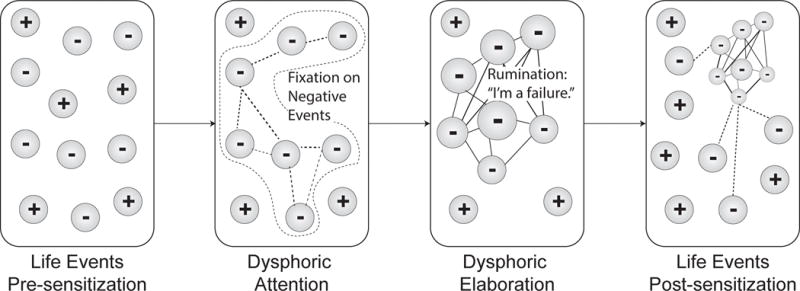
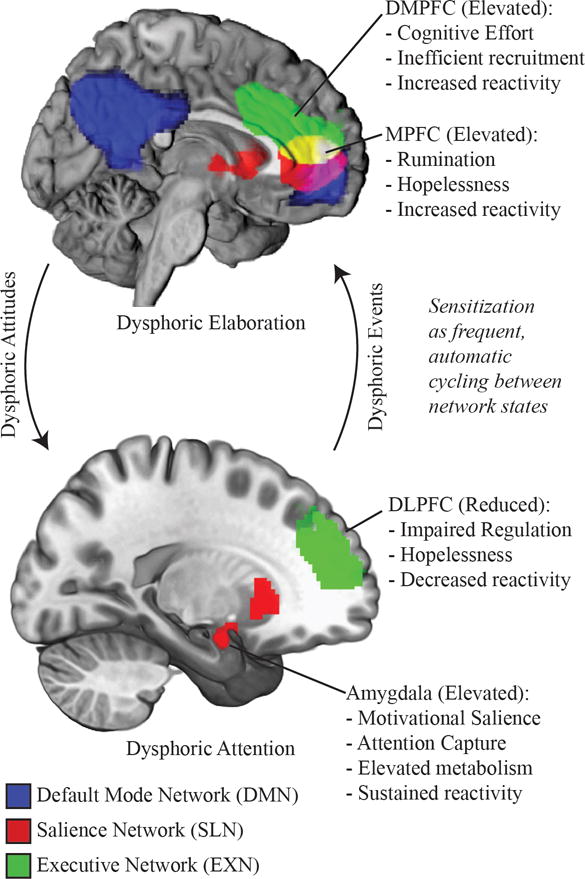
The substantial health burden associated with major depressive disorder (MDD) is a product of both its high prevalence and the significant risk of relapse, recurrence, and chronicity. Establishing recurrence vulnerability factors (VFs) could improve the long-term management of MDD by identifying the need for further intervention in seemingly recovered patients. We present a model of sensitization in depression vulnerability, with an emphasis on the integration of behavioral and neural systems accounts. Evidence suggests that VFs fall into 2 categories: dysphoric attention and dysphoric elaboration. Dysphoric attention is driven by fixation on negative life events, and is characterized behaviorally by reduced executive control, and neurally by elevated activity in the brain's salience network. Dysphoric elaboration is driven by rumination that promotes overgeneral self- and contextual appraisals, and is characterized behaviorally by dysfunctional attitudes, and neurally by elevated connectivity within normally distinct prefrontal brain networks. Although few prospective VF studies exist from which to catalogue a definitive neurobehavioral account, extant data support the value of the proposed 2-factor model. Measuring the continued presence of these 2 VFs during recovery may more accurately identify remitted patients who would benefit from targeted prophylactic intervention.
(PsycINFO Database Record (c) 2015 APA, all rights reserved).
Conflict of interest statement
With regards to the current manuscript, authors NASF, JAI, and AKA have no economic or commercial conflicts of interest to disclose. ZVF discloses commercial interest in Mindfulness-Based Cogntiive Therapy (MBCT), which is mentioned as a therapeutic intervention in the text. ZVF receives commercial support in the form of royalties for the MBCT clinical manual, as well as for leading MBCT facilitator training courses.
Figures
References
-
- Abela JR, Hankin BL. Rumination as a vulnerability factor to depression during the transition from early to middle adolescence: a multiwave longitudinal study. Journal of Abnormal Psychology. 2011;120(2):259–271. - PubMed
-
- Abela JR, Skitch SA. Dysfunctional attitudes, self-esteem, and hassles: Cognitive vulnerability to depression in children of affectively ill parents. Behaviour Research and Therapy. 2007;45(6):1127–1140. - PubMed
-
- Abercrombie HC, Schaefer SM, Larson CL, Oakes TR, Lindgren KA, Holden JE, Davidson RJ. Metabolic rate in the right amygdala predicts negative affect in depressed patients. Neuroreport. 1998;9(14):3301–3307. - PubMed
-
- Abramson L, Metalsky G. The Cognitive Style Questionnaire: Measurement of negative cognitive styles about self and consequences. 1986. Unpublished Manuscript.
MeSH terms
Grants and funding
LinkOut - more resources
Full Text Sources
Other Literature Sources