


Tooth counts through growth in diapsid reptiles: implications for interpreting individual and size-related variation in the fossil record
- PMID: 25689039
- PMCID: PMC4386932
- DOI: 10.1111/joa.12280
Tooth counts through growth in diapsid reptiles: implications for interpreting individual and size-related variation in the fossil record
Abstract
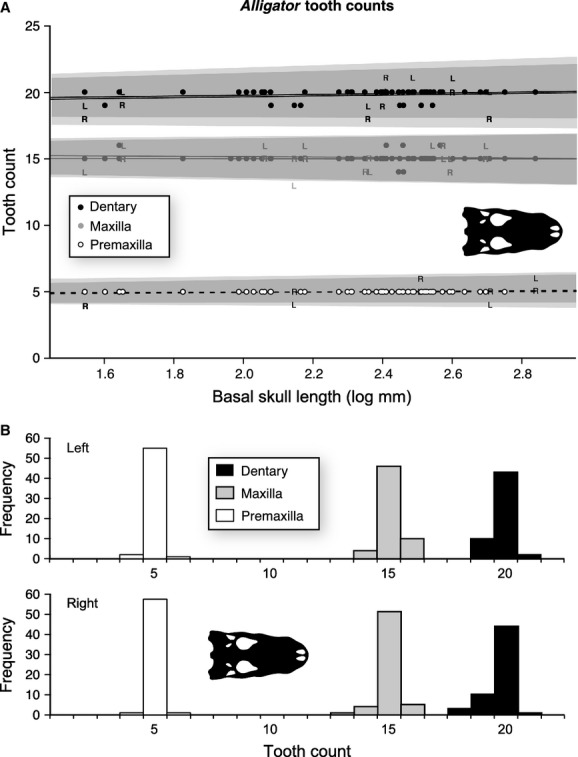
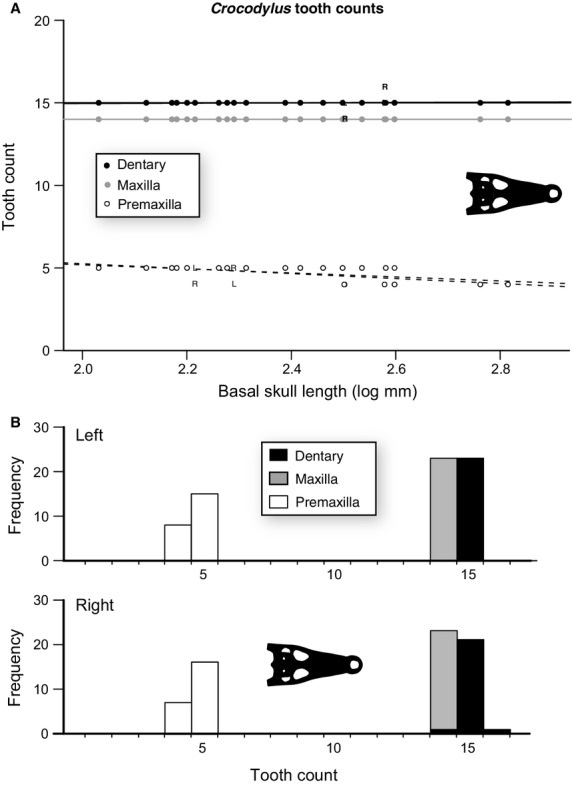
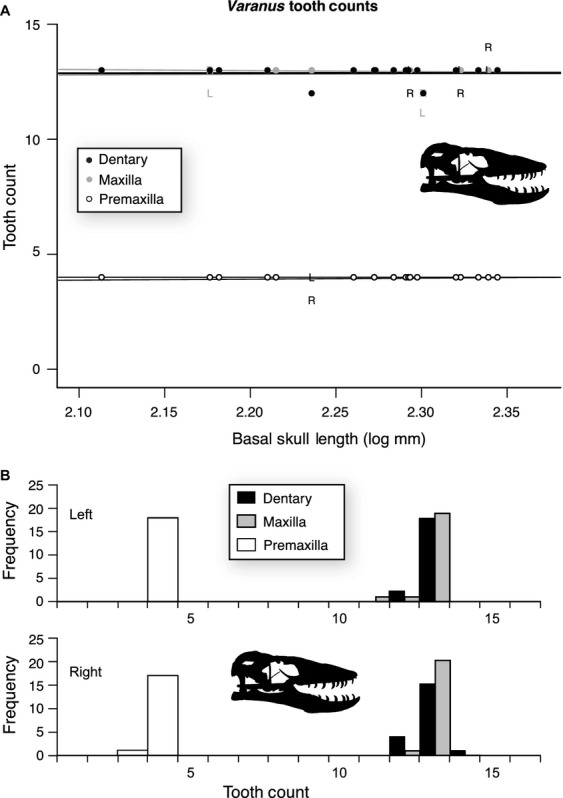
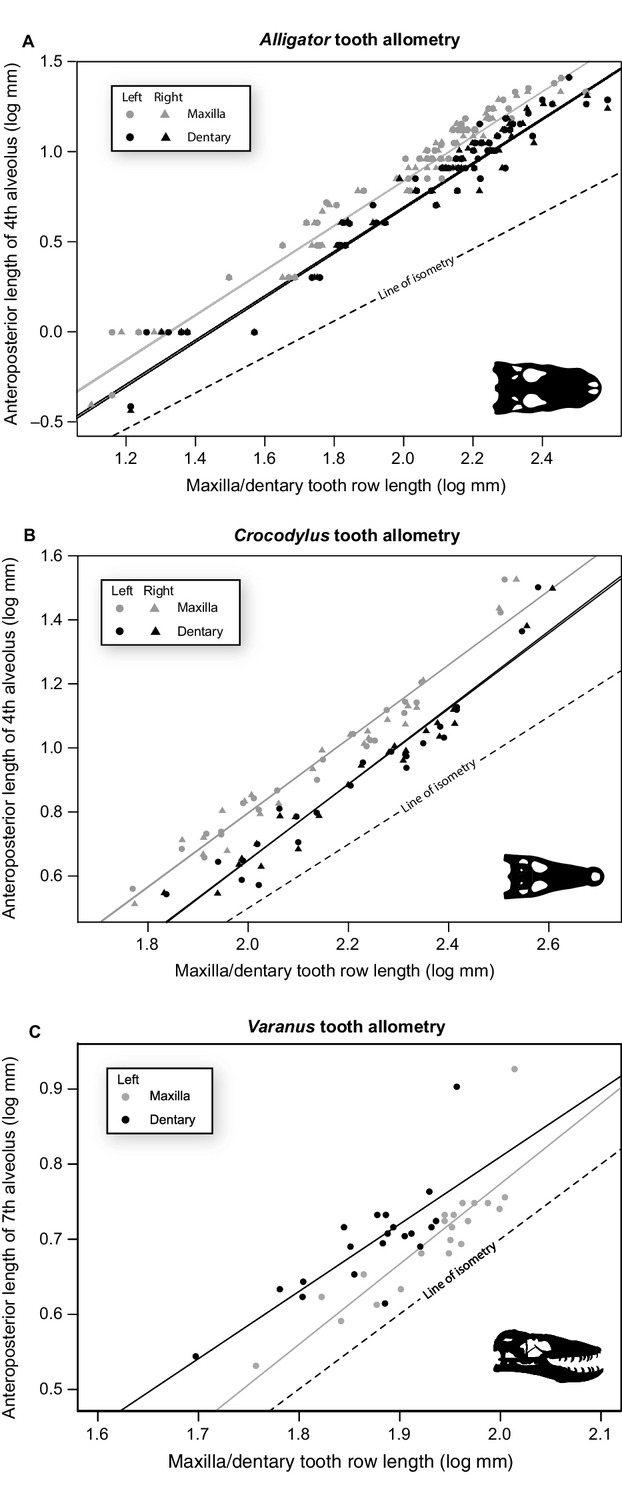
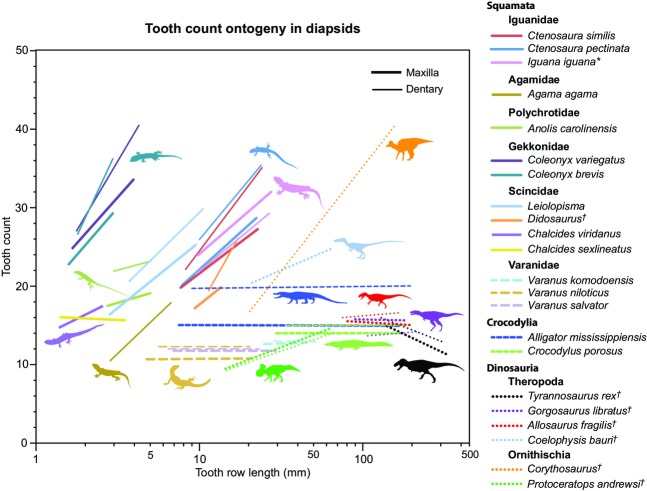
Tooth counts are commonly recorded in fossil diapsid reptiles and have been used for taxonomic and phylogenetic purposes under the assumption that differences in the number of teeth are largely explained by interspecific variation. Although phylogeny is almost certainly one of the greatest factors influencing tooth count, the relative role of intraspecific variation is difficult, and often impossible, to test in the fossil record given the sample sizes available to palaeontologists and, as such, is best investigated using extant models. Intraspecific variation (largely manifested as size-related or ontogenetic variation) in tooth counts has been examined in extant squamates (lizards and snakes) but is poorly understood in archosaurs (crocodylians and dinosaurs). Here, we document tooth count variation in two species of extant crocodylians (Alligator mississippiensis and Crocodylus porosus) as well as a large varanid lizard (Varanus komodoensis). We test the hypothesis that variation in tooth count is driven primarily by growth and thus predict significant correlations between tooth count and size, as well as differences in the frequency of deviation from the modal tooth count in the premaxilla, maxilla, and dentary. In addition to tooth counts, we also document tooth allometry in each species and compare these results with tooth count change through growth. Results reveal no correlation of tooth count with size in any element of any species examined here, with the exception of the premaxilla of C. porosus, which shows the loss of one tooth position. Based on the taxa examined here, we reject the hypothesis, as it is evident that variation in tooth count is not always significantly correlated with growth. However, growth trajectories of smaller reptilian taxa show increases in tooth counts and, although current samples are small, suggest potential correlates between tooth count trajectories and adult size. Nevertheless, interspecific variation in growth patterns underscores the importance of considering and understanding growth when constructing taxonomic and phylogenetic characters, in particular for fossil taxa where ontogenetic patterns are difficult to reconstruct.
Keywords: Alligator; Crocodylus; Diapsida; Dinosauria; Reptilia; Varanus; allometry; dentition.
© 2015 Anatomical Society.
Figures
References
-
- Arnold EN. Recently extinct reptile populations from Mauritius and Reunion, Indian Ocean. J Zool. 1980;191:33–47.
-
- Benton MJ. Tooth form, growth, and function in Triassic rhynchosaurs (Reptilia, Diapsida) Palaeontology. 1984;27:737–776.
-
- Carrano MT, Benson RB, Sampson SD. The phylogeny of Tetanurae (Dinosauria: Theropoda) J Syst Paleontol. 2012;10:211–300.
-
- Colbert EH. Variation in Coelophysis bauri. In: Carpenter K, Currie P, editors. Dinosaur Systematics: Approaches and Perspectives. Cambridge: Cambridge University Press; 1990. pp. 81–90. )
Publication types
MeSH terms
LinkOut - more resources
Full Text Sources
Other Literature Sources
