Quality of relationships with parents and friends in adolescence predicts metabolic risk in young adulthood
- PMID: 25689301
- PMCID: PMC4537843
- DOI: 10.1037/hea0000213
Quality of relationships with parents and friends in adolescence predicts metabolic risk in young adulthood
Abstract
Objective: This study was designed to examine whether family and peer relationships in adolescence predict the emergence of metabolic risk factors in young adulthood.
Method: Participants from a large, nationally representative cohort study (N = 11,617 for these analyses) reported on their relationship experiences with parents and close friends during adolescence. Fourteen years later, interviewers collected blood samples, as well as anthropometric and blood pressure measurements. Blood samples were analyzed for HbA1c.
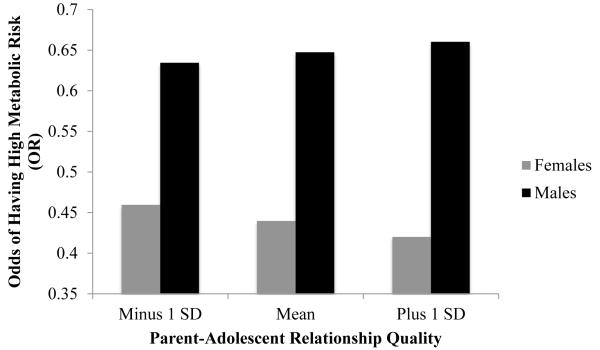
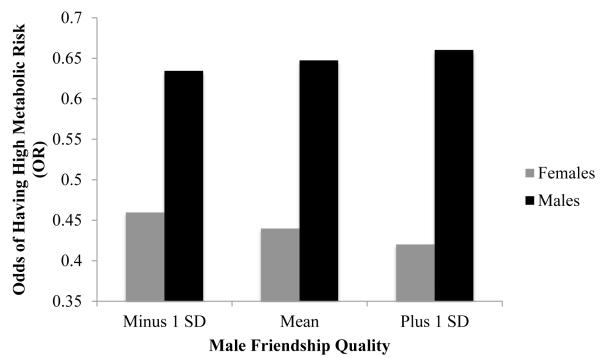
Results: Ordered logistic regressions revealed that for females, supportive parent-child relationships and close male friendships in adolescence were associated with reduced odds of having elevated metabolic risk markers in young adulthood. These effects remained significant even after controlling for baseline measures of body mass index (BMI) and health and demographic covariates. The protective effects of close relationships were not significant for males, however. Exploratory analyses with 2-parent families revealed that supportive father-child relationships were especially protective for females.
Conclusions: These findings suggest that, for females, close and supportive relationships with parents and male friends in adolescence may reduce the risk of metabolic dysregulation in adulthood.
(c) 2015 APA, all rights reserved).
Figures
References
-
- Adam EK, Chyu L, Hoyt L, Doane L, Boisjoly J, Duncan G, Chase-Lansdale L, McDade T. Adverse adolescent relationship histories and young adult health: Cumulative effects of loneliness, low parental support, relationship instability, intimate partner violence and loss. Journal of Adolescent Health. 2011;49:278–286. - PMC - PubMed
-
- Adler NE, Ostrove JM. Socioeconomic status and health: What we know and what we don’t. Annals of the New York Academy of Sciences. 1999;896:3–15. doi:10.1111/j.1749-6632.1999.tb08101.x. - PubMed
-
- Almquist Y. Peer status in school and adult disease risk: A 30-year follow-up study of disease-specific morbidity in a Stockholm cohort. Journal of Epidemiology and Community Health. 2009;63:1028–1034. doi:10.1136/jech.2009.088377. - PubMed
-
- Brownstein N, Kalsbeek WD, Tabor J, Entzel P, Daza E, Harris KM. Non-response in Wave IV of the National Longitudinal Study of Adolescent Health. 2010 Retrieved from the Add Health website: http://www.cpc.unc.edu/projects/addhealth/data/guides/W4_nonresponse.pdf.
Publication types
MeSH terms
Grants and funding
LinkOut - more resources
Full Text Sources
Other Literature Sources
Medical