


Effects of two dietary fibers as part of ready-to-eat cereal (RTEC) breakfasts on perceived appetite and gut hormones in overweight women
- PMID: 25689743
- PMCID: PMC4344586
- DOI: 10.3390/nu7021245
Effects of two dietary fibers as part of ready-to-eat cereal (RTEC) breakfasts on perceived appetite and gut hormones in overweight women
Abstract
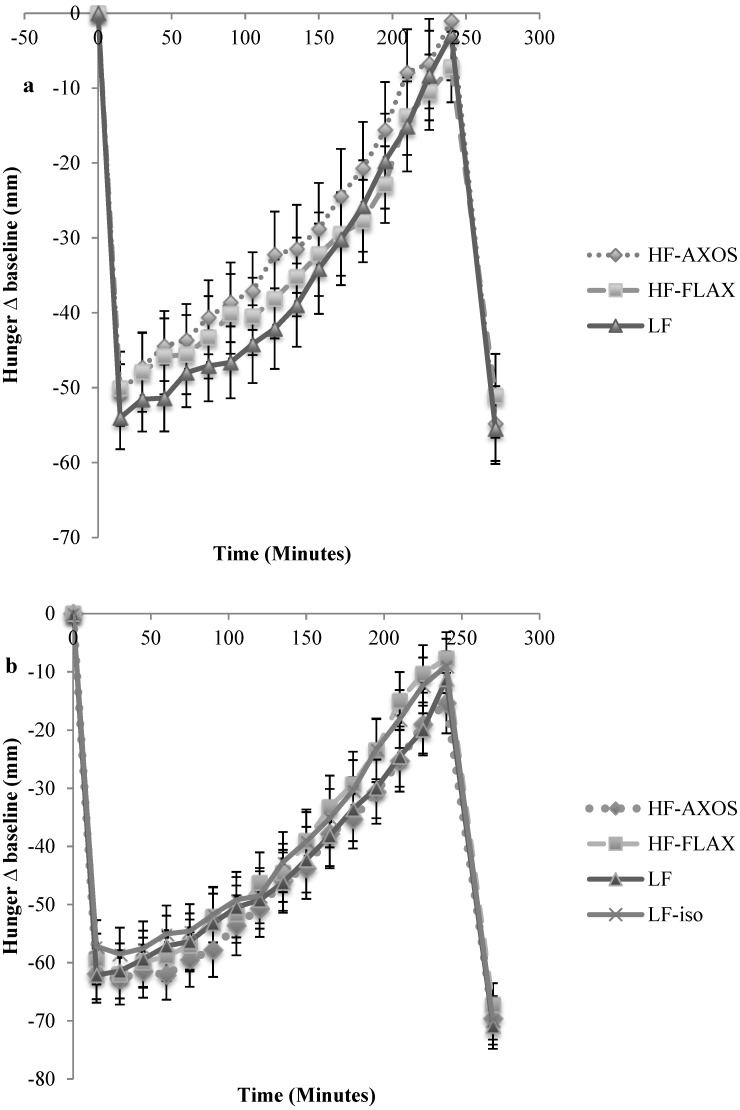
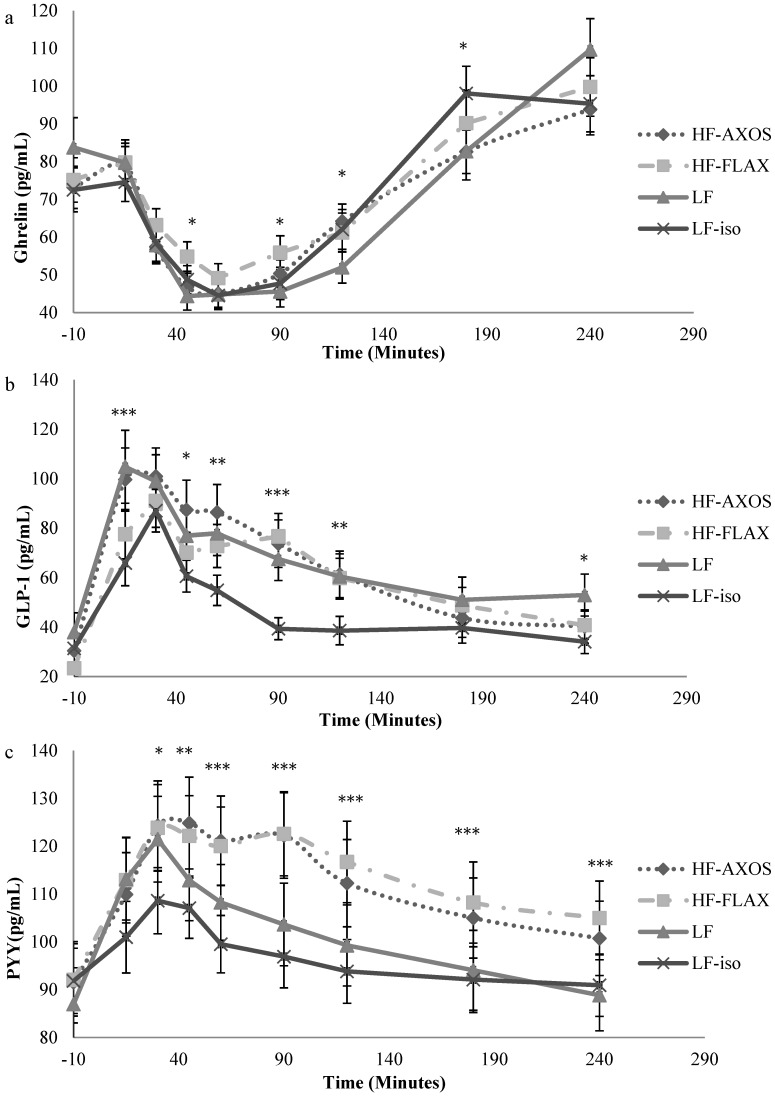
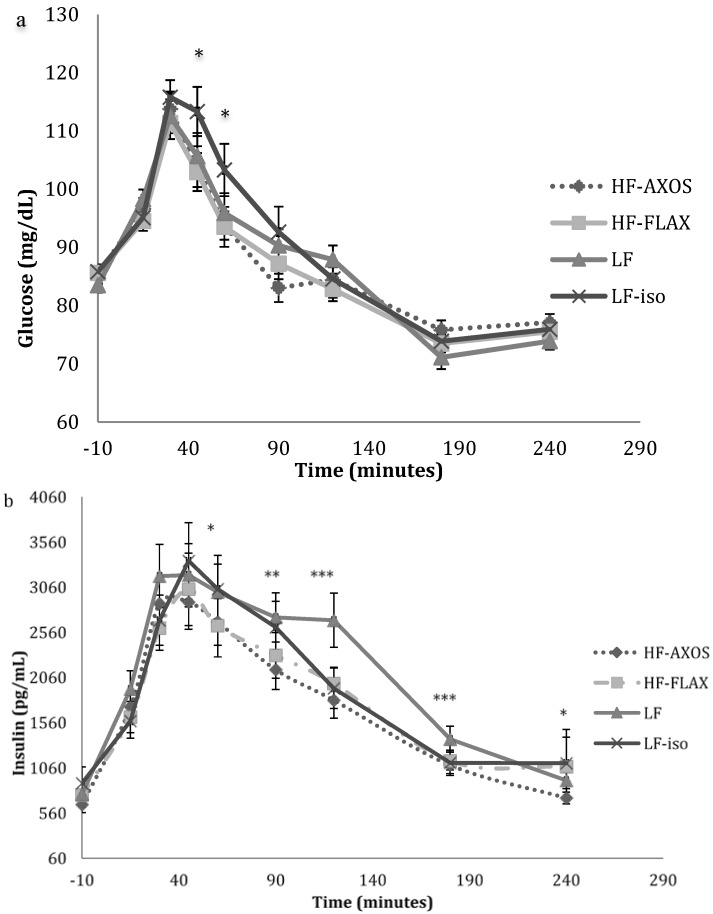
The effects of an enzyme-hydrolyzed arabinoxylan from wheat (AXOS) versus an intact arabinoxylan from flax (FLAX) added to a ready-to-eat cereal (RTEC) on the postprandial appetitive, hormonal, and metabolic responses in overweight women (BMI 25.0-29.9 kg/m2) were evaluated. Subsequent meal energy intake was also assessed. Two randomized, double-blind, crossover design studies were completed. For trial 1, the participants consumed the following RTEC breakfast, matched for total weight and varied in energy content: low-fiber (LF, 4 g); high-fiber (HF, 15 g) as either AXOS or FLAX. For trial 2, the participants consumed LF, HF-AXOS, and HF-FLAX RTECs but also consumed another LF breakfast that was isocaloric (LF-iso) to that of the HF breakfasts. Perceived appetite and blood samples (trial 2 only) were assessed before and after breakfast. An ad libitum lunch was offered 4 h post-breakfast. No differences in postprandial appetite responses were observed among any breakfasts in either trial. The HF-AXOS and HF-FLAX led to increased postprandial GLP-1 and peptide YY (PYY) concentrations vs. LF-iso. No differences were observed in lunch meal energy intake among breakfast meals in either trial. Collectively, these data suggest that 15 g of low molecular weight fiber added to RTECs did not affect perceived appetite or subsequent energy intake despite differences in satiety hormone signaling in overweight females.
Figures
References
-
- Blundell J., Burley V. Satiation, satiety and the action of fiber on food intake. Int. J. Obes. 1987;11:9–25. - PubMed
-
- US Department of Agriculture Agricultural Research Service . What We Eat in America NHANES 2007–2008. US Department of Agriculture Agricultural Research Service; Beltsville, MD, USA: 2010.
-
- Institute of Medicine of the National Academies . Dietary Reference Intakes for Energy, Carbohydrates, Fiber, Fat, Fatty Acids, Cholesterol, Protein, and Amino Acids. The National Academies Press; Washington, DC, USA: 2005.
Publication types
MeSH terms
Substances
LinkOut - more resources
Full Text Sources
Other Literature Sources
Medical
Research Materials
Miscellaneous
