Recruitment strategies and the retention of obese urban racial/ethnic minority adolescents in clinical trials: the FIT families project, Michigan, 2010-2014
- PMID: 25695260
- PMCID: PMC4335615
- DOI: 10.5888/pcd12.140409
Recruitment strategies and the retention of obese urban racial/ethnic minority adolescents in clinical trials: the FIT families project, Michigan, 2010-2014
Abstract
Introduction: The successful recruitment and retention of participants is integral to the translation of research findings. We examined the recruitment and retention rates of racial/ethnic minority adolescents at a center involved in the National Institutes of Health Obesity Research for Behavioral Intervention Trials (ORBIT) initiative by the 3 recruitment strategies used: clinic, informatics, and community.
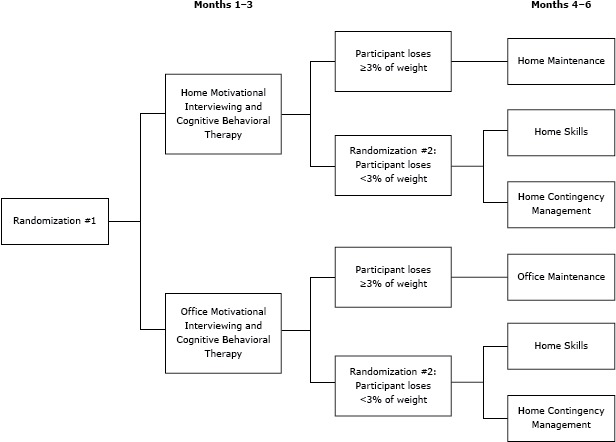
Methods: During the 9-month study, 186 family dyads, each composed of an obese African American adolescent and a caregiver, enrolled in a 6-month weight-loss intervention, a sequential multiple assignment randomized trial. We compared recruitment and retention rates by recruitment strategy and examined whether recruitment strategy was related to dyad baseline characteristics.
Results: Of the 186 enrolled families, 110 (59.1%) were recruited through clinics, 53 (28.5%) through informatics, and 23 (12.4%) through community. Of those recruited through community, 40.4% enrolled in the study, compared with 32.7% through clinics and 8.2% through informatics. Active refusal rate was 3%. Of the 1,036 families identified for the study, 402 passively refused to participate: 290 (45.1%) identified through informatics, 17 (29.8%) through community, and 95 (28.3%) through clinics. Recruitment strategy was not related to the age of the adolescent, adolescent comorbidities, body mass index of the adolescent or caregiver, income or education of the caregiver, or retention rates at 3 months, 7 months, or 9 months. Study retention rate was 87.8%.
Conclusion: Using multiple recruitment strategies is beneficial when working with racial/ethnic minority adolescents, and each strategy can yield good retention. Research affiliated with health care systems would benefit from the continued specification, refinement, and dissemination of these strategies.
Trial registration: ClinicalTrials.gov NCT01350531.
Figures
References
-
- Khan LK, Sobush K, Keener D, Goodman K, Lowry A, Kakietek J, et al. ; Centers for Disease Control and Prevention. Recommended community strategies and measurements to prevent obesity in the United States. MMWR Recomm Rep 2009;58(RR-7):1–26. - PubMed
-
- Let’s Move. http://www.letsmove.gov/. Accessed August 1, 2014.
-
- National Collaborative on Childhood Obesity Research (NCCOR). http://www.nccor.org/. Accessed August 1, 2014.
Publication types
MeSH terms
Associated data
Grants and funding
LinkOut - more resources
Full Text Sources
Other Literature Sources
Medical