


Acute gastrointestinal illness in two Inuit communities: burden of illness in Rigolet and Iqaluit, Canada
- PMID: 25697261
- PMCID: PMC9151065
- DOI: 10.1017/S0950268814003744
Acute gastrointestinal illness in two Inuit communities: burden of illness in Rigolet and Iqaluit, Canada
Abstract
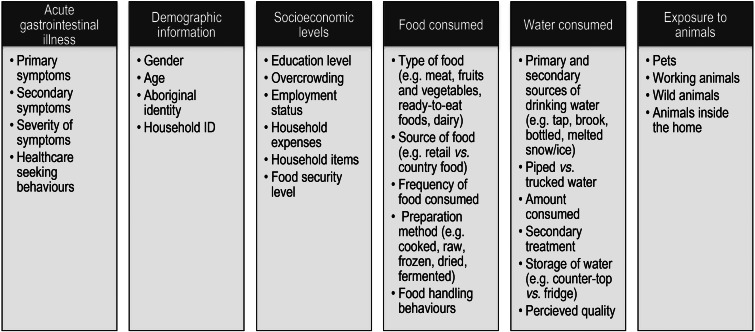
Food- and waterborne disease is thought to be high in some Canadian Indigenous communities; however, the burden of acute gastrointestinal illness (AGI) is not well understood due to limited availability and quality of surveillance data. This study estimated the burden of community-level self-reported AGI in the Inuit communities of Rigolet, Nunatsiavut, and Iqaluit, Nunavut, Canada. Cross-sectional retrospective surveys captured information on AGI and potential environmental risk factors. Multivariable logistic regression models identified potential AGI risk factors. The annual incidence of AGI ranged from 2·9-3·9 cases/person per year in Rigolet and Iqaluit. In Rigolet, increased spending on obtaining country foods, a homeless person in the house, not visiting a cabin recently, exposure to puppies, and alternative sources of drinking water were associated with increased odds of AGI. In Iqaluit, eating country fish often, exposure to cats, employment status of the person responsible for food preparation, not washing the countertop with soap after preparing meat, a homeless person in the house, and overcrowding were associated with increased odds of AGI. The results highlight the need for systematic data collection to better understand and support previously anecdotal indications of high AGI incidence, as well as insights into unique AGI environmental risk factors in Indigenous populations.
Keywords: Aboriginal health; Inuit; acute gastrointestinal illness; burden of illness; foodborne disease; waterborne disease.
Figures


References
-
- WHO. Global health risk summary tables. Geneva, Switzerland: Health Statistics and Informatics Department, World Health Organization, 2009.
-
- Costello A, et al. Managing the health effects of climate change. Lancet 2009; 373: 1693–1733. - PubMed
Publication types
MeSH terms
Grants and funding
LinkOut - more resources
Full Text Sources
Medical
Miscellaneous
