. 2015 Apr 1;284(1):79-91.
doi: 10.1016/j.taap.2015.02.009. Epub 2015 Feb 16.

Permanent uncoupling of male-specific CYP2C11 transcription/translation by perinatal glutamate

Affiliations

Permanent uncoupling of male-specific CYP2C11 transcription/translation by perinatal glutamate

Sarmistha Banerjee et al. Toxicol Appl Pharmacol. .

Abstract

Perinatal exposure of rats and mice to the typically reported 4mg/g bd wt dose of monosodium glutamate (MSG) results in a complete block in GH secretion as well as obesity, growth retardation and a profound suppression of several cytochrome P450s, including CYP2C11, the predominant male-specific isoform--all irreversible effects. In contrast, we have found that a lower dose of the food additive, 2mg/g bd wt on alternate days for the first 9days of life results in a transient neonatal depletion of plasma GH, a subsequent permanent overexpression of CYP2C11 as well as subnormal (mini) GH pulse amplitudes in an otherwise normal adult masculine episodic GH profile. The overexpressed CYP2C11 was characterized by a 250% increase in mRNA, but only a 40 to 50% increase in CYP2C11 protein and its catalytic activity. Using freshly isolated hepatocytes as well as primary cultures exposed to the masculine-like episodic GH profile, we observed normal induction, activation, nuclear translocation and binding to the CYP2C11 promoter of the GH-dependent signal transducers required for CYP2C11 transcription. The disproportionately lower expression levels of CYP2C11 protein were associated with dramatically high expression levels of an aberrant, presumably nontranslated CYP2C11 mRNA, a 200% increase in CYP2C11 ubiquitination and a 70-80% decline in miRNAs associated, at normal levels, with a suppression of CYP2C expression. Whereas the GH-responsiveness of CYP2C7 and CYP2C6 as well as albumin was normal in the MSG-derived hepatocytes, the abnormal expression of CYP2C11 was permanent and irreversible.

Keywords: CYP2C11; Growth hormone; MSG; SOCS2; STAT5b; Sexual dimorphism.


Figures

Fig. 1
Fig. 1
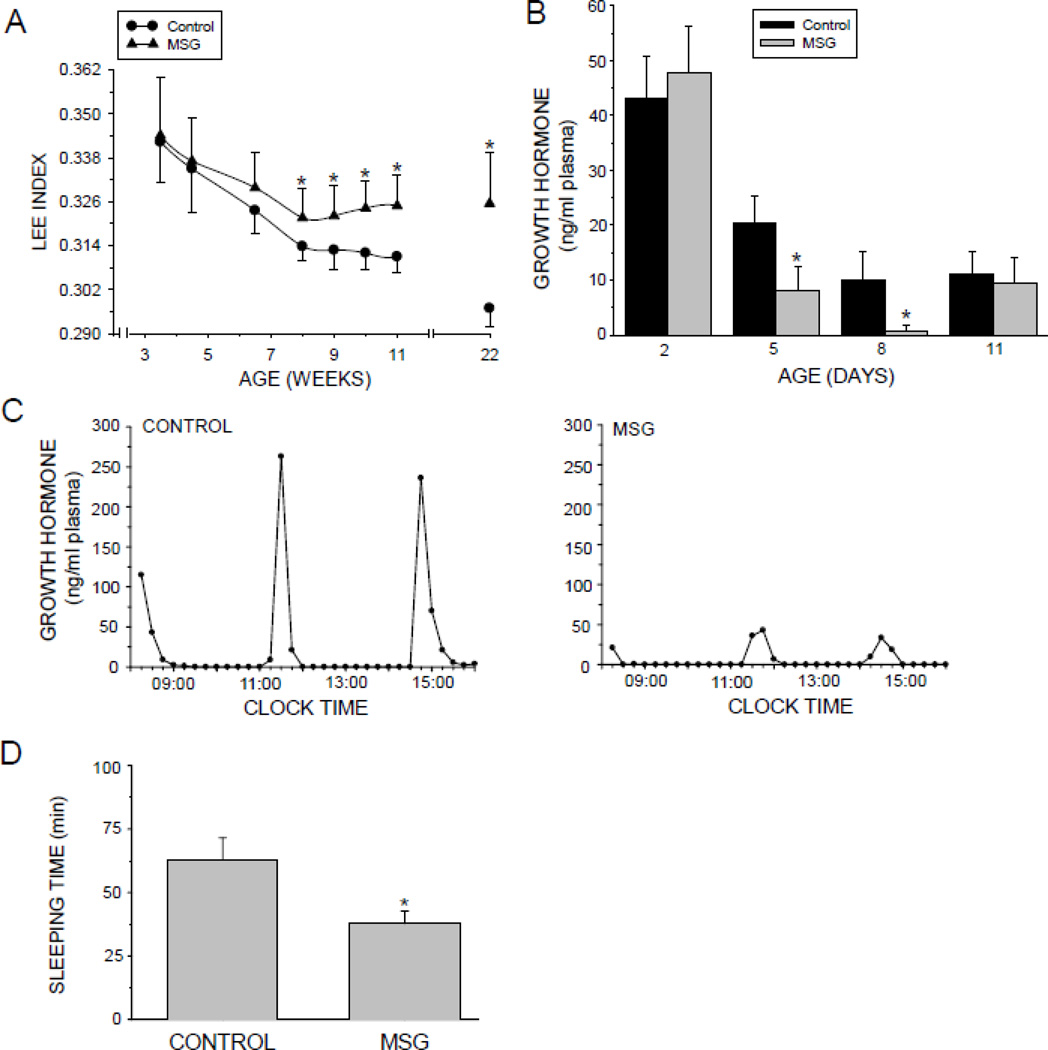
Developmental effects of neonatal MSG on obesity, growth hormone secretion and drug action. Neonatally-treated pups were injected with either MSG (2mg/g bd wt) or equivalent doses of vehicle (Control) on postnatal days 1, 3, 5, 7, and 9. A. Post-weaning maturational Lee index profile of male rats treated neonatally with MSG. Results are presented as the mean ±SD of at least 10 rats/data point. *P<0.01 vs controls. B. Plasma growth hormone of male rats pups being treated with either MSG or vehicle. Results are presented as the mean ±SD of at least 7 pups/growp. * P<0.01 vs Control pups. C. Plasma growth hormone profiles in individual, representative adult male rats that were either neonatally administered MSG or vehicle. Plasma levels of circulating growth hormone were obtained from individual undisturbed catheterized rats for 8 continuous hours at 15 min intervals. Similar results were obtained from 4 to 5 additional animals in each treatment group. D. Hexobarbital-induced sleeping times in adult male rats that were either neonatally administered MSG or vehicle. Sleeping times were determined following an ip injection of hexobarbital (150mg/kg bd wt). Results are presented as the means ±SD of at least 10 rats/group. *P<0.01 vs Control rats.
Fig. 2
Fig. 2
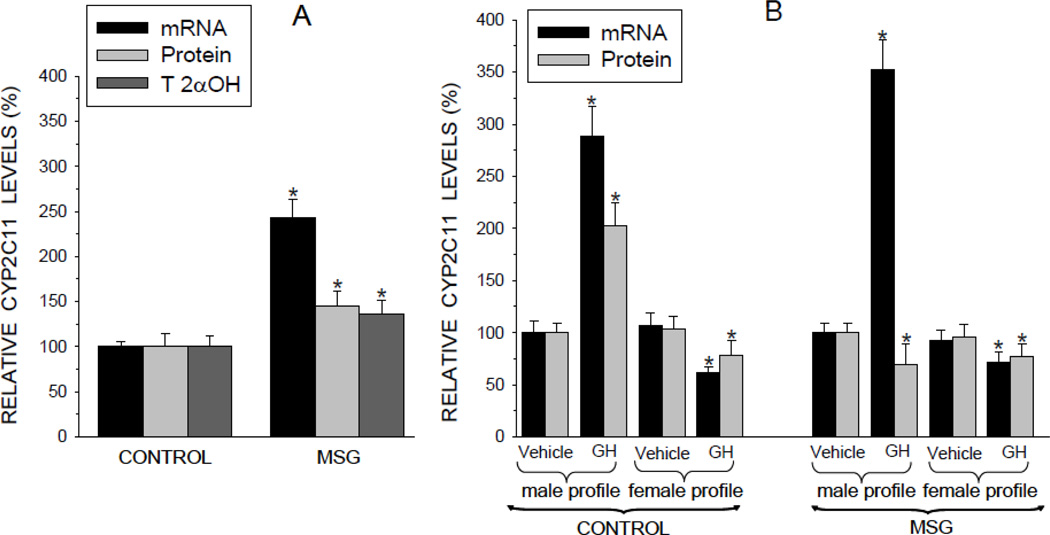
Relative expression levels [mRNA, protein and testosterone 2α-hydroxylase (T 2αOH) catalytic activity] of the paramount male-specific CYP2C11 isoform in hepatocytes from adult male rats that were either neonatally administered MSG or vehicle. Neonatally-treated pups were injected with either MSG (2mg/g bd wt) or equivalent doses of vehicle (Control) on postnatal days 1, 3, 5, 7, and 9. A. CYP2C11 levels in freshly isolated preplated hepatocytes. Results are presented as a percentage of mRNA or protein in hepatocytes from control rats arbitrarily designated 100%. Values are means ±SD of at least 7 rats/data point. *P<0.01 vs control rats. B. Hepatocytes from the same animal were exposed to either the episodic male-like GH profile or the hormone’s vehicle, or the continuous female-like GH profile or vehicle for 6 days. Results are presented as a percentage of mRNA or protein in hepatocytes exposed to vehicle administered in an episodic male-like profile, arbitrarily designated 100%. Values are means ±SD of at least 7 rats/data point. *P<0.01 vs hepatocytes exposed to the episodic male-like vehicle profile from rats of the same neonatal treatment, i.e. Control or MSG.
Fig. 3
Fig. 3
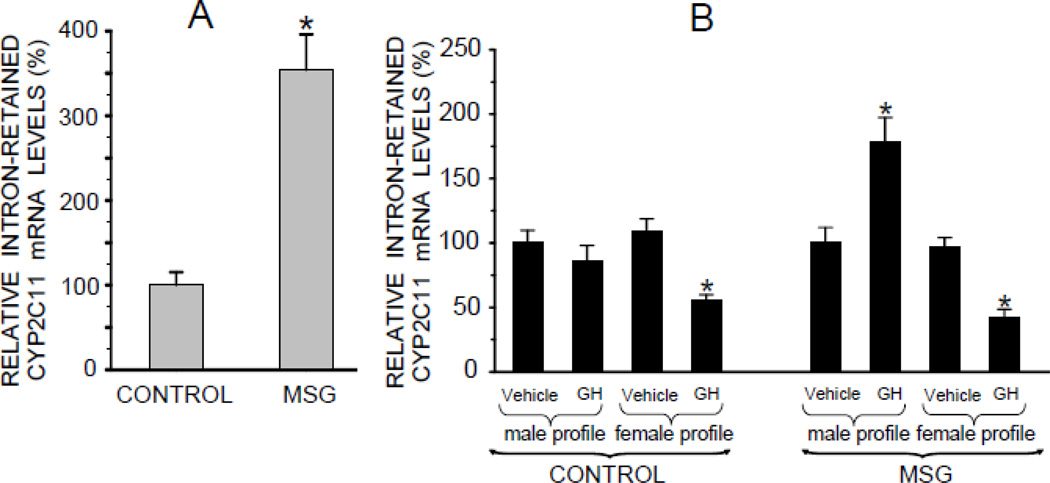
Relative mRNA expression levels of an intron-retained male-specific CYP2C11 isoform in hepatocytes from adult male rats that were either neonatally administered MSG or vehicle. Neonatally-treated pups were injected with either MSG (2mg/g bd wt) or equivalent doses of vehicle (Control) on postnatal days 1, 3, 5, 7 and 9. A. Intron-retained CYP2C11 levels in freshly isolated preplated hepatocytes. Results are presented as a percentage of mRNA in hepatocytes from control rats arbitrarily designated 100%. Values are means ±SD of at least 7 rats/data point. *P<0.01 vs control rats. B. Hepatocytes from the same animal were exposed to either the episodic male-like GH profile or the hormone’s vehicle, or the continuous female-like GH profile or vehicle for 6 days. Results are presented as a percentage of mRNA in hepatocytes exposed to vehicle administered in an episodic male-like profile, arbitrarily designated 100%. Values are means ±SD of at least 7 rats/data point. *P<0.01 vs hepatocytes exposed to the episodic male-like vehicle profile from rats of the same neonatal treatment, i.e. Control or MSG.
Fig. 4
Fig. 4
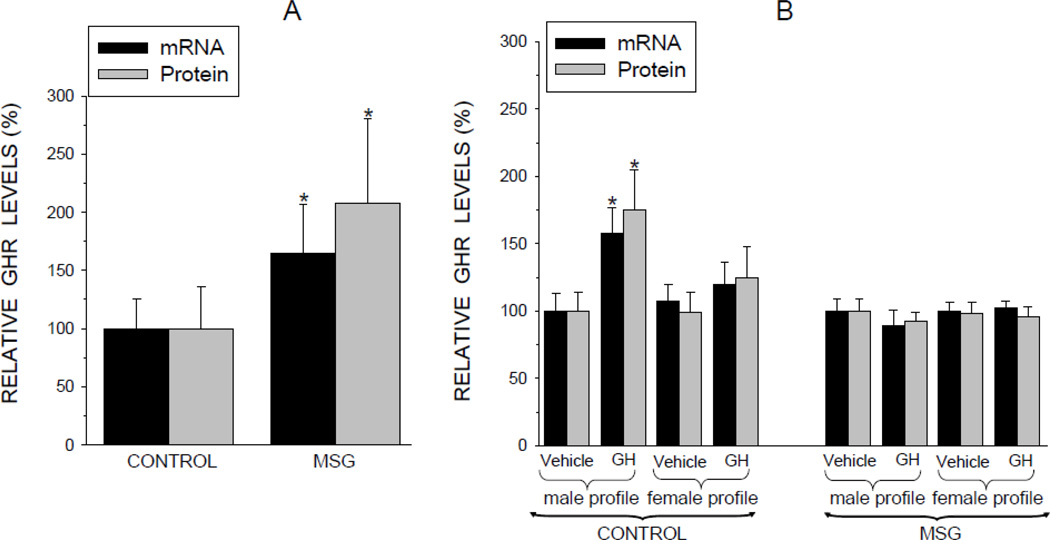
Relative expression levels (mRNA and protein) of growth hormone receptor (GHR) in hepatocytes from adult male rats that were either neonatally administered MSG or vehicle. Neonatally-treated pups were injected with either MSG (2mg/g bd wt) or equivalent doses of vehicle (Control) on postnatal days 1, 3, 5, 7 and 9. A. GHR levels in freshly isolated preplated hepatocytes. Results are presented as a percentage of mRNA or protein in hepatocytes from control rats arbitrarily designated 100%. Values are means ±SD of at least 7 rats/data point. *P<0.01 vs control rats. B. Hepatocytes from the same animal were exposed to either the episodic male-like profile or the hormone’s vehicle, or the continuous female-like GH profile or vehicle for 6 days. Results are presented as a percentage of mRNA or protein in hepatocytes exposed to vehicle administered in an episodic male-like profile arbitrarily designated 100%. Values are means ±SD of at least 7 rats/data point. *P<0.01 vs hepatocytes exposed to the episodic male-like vehicle profile from rats of the same neonatal treatment, i.e. Control or MSG.
Fig. 5
Fig. 5
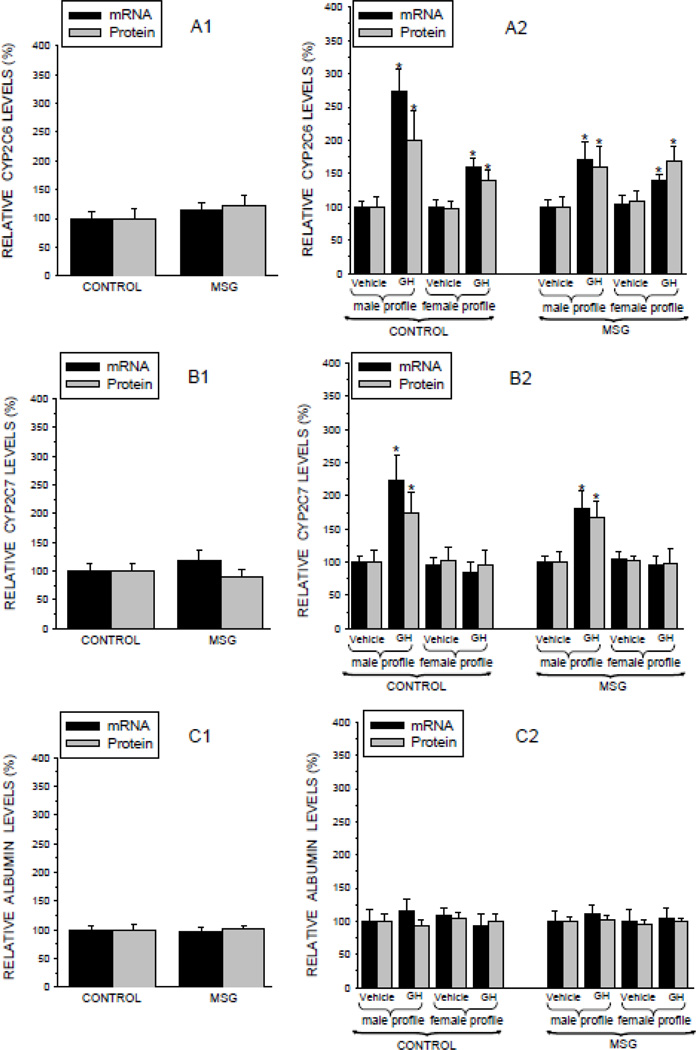
Relative expression levels (mRNA and protein) of two CYP isoforms and albumin in hepatocytes from adult male rats that were either neonatally administered MSG or vehicle. Neonatally-treated pups were injected with either MSG (2mg/g bd wt) or equivalent doses of vehicle (Control) on postnatal days 1, 3, 5, 7 and 9. Female-predominant CYP2C6 (A1), female-predominant CYP2C7 (B1), and sex-independent albumin (C1) levels in freshly isolated preplated hepatocytes. Results are presented as a percentage of mRNA or protein in hepatocytes from control rats arbitrarily designated 100%. Values are means ±SD of at least 7 rats/data point. *P<0.01 vs control rats. Hepatocytes from the same animal were exposed to either the episodic male-like GH profile or the hormone’s vehicle, or the continuous female like-GH profile or vehicle for 6 days. CYP2C6 (A2), CYP2C7 (B2) and albumin (C2) results are presented as a percentage of mRNA or protein in hepatocytes exposed to vehicle administered in an episodic male-like profile arbitrarily designated 100%. Values are means ±SD of at least 7 rats/data point. *P<0.01 vs hepatocytes exposed to the episodic male-like vehicle profile from rats of the same neonatal treatment, i.e. Control or MSG.
Fig. 6
Fig. 6
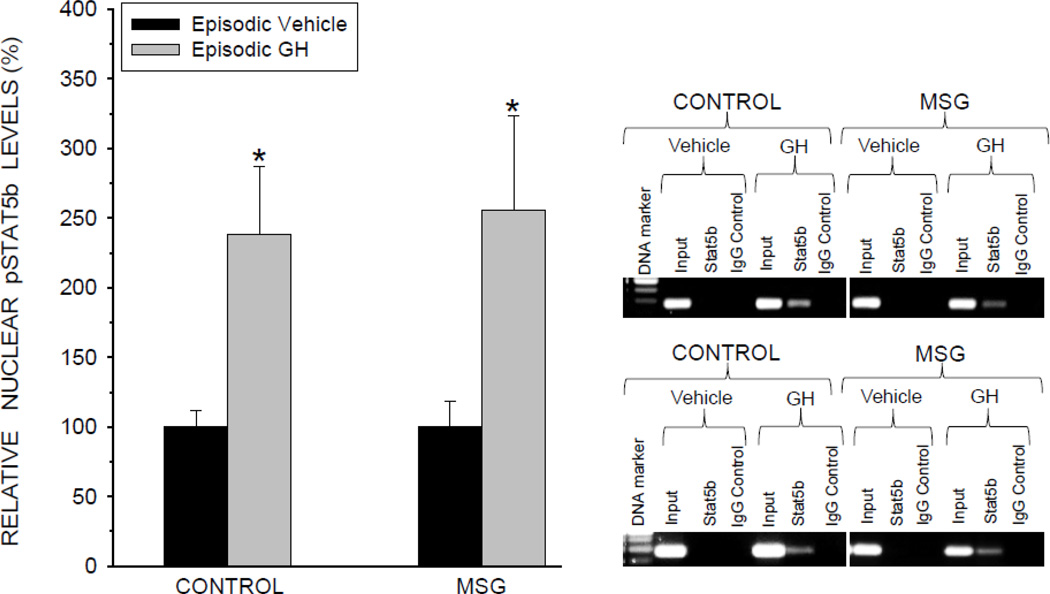
Nuclear levels of activated signal transducers and activators of transcription (pSTAT5b) in cultured primary hepatocytes derived from male rats that were either neonatally administered MSG or vehicle. Neonatally-treated pups were injected either with MSG (2mg/g bd wt) or equivalent doses of vehicle (Control) on postnatal days 1, 3, 5, 7 and 9. A. Hepatocytes from the same animal were exposed to either the episodic male-like GH profile or the episodic profile containing GH vehicle alone for 6 days. Results are presented as a percentage of nuclear pSTAT5b of hepatocytes from Control treated rats exposed to the episodic vehicle profile arbitrarily designated 100%. Values are means ±SD of at least 5 rats/data point. *P<0.01 vs hepatocytes exposed to the episodic vehicle profile from rats of the same pre-adult treatment, i.e. Control or MSG. Insert: Representative ChIP blots demonstrating episodic GH regulation of pSTAT5b binding to the CYP2C11 promoter in hepatocytes derived from adult male rats neonatally treated with either MSG or vehicle (Control). As described above, the cells were exposed to either the episodic male-like GH profile or the vehicle containing profile. ChIP assays were performed on 5 rats of each treatment group with the same results as that presented in the representative blots.
Fig. 7
Fig. 7
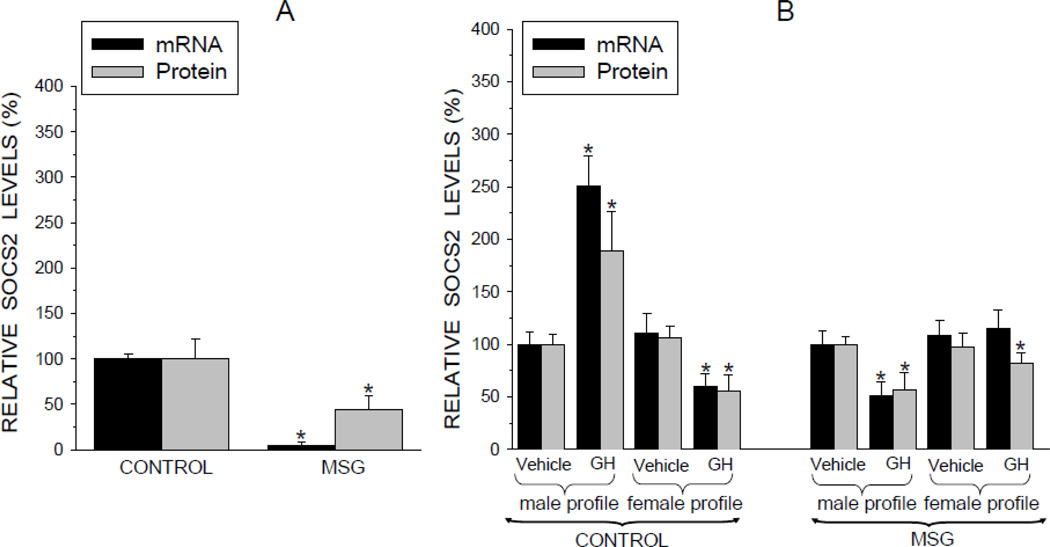
Relative expression levels (mRNA and protein) of suppressors of cytokine signaling 2 (SOCS2) in hepatocytes from adult male rats that were either neonatally administered MSG or vehicle. Neonatally-treated pup were injected with either MSG (2mg/g bd wt) or equivalent doses of vehicle (Control) on postnatal days 1, 3, 5, 7 and 9. A. SOCS2 levels in freshly isolated preplated hepatocytes. Results are presented as a percentage of mRNA or protein in hepatocytes from control rats arbitrarily designated 100%. Values are means ±SD of at least 7 rats/data point. *P<0.01 vs control rats. B. Hepatocytes from the same animal were exposed to either the episodic male-like GH profile or the hormone’s vehicle, or the continuous female-like GH profile or vehicle for 6 days. Results are presented as a percentage of mRNA or protein in hepatocytes exposed to vehicle administered in an episodic male-like profile arbitrarily designated 100%. Values are means ±SD of at least 7 rats/data point. *P<0.01 vs hepatocytes exposed to the episodic male-like vehicle profile from rats of the same neonatal treatment, i.e. Control or MSG.
Fig. 8
Fig. 8
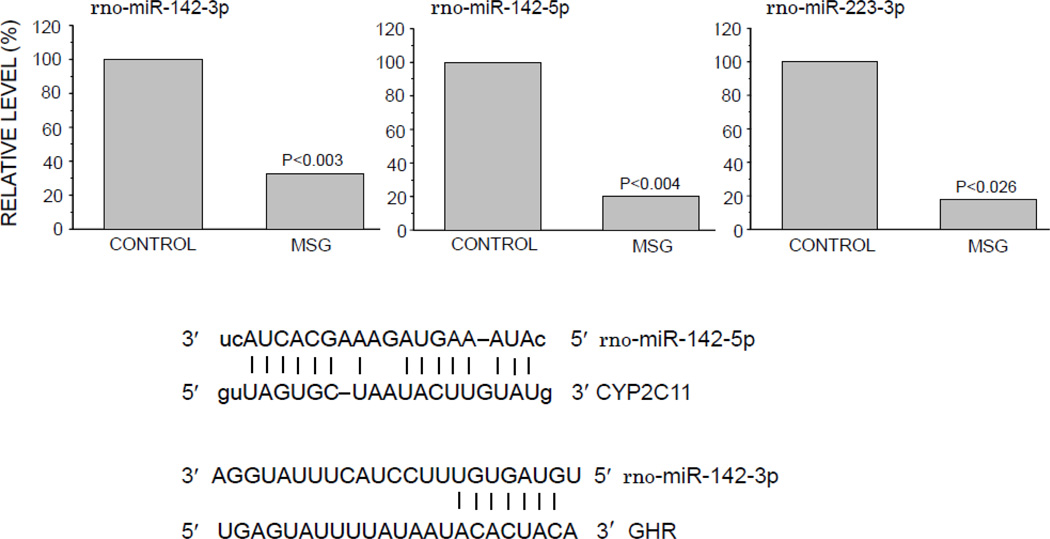
Relative expression levels of 3 microRNAs and their complementary sites in the 3’-UTR of CYP2C11 and rat growth hormone receptor in freshly isolated preplated hepatocytes from adult male rats that were either neonatally administered MSG or vehicle. Neonatally-treated pups were injected with either MSG (2mg/g bd wt) or equivalent doses of vehicle (control) on postnatal days 1, 3, 5, 7 and 9. Results are presented as a percentage of microRNA in hepatocytes from control rats arbitrarily designated 100%. Values are means of at least 3 rats/data point.
Fig. 9
Fig. 9
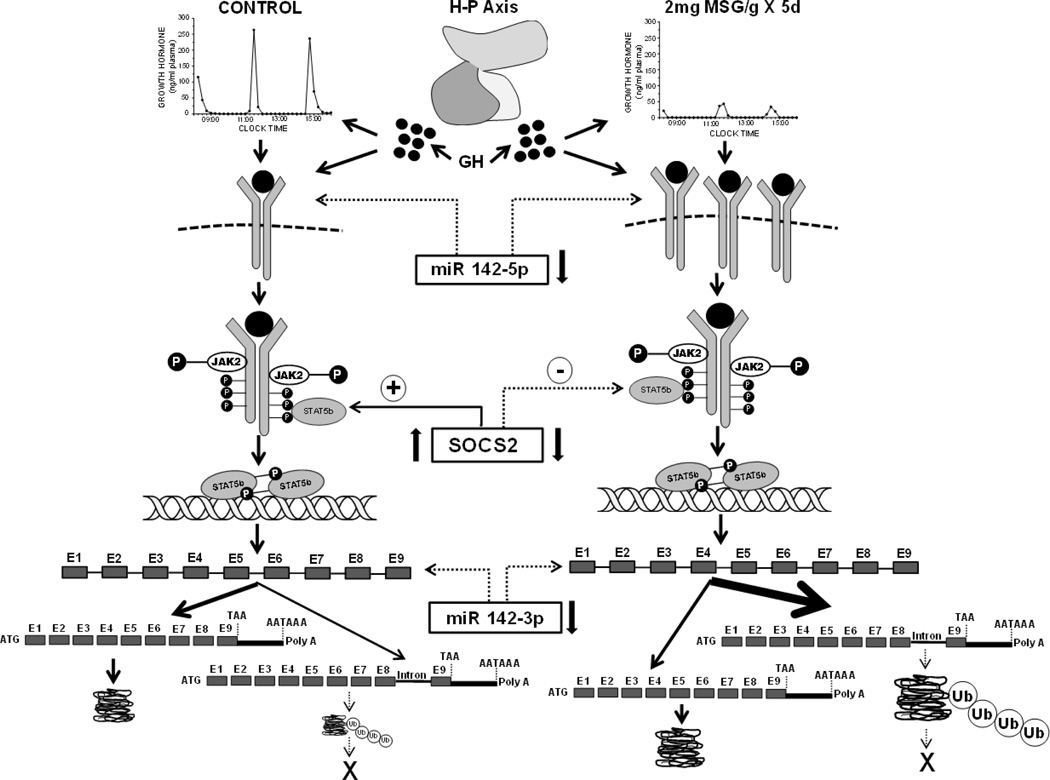
Hypothetical mechanism(s) describing the permanent effect of neonatal “low” dose MSG treatment on adult male CYP211 expression. Neonatal administration of 2mg MSG/g bd wt disrupts the development of the hypothalamic-pituitary (H-P) axis resulting in the adult secretion of mini-GH pulses in an otherwise normal masculine GH profile contributing to the permanent overexpression of CYP2C11. The mini GH secretory profile, alone, and/or in combination with reduced hepatic concentrations of miR142-5p, a putative small, single-stranded non-coding RNA suppressor of GHR transcription, results in the overexpression of the transmembrane hepatic GHR. The overexpressed GHR along with decreased levels of SOCS2, an inhibitor of GH activation of the GHR●JAK2●STAT5b complex, causes an enhanced expression of CYP2C11. This overexpression of CYP2C11 may be supported by the reduced concentrations of hepatic miR142-3p, a putative suppressor of CYP2C11 transcription. In contrast to the normal (CONTROL) condition (left side of schematic) where only a small fraction of the CYP2C11 transcript retains the terminal intron, the bulk of the CYP2C11 transcript (noted by arrow thickness) retains the intron separating exons 8 and 9. Although not studied in this report, the dramatic overexpression of the intron-retained transcript may be due, at least in part, to a reduction in nuclear splicing capacity in the affected rats (Pampori and Shapiro, 2000). The absence of a detectable translation product from the intron-retained CYP2C11 mRNA in both treatment groups (depicted by X) is likely a result of the presence of a premature stop codon leading to the immediate degradation of a likely truncated protein by ubiquitination; the catabolic enzyme complex greatly overexpressed in the MSG-treated male rats. The 40 to 50% overexpression of CYP2C11 protein in the MSG rats is likely due to a similar percent elevation in normal transcript levels.

References

    1. Affolter M, Labbé D, Jean A, Raymond M, Noël D, Labelle Y, Parent-Vaugeois C, Lambert M, Bojanowski R, Anderson A. cDNA clones for liver cytochrome P450s from individual Aroclor-treated rats: constitutive expression of a new P-450 gene related to phenobarbital-inducible forms. DNA. 1986;5:209–218. - PubMed
    1. Agrawal AK, Shapiro BH. Intrinsic signals in the sexually dimorphic circulating growth hormone profiles of the rat. Mol Cell Endocrinol. 2001;173:167–181. - PubMed
    1. Agrawal AK, Pampori NA, Shapiro BH. Thin-layer chromatographic separation of regioselective and stereospecific androgen metabolites. Anal Biochem. 1995a;224:455–457. - PubMed
    1. Agrawal AK, Pampori NA, Shapiro BH. Neonatal phenobarbital-induced defects in age-and sex-specific growth hormone profiles regulating monooxygenases. Am J Physiol. 1995b;268:E439–E445. - PubMed
    1. Agrawal AK, Shapiro BH. Phenobarbital induction of hepatic CYP2B1 and CYP2B2: Pretranscriptional and post-transcriptional effects of gender, adult age and phenobarbital dose. Mol Pharmacol. 1996;49:523–531. - PubMed

Publication types

MeSH terms

Substances