


Tooth movement alterations by different low level laser protocols: a literature review
- PMID: 25699160
- PMCID: PMC4329135
Tooth movement alterations by different low level laser protocols: a literature review
Abstract
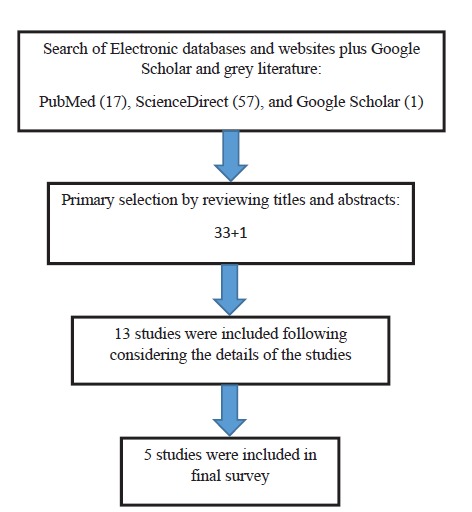
Low-Level Laser Therapy (LLLT) provides several benefits for patients receiving orthodontic treatment. According to some literatures, Orthodontic Tooth Movement (OTM) can be enhanced but some investigators have reported contradictory results. This article reviews the literature regarding the different aspects of the use of LLLT on OTM and its alterations. The general data regarding the study design, sample size, wavelength (nm), power (mW), and duration were extracted and recorded independently. Electronic databases of PubMed and ScienceDirect from January 2009 to August 2014 were searched. Also Google Scholar and grey literature was searched for relevant references. Some investigators found that the amount of tooth movement in the Low-Energy Laser Irradiation (LELI) group was significantly greater than in the nonirradiation group by the end of the experimental period. Low-level laser irradiation accelerates the bone remodeling process by stimulating osteoblastic and osteoclastic cell proliferation and function during orthodontic tooth movement. But some researchers have reported that no statistical differences in the mean rate of tooth movement were noted between low energy and high energy experimental sides and their controls. Some evidence shows that low-level laser irradiation accelerates the bone remodeling process and some evidence shows that LLLT has not effect on OTM. In some investigations no statistical differences in the mean rate of tooth movement can be seen between low energy and high energy experimental sides and their controls. It has been shown by authors that laser irradiation can reduce the amount of OTM and a clinical usage for the inhibitory role of low level laser irradiation is enforcing the anchorage unit.
Keywords: laser therapies; low-level; movement; orthodontics; tooth.
References
-
- Seifi M, Shafeei HA, Daneshdoost S, Mir M. Effects of two types of low-level laser wave lengths (850 and 630 nm) on the orthodontic tooth movements in rabbits. Lasers Med Sci. 2007;22(4):261–4. - PubMed
-
- Ren Y, Maltha JC, Kuijpers-Jagtman AM. The rat as a model for orthodontic tooth movement--a critical review and a proposed solution. Eur J Orthod. 2004;26(5):483–90. - PubMed
-
- Youssef M, Ashkar S, Hamade E, Gutknecht N, Lampert F, Mir M. The effect of low-level laser therapy during orthodontic movement: a preliminary study. Lasers Med Sci. 2008;23(1):27–33. - PubMed
-
- Cruz DR, Kohara EK, Ribeiro MS, Wetter NU. Effects of low-intensity laser therapy on the orthodontic movement velocity of human teeth: a preliminary study. Lasers Surg Med. 2004;35(2):117–20. - PubMed
-
- Sousa MV, Scanavini MA, Sannomiya EK, Velasco LG, Angelieri F. Influence of low-level laser on the speed of orthodontic movement. Photomed Laser Surg. 2011;29(3):191–6. - PubMed
Publication types
LinkOut - more resources
Full Text Sources