Technological innovation in neurosurgery: a quantitative study
- PMID: 25699414
- PMCID: PMC4446106
- DOI: 10.3171/2014.12.JNS141422
Technological innovation in neurosurgery: a quantitative study
Abstract
Object: Technological innovation within health care may be defined as the introduction of a new technology that initiates a change in clinical practice. Neurosurgery is a particularly technology-intensive surgical discipline, and new technologies have preceded many of the major advances in operative neurosurgical techniques. The aim of the present study was to quantitatively evaluate technological innovation in neurosurgery using patents and peer-reviewed publications as metrics of technology development and clinical translation, respectively.
Methods: The authors searched a patent database for articles published between 1960 and 2010 using the Boolean search term "neurosurgeon OR neurosurgical OR neurosurgery." The top 50 performing patent codes were then grouped into technology clusters. Patent and publication growth curves were then generated for these technology clusters. A top-performing technology cluster was then selected as an exemplar for a more detailed analysis of individual patents.
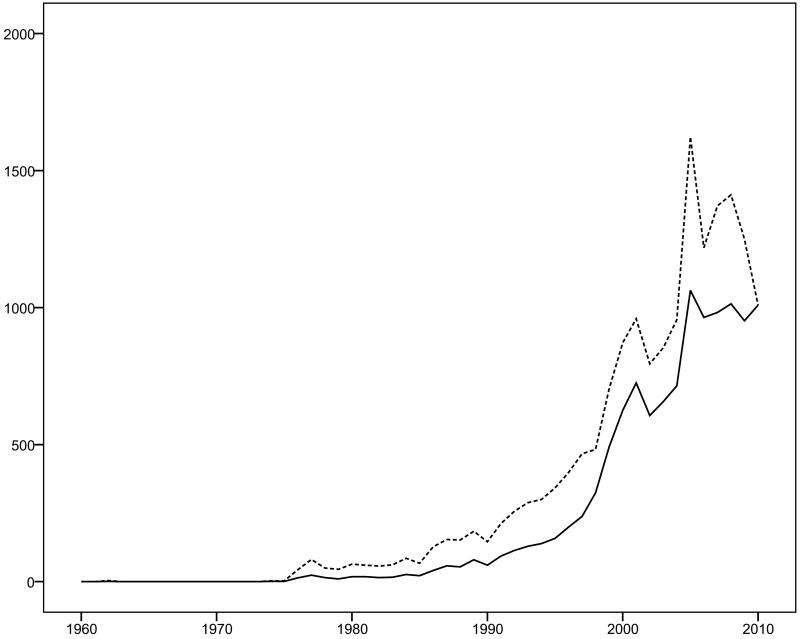
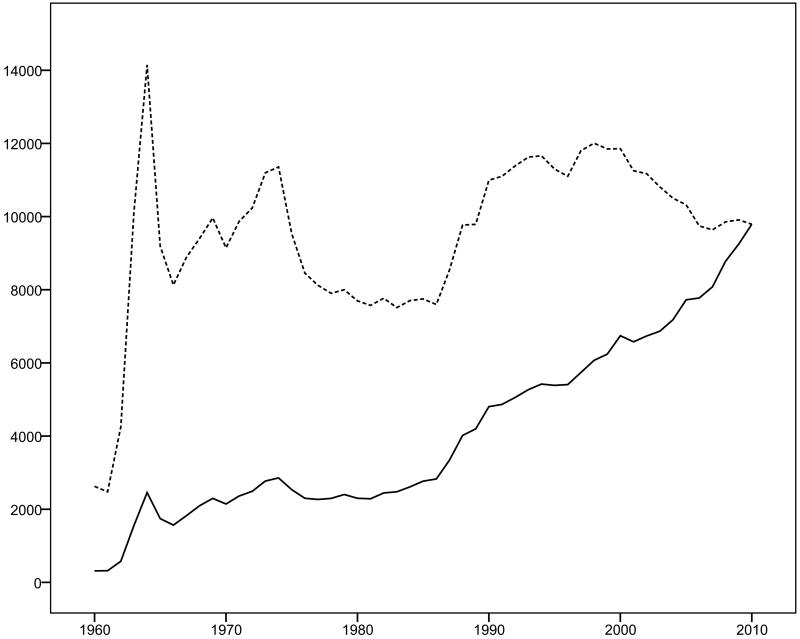
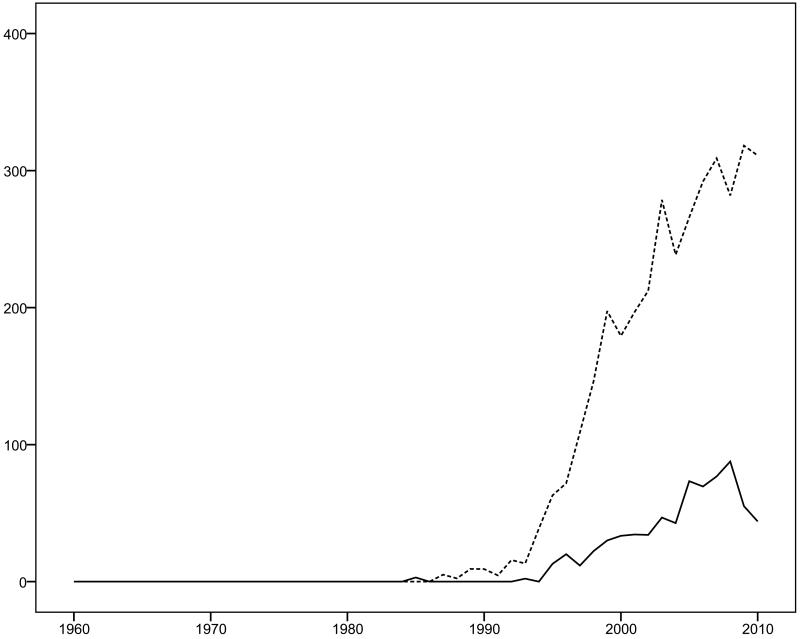
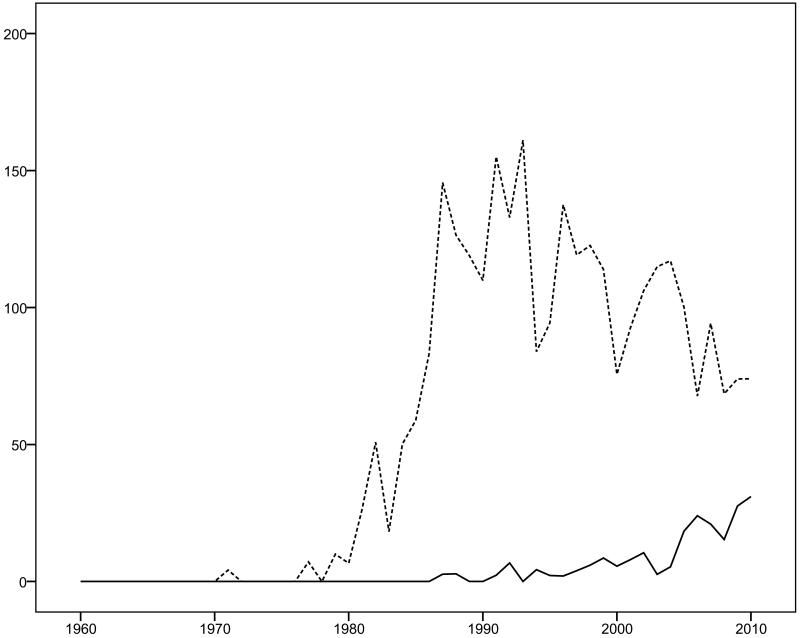
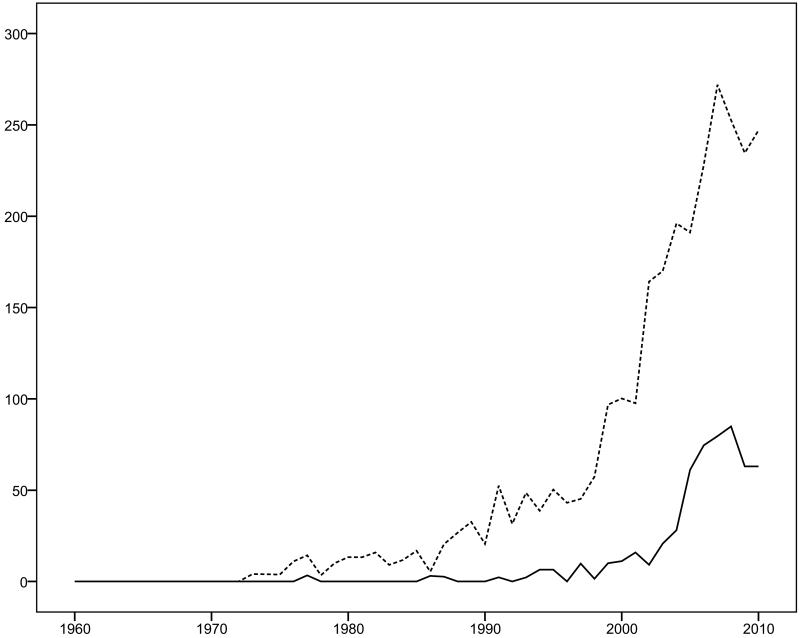
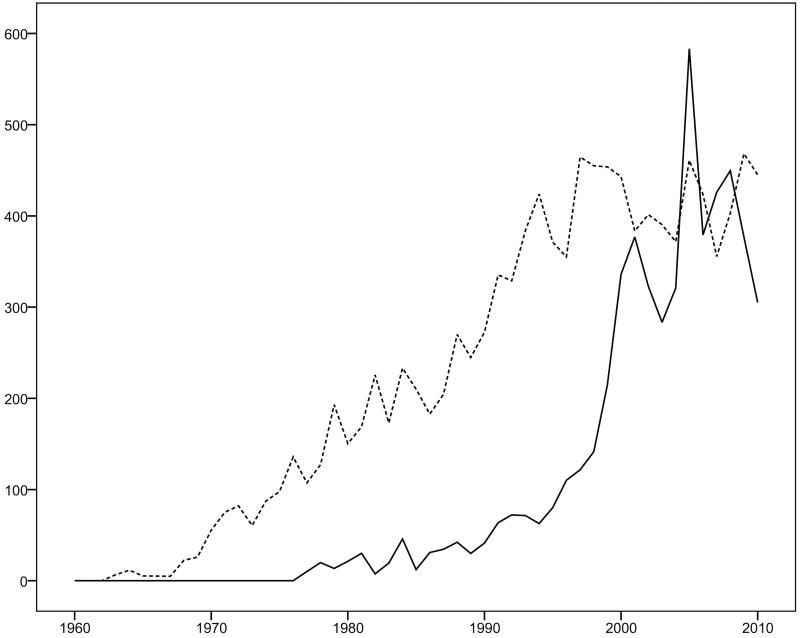
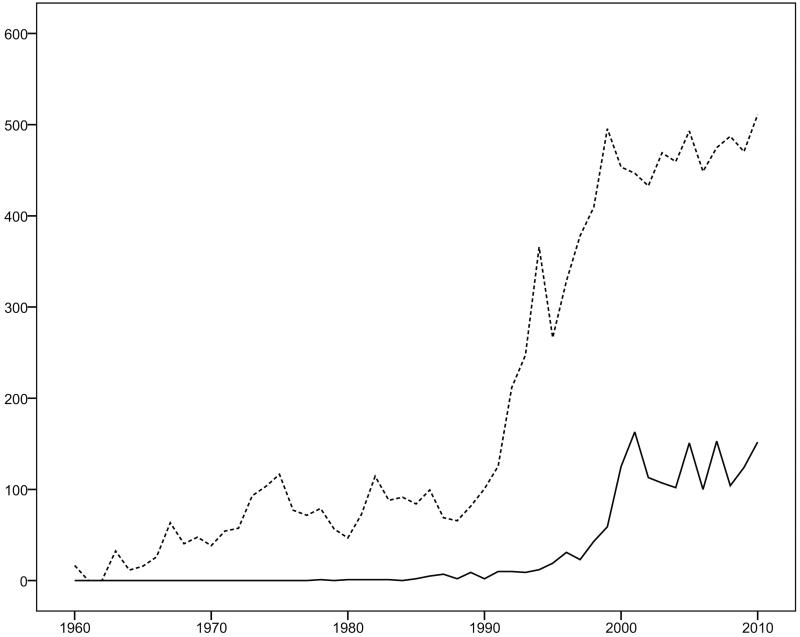
Results: In all, 11,672 patents and 208,203 publications related to neurosurgery were identified. The top-performing technology clusters during these 50 years were image-guidance devices, clinical neurophysiology devices, neuromodulation devices, operating microscopes, and endoscopes. In relation to image-guidance and neuromodulation devices, the authors found a highly correlated rapid rise in the numbers of patents and publications, which suggests that these are areas of technology expansion. An in-depth analysis of neuromodulation-device patents revealed that the majority of well-performing patents were related to deep brain stimulation.
Conclusions: Patent and publication data may be used to quantitatively evaluate technological innovation in neurosurgery.
Keywords: DBS = deep brain stimulation; MEP = motor evoked potential; SSEP = somatosensory evoked potential; diffusion of innovations; neurosurgery; technology.
Figures
Comment in
- J Neurosurg. 2016 Mar;124(3):882-3
-
Letter to the Editor: Innovations in neurosurgery.J Neurosurg. 2016 Feb;124(2):585-6. doi: 10.3171/2015.4.JNS15842. Epub 2015 Dec 4. J Neurosurg. 2016. PMID: 26636378 No abstract available.
-
Evaluation of neurosurgical innovation using patent database.J Neurosurg. 2016 Mar;124(3):881-2. doi: 10.3171/2015.8.JNS151854. Epub 2016 Jan 1. J Neurosurg. 2016. PMID: 26722847 No abstract available.
-
Response.J Neurosurg. 2016 Feb;124(2):586. J Neurosurg. 2016. PMID: 27243046 No abstract available.
References
-
- Babu MA, Heary RF, Nahed BV. Device innovation in neurosurgery: controversy, learning, and future directions. Neurosurgery. 2012;70:789–794. discussion 794-785. - PubMed
-
- Barkun JS, Aronson JK, Feldman LS, Maddern GJ, Strasberg SM, Balliol C, et al. Evaluation and stages of surgical innovations. Lancet. 2009;374:1089–1096. - PubMed
-
- Bengisu M, Nekhili R. Forecasting emerging technologies with the aid of science and technology databases. Technological Forecasting and Social Change. 2006;73:835–844.
-
- Berwick DM. Disseminating innovations in health care. JAMA. 2003;289:1969–1975. - PubMed
-
- Campbell B. How to judge the value of innovation. BMJ. 2012;344:e1457. - PubMed