


Improvements from a flipped classroom may simply be the fruits of active learning
- PMID: 25699543
- PMCID: PMC4353080
- DOI: 10.1187/cbe.14-08-0129
Improvements from a flipped classroom may simply be the fruits of active learning
Abstract
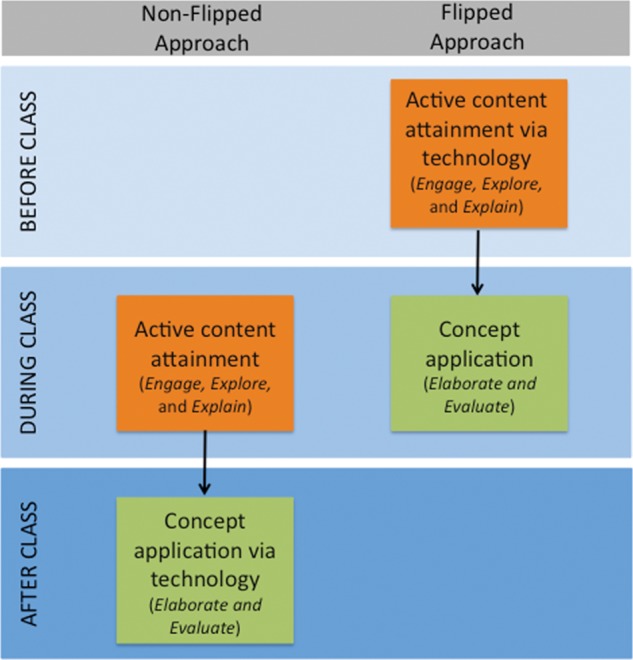
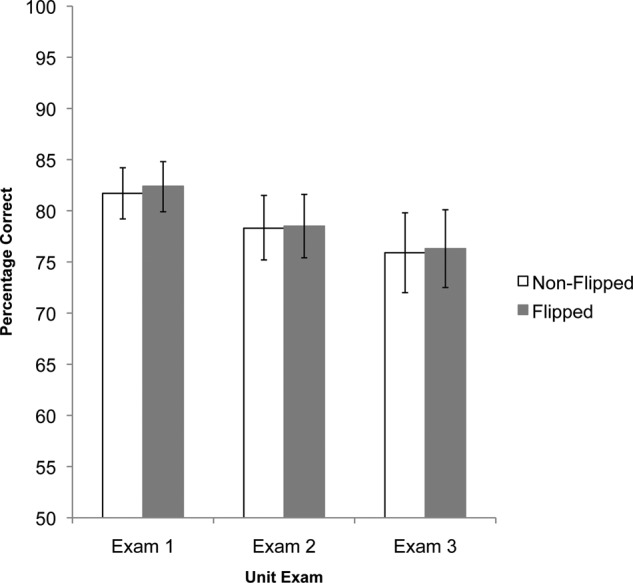
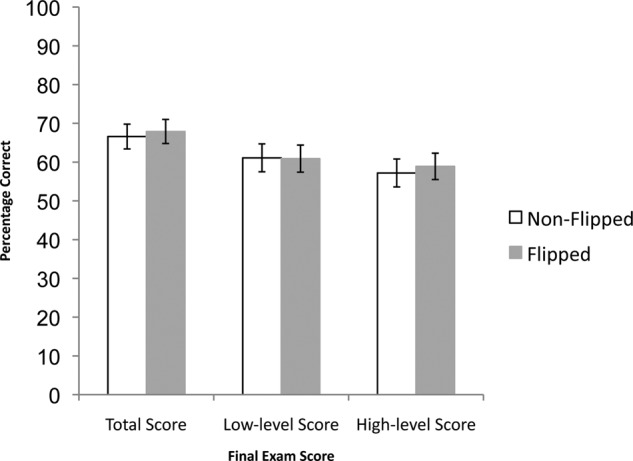
The "flipped classroom" is a learning model in which content attainment is shifted forward to outside of class, then followed by instructor-facilitated concept application activities in class. Current studies on the flipped model are limited. Our goal was to provide quantitative and controlled data about the effectiveness of this model. Using a quasi-experimental design, we compared an active nonflipped classroom with an active flipped classroom, both using the 5-E learning cycle, in an effort to vary only the role of the instructor and control for as many of the other potentially influential variables as possible. Results showed that both low-level and deep conceptual learning were equivalent between the conditions. Attitudinal data revealed equal student satisfaction with the course. Interestingly, both treatments ranked their contact time with the instructor as more influential to their learning than what they did at home. We conclude that the flipped classroom does not result in higher learning gains or better attitudes compared with the nonflipped classroom when both utilize an active-learning, constructivist approach and propose that learning gains in either condition are most likely a result of the active-learning style of instruction rather than the order in which the instructor participated in the learning process.
© 2015 J. L. Jensen et al. CBE—Life Sciences Education © 2015 The American Society for Cell Biology. This article is distributed by The American Society for Cell Biology under license from the author(s). It is available to the public under an Attribution–Noncommercial–Share Alike 3.0 Unported Creative Commons License (http://creativecommons.org/licenses/by-nc-sa/3.0).
Figures
References
-
- Bergstrom G. On offering a blended cell biology course. J Res Cent Educ Technol. 2009;5:15–21.
-
- Bergstrom G. Content vs. learning: an old dichotomy in science courses. J Asynchronous Learn Netw. 2011;15:33–44.
-
- Bleichrodt H, Quiggin J. Life-cycle preferences over consumption and health: when is cost-effectiveness analysis equivalent to cost-benefit analysis. J Health Econ. 1999;18:681–708. - PubMed
-
- Bloom BS. Taxonomy of Educational Objectives. Boston: Allyn and Bacon; 1984.
Publication types
MeSH terms
LinkOut - more resources
Full Text Sources
Other Literature Sources
Molecular Biology Databases
