


Male involvement and maternal health outcomes: systematic review and meta-analysis
- PMID: 25700533
- PMCID: PMC4453485
- DOI: 10.1136/jech-2014-204784
Male involvement and maternal health outcomes: systematic review and meta-analysis
Abstract
Background: The developing world accounts for 99% of global maternal deaths. Men in developing countries are the chief decision-makers, determining women's access to maternal health services and influencing their health outcomes. At present, it is unclear whether involving men in maternal health can improve maternal outcomes. This systematic review and meta-analysis aimed to investigate the impact of male involvement on maternal health outcomes of women in developing countries.
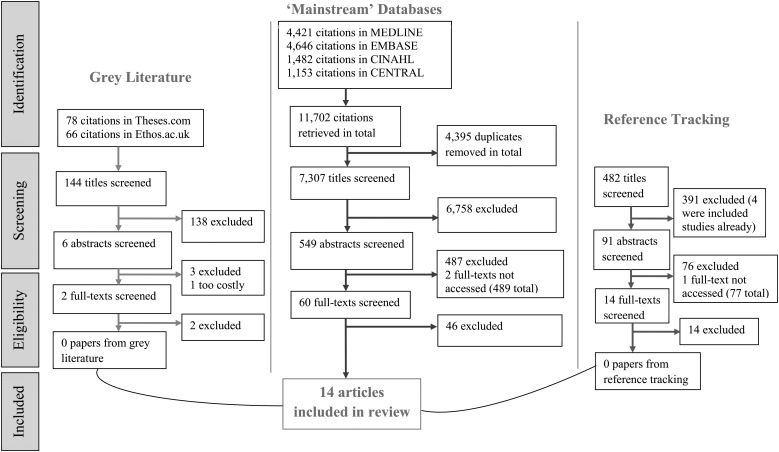
Methods: Four electronic databases and grey literature sources were searched (up to May 2013), together with reference lists of included studies. Two reviewers independently screened and assessed the quality of studies based on prespecified criteria. Measures of effects were pooled and random effect meta-analysis was conducted, where possible.
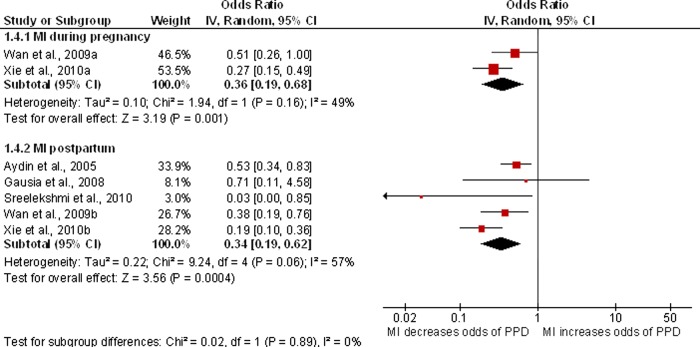
Results: Fourteen studies met the inclusion criteria. Male involvement was significantly associated with reduced odds of postpartum depression (OR=0.36, 95% CI 0.19 to 0.68 for male involvement during pregnancy; OR=0.34, 95% CI 0.19 to 0.62 for male involvement post partum), and also with improved utilisation of maternal health services (skilled birth attendance and postnatal care). Male involvement during pregnancy and at post partum appeared to have greater benefits than male involvement during delivery.
Conclusions: Male involvement is associated with improved maternal health outcomes in developing countries. Contrary to reports from developed countries, there was little evidence of positive impacts of husbands' presence in delivery rooms. However, more rigorous studies are needed to improve this area's evidence base.
Keywords: ACCESS TO HLTH CARE; DEVELOPING COUNTR; INTERNATIONAL HLTH; MATERNAL HEALTH; SYSTEMATIC REVIEWS.
Published by the BMJ Publishing Group Limited. For permission to use (where not already granted under a licence) please go to http://group.bmj.com/group/rights-licensing/permissions.
Figures

References
-
- World Health Organisation. Maternal mortality. http://www.who.int/mediacentre/factsheets/fs348/en/index.html (accessed 5 Feb 2013).
-
- World Health Organisation. MDG 5: Improve maternal health. http://www.who.int/topics/millennium_development_goals/maternal_health/e... (accessed 18 Mar 2013).
-
- United Nations Department of Public Information. International Conference on Population and Development, ICPD ‘94: Summary of the programme of action 1995. http://www.un.org/ecosocdev/geninfo/populatin/icpd.htm (accessed 5 Feb 2013).
-
- United Nations Population Fund. Male involvement in reproductive health, including family planning and sexual health 1995. http://snap3.uas.mx/RECURSO1/unfpa/data/docs/unpf0074.pdf (accessed 6 Feb 2013).
-
- Dudgeon MR, Inhorn MC. Men's influences on women's reproductive health: medical anthropological perspectives. Soc Sci Med 2004;59:1379–95. - PubMed
Publication types
MeSH terms
LinkOut - more resources
Full Text Sources
Other Literature Sources
Medical
Miscellaneous
