. 2015 Feb 26;160(5):870-881.
doi: 10.1016/j.cell.2015.02.003. Epub 2015 Feb 19.

Ribosome excursions during mRNA translocation mediate broad branching of frameshift pathways

Affiliations

Ribosome excursions during mRNA translocation mediate broad branching of frameshift pathways

Shannon Yan et al. Cell. .

Abstract

Programmed ribosomal frameshifting produces alternative proteins from a single transcript. -1 frameshifting occurs on Escherichia coli's dnaX mRNA containing a slippery sequence AAAAAAG and peripheral mRNA structural barriers. Here, we reveal hidden aspects of the frameshifting process, including its exact location on the mRNA and its timing within the translation cycle. Mass spectrometry of translated products shows that ribosomes enter the -1 frame from not one specific codon but various codons along the slippery sequence and slip by not just -1 but also -4 or +2 nucleotides. Single-ribosome translation trajectories detect distinctive codon-scale fluctuations in ribosome-mRNA displacement across the slippery sequence, representing multiple ribosomal translocation attempts during frameshifting. Flanking mRNA structural barriers mechanically stimulate the ribosome to undergo back-and-forth translocation excursions, broadly exploring reading frames. Both experiments reveal aborted translation around mutant slippery sequences, indicating that subsequent fidelity checks on newly adopted codon position base pairings lead to either resumed translation or early termination.


Figures

Figure 1
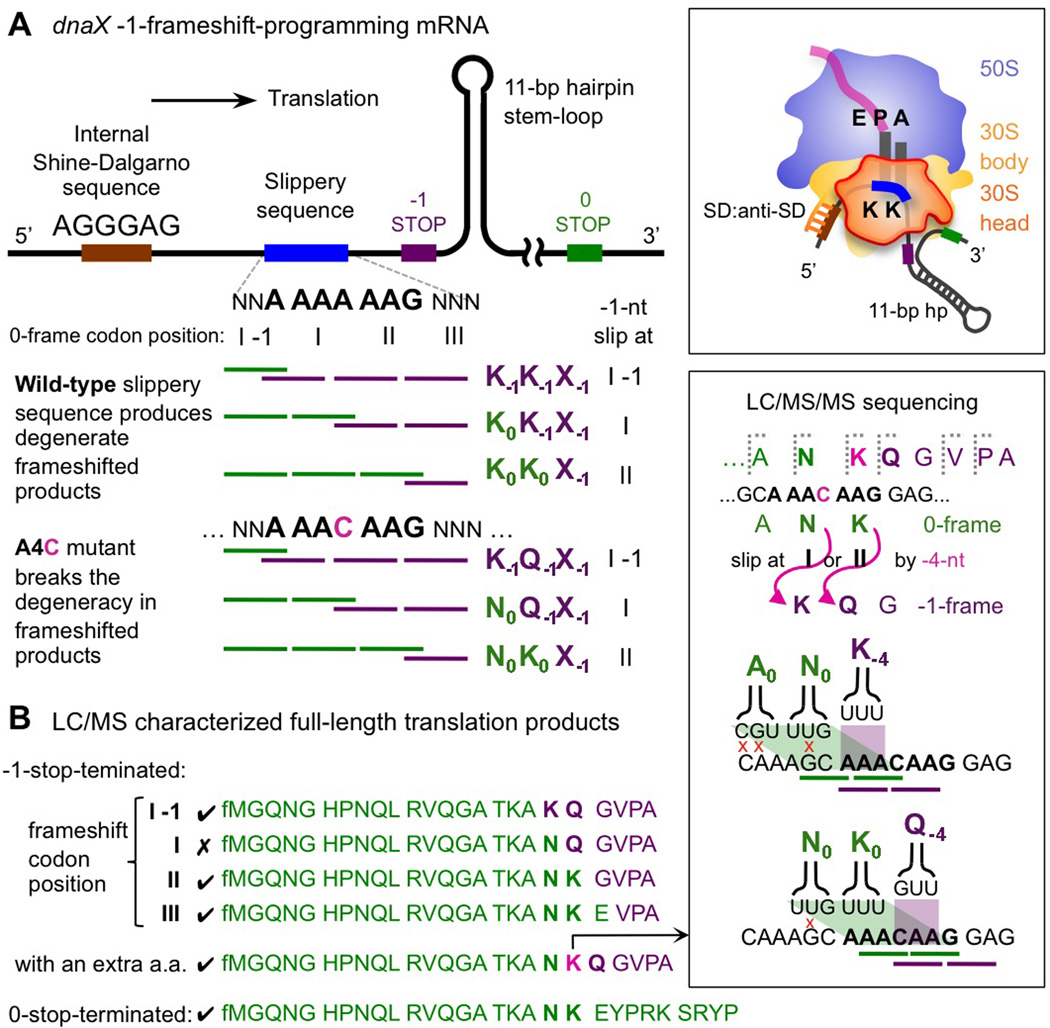
Figure 1. Resolving ribosomal frameshifting codon positions on dnaX-derived mRNAs
1A. Three mRNA sequence elements program the -1-nt ribosomal frameshift: a slippery sequence, AAAAAAG (region in blue); an internal Shine-Dalgarno sequence (SD, region in brown); and a downstream hairpin. The cartoon shows the position of these elements on the mRNA relative to the ribosome. Exact frameshift codon positions are indistinguishable due to the identical product sequence. A single mutation A4C in the slippery sequence (I and II denotes the two 0-frame codons) differentiates possible frameshift positions. 1B. Various -1-stop-terminated products (sequences ended in purple) from the A4C mutant, detected by liquid chromatography-mass spectrometry (LC/MS), show that ribosomes frameshift from different codons around the slippery sequence, including position I-1, II, and III. One major frameshifted product, sequenced by tandem mass spectrometry (LC/MS/MS), bears an extra amino acid in the slippery sequence region (Figure S1D and Table S2); thus, the ribosome has slipped by -4-nt to enter the -1-frame. Two degenerate frameshift pathways exist to translate such a product (right box): -4-slip at codon position I or II (green-shaded rhombus area); the latter imposes fewer codon:anticodon base-pair mismatches (red crosses).
Figure 2
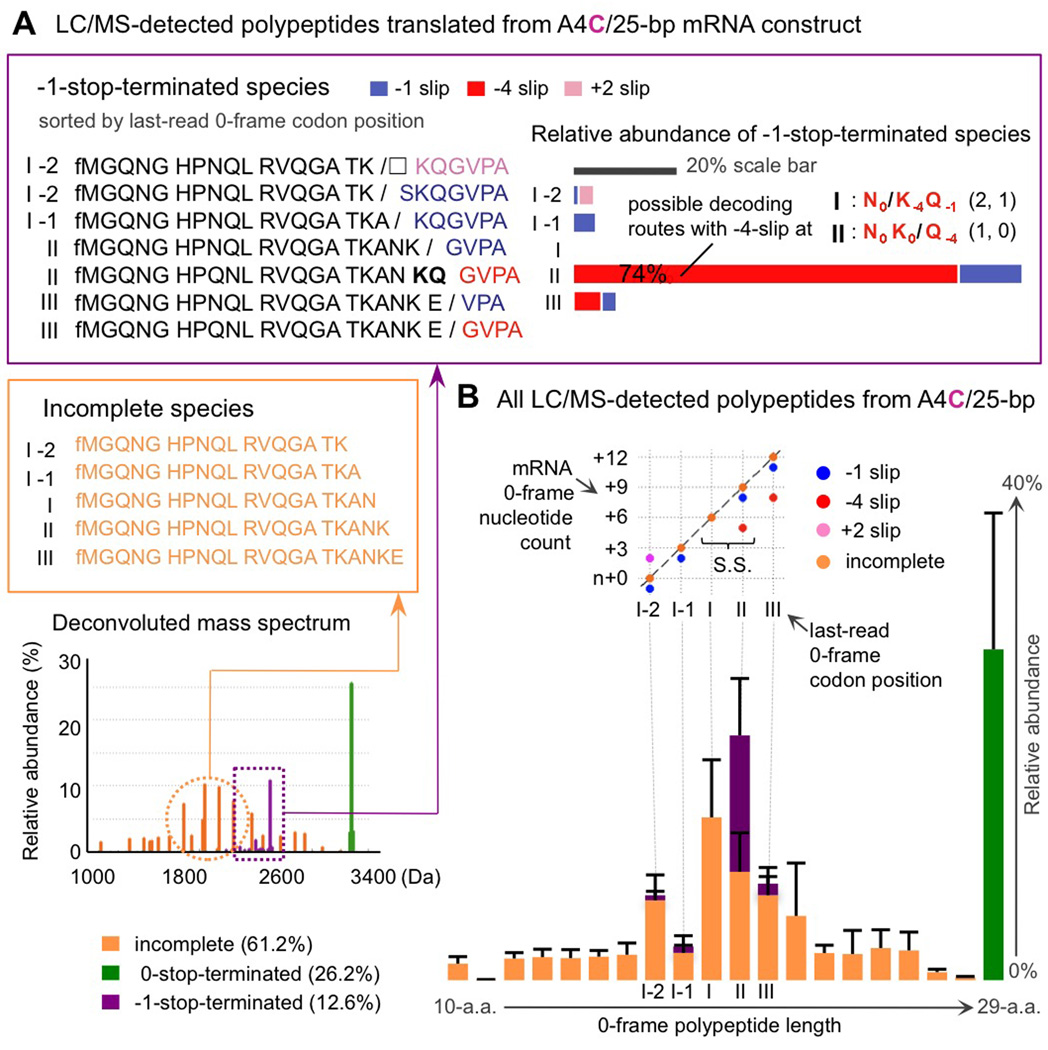
Figure 2. In addition to various stop-codon-terminated polypeptides, frameshift-programming mRNAs produce incomplete species
2A. A4C slippery sequence variant (construct with a downstream 25-bp duplex) as an example: LC/MS detected a broad collection of -1-stop-terminated products frameshifted from codon positions around the slippery sequence; the top bar graph shows their relative abundance (x-axis). These frameshifted species were translated via -1-slips (blue), -4-slips (red), and +2-slips (pink); the latter two lead to polypeptides one amino acid longer or shorter (Figure S2). When degenerate decoding routes exist (as those shown in Figure 1B right box; numbers of base-pair mismatches for the last two 0-frame tRNAs are tabulated here in parenthesis; every non Watson-Crick base-pair scores a 1), we assigned the given product to frameshift codon positions with fewer mismatches. Incomplete polypeptides ended with 0-frame amino acids along the slippery sequence were also found (sequences in orange; orange peaks in the mass spectrum; Table S1). 2B. Bottom bar graph: all detected species in the MS spectrum are organized based on their last 0-frame amino acid incorporated, i.e. 0-frame polypeptide length. A 2D diagram, focusing on codon positions around the slippery sequence (S.S.) region, displays from where (x-axis) the ribosome frameshifts or leaves behind incomplete species. With the y-axis listing the mRNA nucleotide counts in reference to the 0-frame, incomplete species (orange dots) lie along the diagonal line; the frameshifted products distribute above and below—as located by the first nucleotide read in the -1-frame on the mRNA.
Figure 3
Figure 3. Probing ribosomal frameshifting translation translocation dynamics using optical tweezers
A single-ribosome translation progression is reported by the step-wise unwinding of a 92-bp mRNA hairpin held on the optical tweezers (see also Experimental Procedures); 3 bp are unzipped per codon translocated at the hairpin junction, thus reflecting displacements between the ribosome and mRNA. When the first 0-frame codon in the slippery sequence (codon position I) resides in the ribosome 30S P-site, a 55-bp hairpin remains downstream. Hairpin portions not unwound by the ribosome were measured at the end of experiments; if the ribosome terminates at the -1-stop, it leaves a smaller residual hairpin, as compared to that for the 0-stop termination (Figure S3B). Both the wild-type slippery sequence and the frameshift-attenuating A5G mutant were examined.
Figure 4
Figure 4. Characteristic fluctuations during ribosome translocation across the slippery sequence
4A. A single-ribosome translation trajectory along the frameshift-promoting wild-type slippery sequence; recorded at 1 kHz and displayed at 20 Hz here. Upon each translocation step taken by the ribosome (vertical advances along y-axis, indicated by black arrow heads), the hairpin releases 6 nt per codon; this is seen as a 2.65-nm increment (spacing between gridlines of the same color) in mRNA end-to-end extension under a tension of 18 pN (Extended Experimental Procedures). Given the mRNA template, amino acids incorporated to the P-site tRNA after each translocation step are labeled next to the gridlines (in letter codes; green for 0-frame, purple for -1-frame). While the ribosome continually translocates against a hairpin, characteristic fluctuations in mRNA extension (zoom-in below) occur downstream from the internal SD sequence around the slippery sequence region (orange-shaded area; Figure S4B). 4B. The characteristic fluctuations were seen for both wild-type and A5G slippery sequence variants—and both in frameshifted and non-frameshifted trajectories, with an amplitude ≥1-codon (magenta double-headed arrow on the zoom-in trace in panel A) and an average excursion lifetime of ~0.5 second for one round of back-and-forth fluctuation (horizontal line segments in magenta; see also Figure S4C; N ≥ 10 trajectories analysed for each of the four categories).
Figure 5
Figure 5. Connecting frameshift translation dynamics and product distribution
5A. The ≥1-codon translocation fluctuations (black-squared section on the blue trace; expanded underneath) persist in translation trajectory along the frameshift-attenuating A5G mutant, occurring around the slippery sequence (orange-shaded area). Meanwhile, LC/MS detected a wide range of frameshift translation species produced from the same A5G/55-bp construct, including frameshifted and incomplete species (purple and orange dots in 2D diagram; x-axis showing last read 0-frame codons, y-axis marking first read nucleotides in the -1-frame, relative to those counted in the 0-frame; Figure S5B). The accumulation of frameshifted and incomplete species at codon position II (the column of purple and orange dots indicated by red arrow), coincide with the locations on the mRNA slippery sequence region that were frequently explored by the back-and-forth fluctuating ribosome—as revealed by the trajectory zoom-in section. 5B. Relative abundances of LC/MS-detected translation products from the 55-bp mRNA constructs—each for the A5G, A4C, and wild-type slippery sequence variants representing low, medium, and high frameshift efficiency—are shown in bar graphs. Products are sorted by their last 0-frame amino acids incorporated along the mRNA (x-axis: increasing 0-frame polypeptide length), and their abundances shown in bar graphs (Table S1). Less efficient slippery sequence variants produce higher amount of incomplete species, particularly at codon positions I and II—from where most frameshifted species were also translated (purple bars). Numbers of base-pair mismatches for the frameshifted E- and P-tRNAs are tabulated in parenthesis for frameshift pathways at codon position I and II, via -1 or -4-slips (in subscripts). We count 1 for every non Watson-Crick interaction.
Figure 6
Figure 6. During mRNA translocation: a dynamic scheme for versatile ribosomal frameshifting
Left: After the polypeptide chain (magenta curvy line) transfers from the P- to A-tRNA (blue and red vertical sticks), the elongation factor G (EF-G:GTP; complex in cyan and yellow star) catalyzes the P/E-, A/P-tRNAs translocation on the ribosome, along with mRNA (gray dashed line) forward translocation by one codon. This mRNA movement is brought by 30S head forward rotation (dark orange counter-clockwise arrow), displacing the E-, P-, and A-site codons (in green, blue, and red) to the left (gray downward arrow). To reset the ribosome for next round of translation, the head rotates back (middle cartoon; dark orange clockwise arrow). Multiple 30S head rotation—thus back-and-forth mRNA displacement—may be taken to achieve translocation between flanking mRNA structural barriers, e.g., SD:antiSD mini-helix and downstream hairpin, hence permitting the tRNAs to base-pair in alternative frames around the slippery sequence. When a new frame is adopted (top row)—at times with mismatches (black crosses)—both the new-frame specified aminoacyl-tRNA (delivered as EF-Tu:GTP:aa-tRNA: in orange, yellow star, and red) and the release factors (e.g. RF2, in green) can compete to bind with the mismatch-encountering, frameshifted ribosome. In the latter case, the ribosome ceases translation and releases an incomplete polypeptide.

References

    1. Atkins JF, Bjork GR. A Gripping Tale of Ribosomal Frameshifting: Extragenic Suppressors of Frameshift Mutations Spotlight P-Site Realignment. Microbiol Mol Biol R. 2009;73 178-+ - PMC - PubMed
    1. Belew AT, Meskauskas A, Musalgaonkar S, Advani VM, Sulima SO, Kasprzak WK, Shapiro BA, Dinman JD. Ribosomal frameshifting in the CCR5 mRNA is regulated by miRNAs and the NMD pathway. Nature. 2014;512:265–269. - PMC - PubMed
    1. Bretscher MS. Translocation in protein synthesis: a hybrid structure model. Nature. 1968;218:675–677. - PubMed
    1. Caliskan N, Katunin VI, Belardinelli R, Peske F, Rodnina MV. Programmed-1 Frameshifting by Kinetic Partitioning during Impeded Translocation. Cell. 2014;157:1619–1631. - PMC - PubMed
    1. Chen J, Petrov A, Johansson M, Tsai A, O'Leary SE, Puglisi JD. Dynamic pathways of-1 translational frameshifting. Nature. 2014;512:328–332. - PMC - PubMed

Publication types