


Cytokine and lipid mediator networks in tuberculosis
- PMID: 25703565
- PMCID: PMC4339232
- DOI: 10.1111/imr.12249
Cytokine and lipid mediator networks in tuberculosis
Abstract
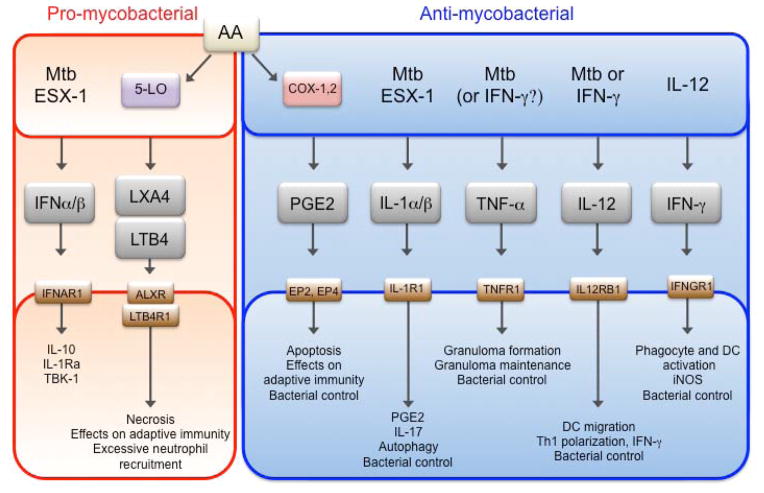
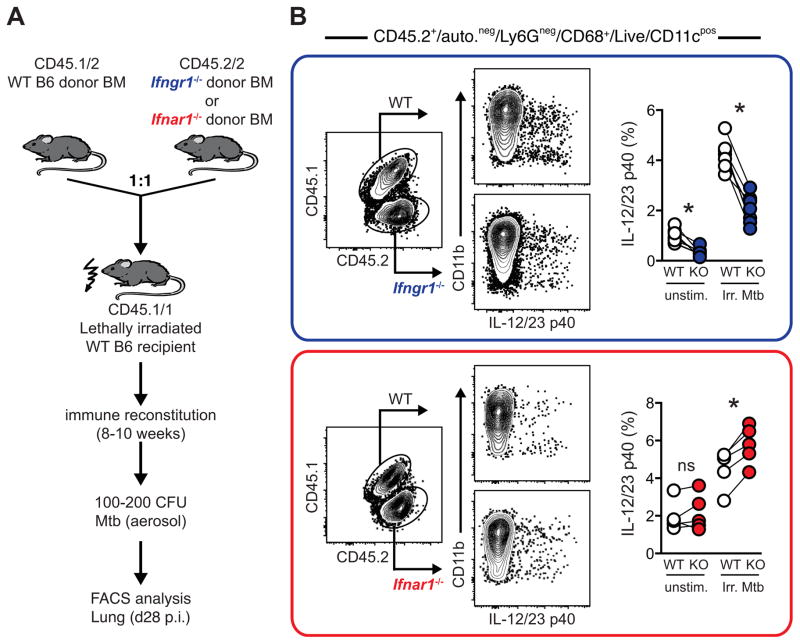
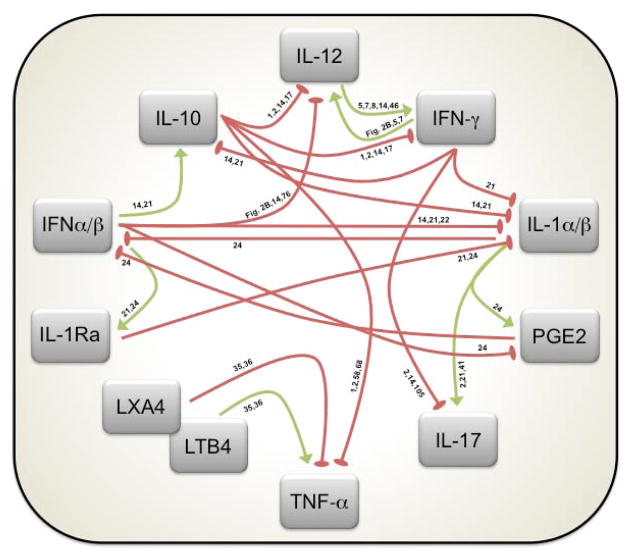
A major approach for immunologic intervention in tuberculosis involves redirecting the outcome of the host immune response from the induction of disease to pathogen control. Cytokines and lipid mediators known as eicosanoids play key roles in regulating this balance and as such represent important targets for immunologic intervention. While the evidence for cytokine/eicosanoid function derives largely from the investigation of murine and zebrafish experimental infection models, clinical studies have confirmed the existence of many of the same pathways in tuberculosis patients. Here, we summarize new data that reveal important intersections between the cytokine and eicosanoid networks in the host response to mycobacteria and discuss how targeting this crosstalk can promote resistance to lethal Mycobacterium tuberculosis infection. This approach could lead to new host-directed therapies to be used either as an adjunct for improving the efficacy of standard antibiotic treatment or for the management of drug-resistant infections.
Keywords: cytokines; eicosanoids; host-directed therapy; lipoxins; prostaglandins; tuberculosis.
Published 2015. This article is a U.S. Government work and is in the public domain in the USA.
Conflict of interest statement
The authors have no conflicts of interest to declare.
Figures
References
Publication types
MeSH terms
Substances
Grants and funding
LinkOut - more resources
Full Text Sources
Other Literature Sources
Medical
