. 2015 Feb 23;10(2):e0116705.
doi: 10.1371/journal.pone.0116705. eCollection 2015.

Complementary amplicon-based genomic approaches for the study of fungal communities in humans

Affiliations

Complementary amplicon-based genomic approaches for the study of fungal communities in humans

Timothy Heisel et al. PLoS One. .

Abstract

Recent studies highlight the importance of intestinal fungal microbiota in the development of human disease. Infants, in particular, are an important population in which to study intestinal microbiomes because microbial community structure and dynamics during this formative window of life have the potential to influence host immunity and metabolism. When compared to bacteria, much less is known about the early development of human fungal communities, owing partly to their lower abundance and the relative lack of established molecular and taxonomic tools for their study. Herein, we describe the development, validation, and use of complementary amplicon-based genomic strategies to characterize infant fungal communities and provide quantitative information about Candida, an important fungal genus with respect to intestinal colonization and human disease. Fungal communities were characterized from 11 infant fecal samples using primers that target the internal transcribed spacer (ITS) 2 locus, a region that provides taxonomic discrimination of medically relevant fungi. Each sample yielded an average of 27,553 fungal sequences and Candida albicans was the most abundant species identified by sequencing and quantitative PCR (qPCR). Low numbers of Candida krusei and Candida parapsilosis sequences were observed in several samples, but their presence was detected by species-specific qPCR in only one sample, highlighting a challenge inherent in the study of low-abundance organisms. Overall, the sequencing results revealed that infant fecal samples had fungal diversity comparable to that of bacterial communities in similar-aged infants, which correlated with the relative abundance of C. albicans. We conclude that targeted sequencing of fungal ITS2 amplicons in conjunction with qPCR analyses of specific fungi provides an informative picture of fungal community structure in the human intestinal tract. Our data suggests that the infant intestine harbors diverse fungal species and is consistent with prior culture-based analyses showing that the predominant fungus in the infant intestine is C. albicans.


Conflict of interest statement

Competing Interests: The authors have declared that no competing interests exist.

Figures

Fig 1
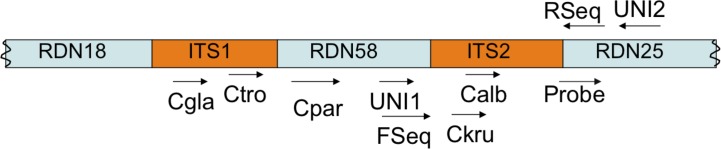
Fig 1. Organization of fungal rDNA locus and regions targeted by oligonucleotide probe and primers.
Primers UNI1, UNI2, and Cspecies, and probe are used in the qPCR strategy. Primers Fseq and Rseq are used to generate amplicons for sequencing. Cgla, C. glabrata; Ctro, C. tropicalis; Cpar, C. parapsilosis; Ckru, C. krusei; Calb, C. albicans. Locus depiction is not to scale. Primer sequences are given in Table 1.
Fig 2
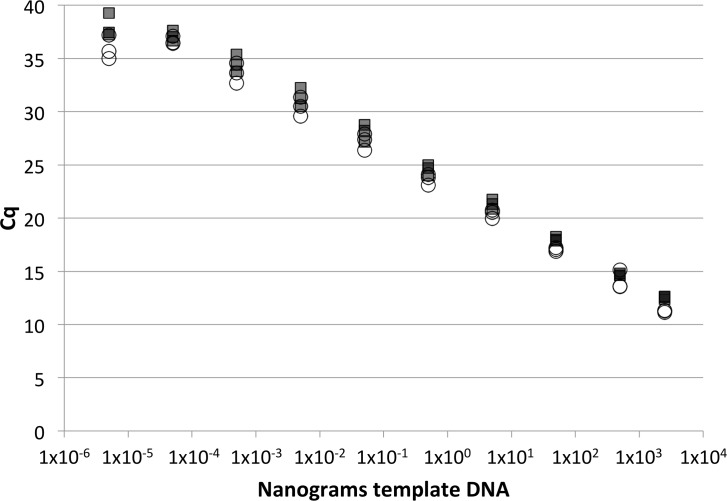
Fig 2. Standard curve amplification plots using C. albicans genomic DNA as template.
Standard curves were generated using 10-fold serial dilutions of DNA with both the universal (UNI1 and UNI2) (circles) and the C. albicans-specific (squares) primer pairs. n = 3 determinations for each DNA amount and primer tested. r2 = 0.999 for the log-linear portion of each curve.
Fig 3
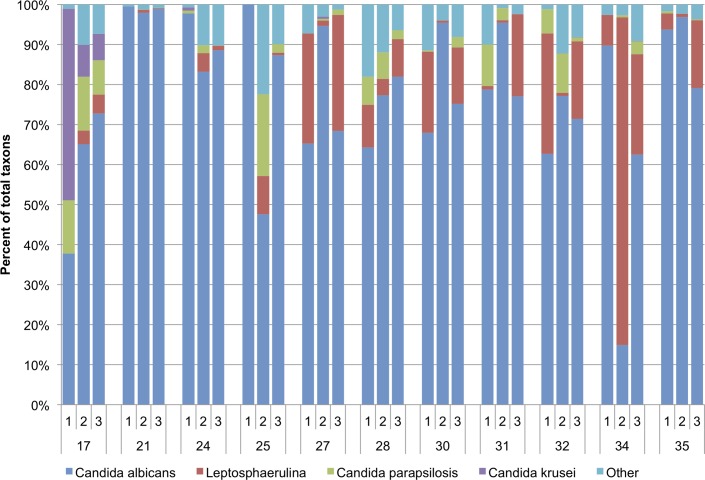
Fig 3. Relative abundances of fungal taxa in infant fecal samples.
Sample numbers (each from different infants) are noted on the lower line of the x-axis and the results of triplicate determinations are shown above the sample number for each. The most abundant taxa are indicated on the right-hand side of the graph, with low-abundance taxa (present at < 1.5% mean abundance across all samples) being grouped into the “Other” category. Sequencing reads are displayed as percentages of the total number of reads for each individual sequencing replicate. Full dataset results for all taxa as well as raw percentage values are presented in S2 Table.
Fig 4
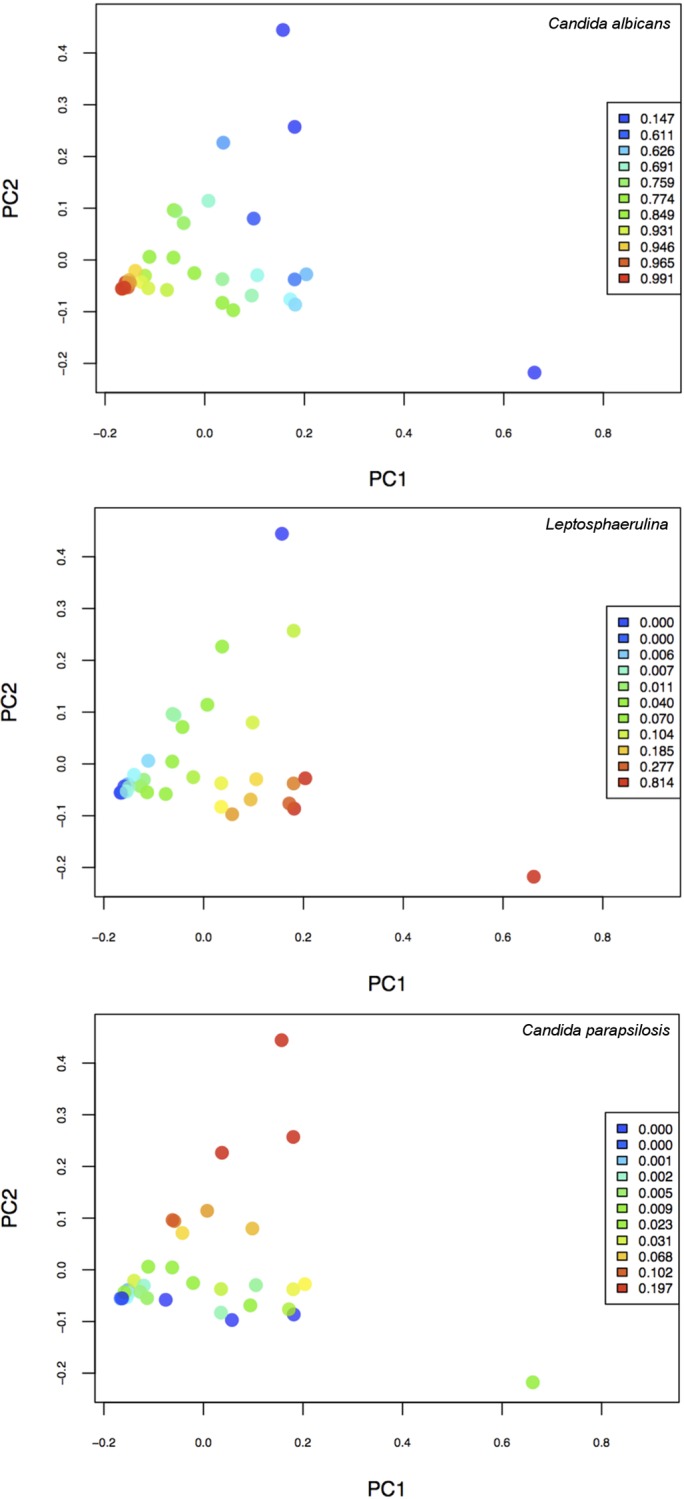
Fig 4. Principal Coordinates analysis of dominant taxa in infant fecal samples.
Principal coordinates analysis of Bray-Curtis dissimilarities among the three most abundant taxa (C. albicans, Leptosphaerulina, and C. parapsilosis) was performed for each sample. Each sample is represented by a dot and is colored based on the abundance (indicated in the legend) of the taxon indicated in the title of the graph. The C. albicans-Leptosphaerulina tradeoff is driving the first (PC1) axis (from bottom to top), and the C. albicans-C. parapsilosis tradeoff is driving the second (PC2) axis (from left to right), in all graphs.

References

    1. Caesar R, Fak F, Backhed F (2010) Effects of gut microbiota on obesity and atherosclerosis via modulation of inflammation and lipid metabolism. J Intern Med 268: 320–328. 10.1111/j.1365-2796.2010.02270.x - DOI - PubMed
    1. Johnson CL, Versalovic J (2012) The human microbiome and its potential importance to pediatrics. Pediatrics 129: 950–960. 10.1542/peds.2011-2736 - DOI - PMC - PubMed
    1. Sjogren YM, Tomicic S, Lundberg A, Bottcher MF, Bjorksten B, et al. (2009) Influence of early gut microbiota on the maturation of childhood mucosal and systemic immune responses. Clin Exp Allergy 39: 1842–1851. 10.1111/j.1365-2222.2009.03326.x - DOI - PubMed
    1. Peleg AY, Hogan DA, Mylonakis E (2010) Medically important bacterial-fungal interactions. Nature reviews Microbiology 8: 340–349. 10.1038/nrmicro2313 - DOI - PubMed
    1. Iliev ID, Funari VA, Taylor KD, Nguyen Q, Reyes CN, et al. (2012) Interactions between commensal fungi and the C-type lectin receptor Dectin-1 influence colitis. Science 336: 1314–1317. 10.1126/science.1221789 - DOI - PMC - PubMed

Publication types

Associated data