


Sugarcane giant borer transcriptome analysis and identification of genes related to digestion
- PMID: 25706301
- PMCID: PMC4338194
- DOI: 10.1371/journal.pone.0118231
Sugarcane giant borer transcriptome analysis and identification of genes related to digestion
Erratum in
-
Correction: Sugarcane giant borer transcriptome analysis and identification of genes related to digestion.PLoS One. 2015 Apr 2;10(4):e0123836. doi: 10.1371/journal.pone.0123836. eCollection 2015. PLoS One. 2015. PMID: 25835298 Free PMC article. No abstract available.
Abstract
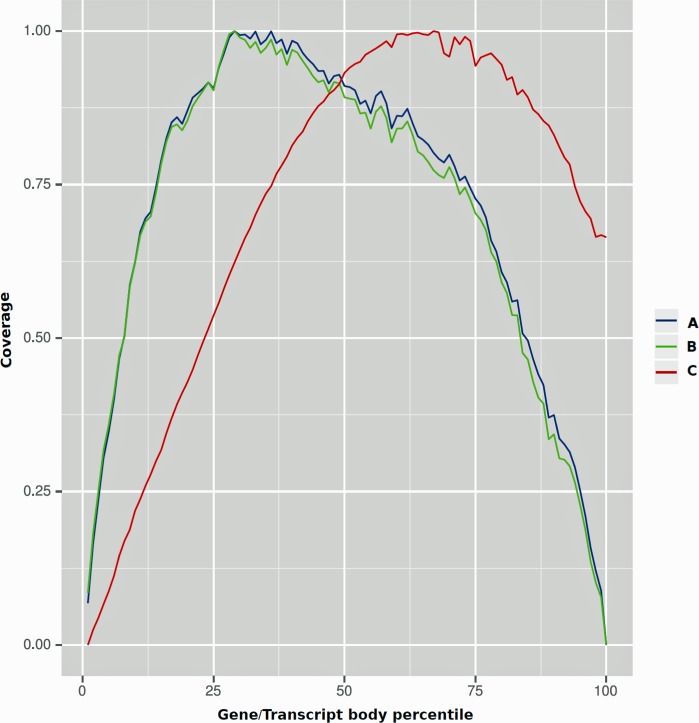
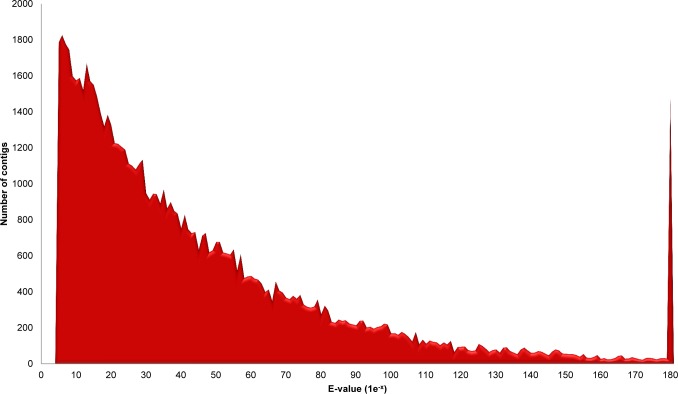
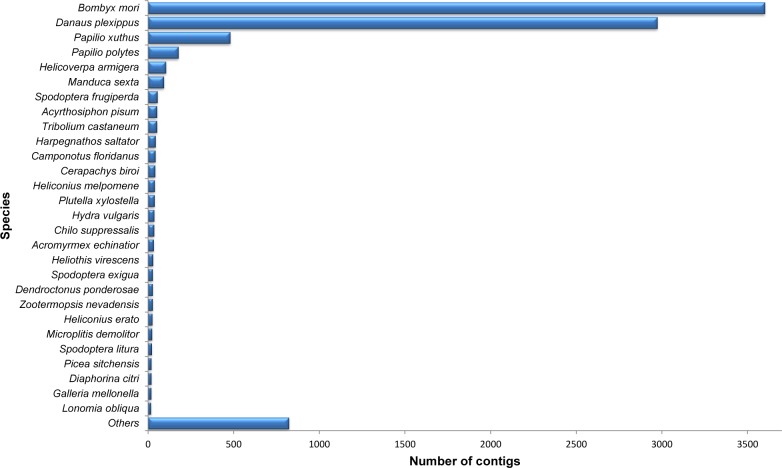
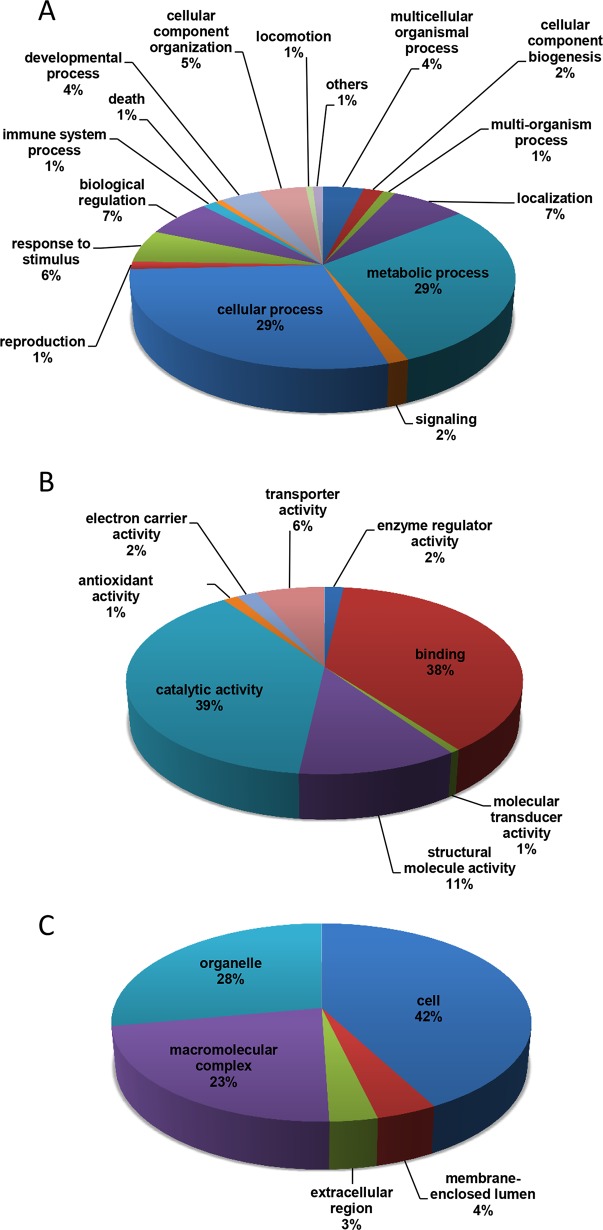
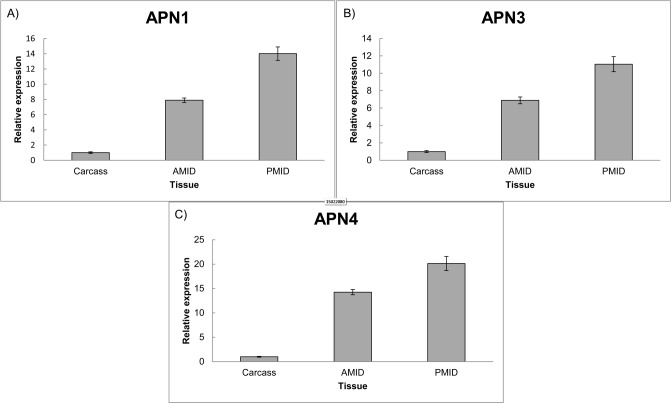
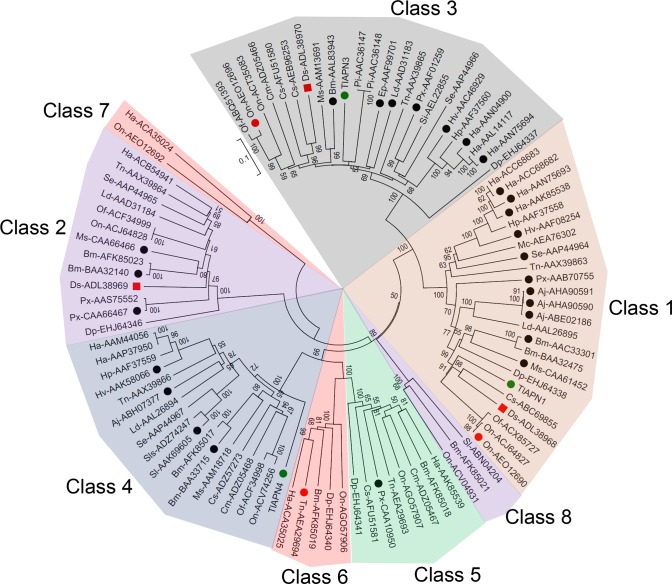
Sugarcane is a widely cultivated plant that serves primarily as a source of sugar and ethanol. Its annual yield can be significantly reduced by the action of several insect pests including the sugarcane giant borer (Telchin licus licus), a lepidopteran that presents a long life cycle and which efforts to control it using pesticides have been inefficient. Although its economical relevance, only a few DNA sequences are available for this species in the GenBank. Pyrosequencing technology was used to investigate the transcriptome of several developmental stages of the insect. To maximize transcript diversity, a pool of total RNA was extracted from whole body insects and used to construct a normalized cDNA database. Sequencing produced over 650,000 reads, which were de novo assembled to generate a reference library of 23,824 contigs. After quality score and annotation, 43% of the contigs had at least one BLAST hit against the NCBI non-redundant database, and 40% showed similarities with the lepidopteran Bombyx mori. In a further analysis, we conducted a comparison with Manduca sexta midgut sequences to identify transcripts of genes involved in digestion. Of these transcripts, many presented an expansion or depletion in gene number, compared to B. mori genome. From the sugarcane giant borer (SGB) transcriptome, a number of aminopeptidase N (APN) cDNAs were characterized based on homology to those reported as Cry toxin receptors. This is the first report that provides a large-scale EST database for the species. Transcriptome analysis will certainly be useful to identify novel developmental genes, to better understand the insect's biology and to guide the development of new strategies for insect-pest control.
Conflict of interest statement
Figures
References
-
- White WH, Viator RP, Dufrene EO, Dalley CD, Richard EP Jr, et al. (2008) Re-evaluation of sugarcane borer (Lepidoptera: Crambidae) bioeconomics in Louisiana. Crop Protection 27: 1256–1261.
-
- Oliveira CM, Auad AM, Mendes SM, Frizzas MR (2014) Crop losses and the economic impact of insect pests on Brazilian agriculture. Crop Protection 56: 50–54.
-
- Pimentel D (2009) Environmental and Economic Costs of the Application of Pesticides Primarily in the United States In: Peshin R, Dhawan A, editors. Integrated Pest Management: Innovation-Development Process: Springer Netherlands; pp. 89–111.
Publication types
MeSH terms
Substances
Associated data
- Actions
- Actions
- Actions
- Actions
- Actions
- SRA/SRR1204999
LinkOut - more resources
Full Text Sources
Other Literature Sources
Research Materials
Miscellaneous
