


Vitamin D₃supplementation in Batswana children and adults with HIV: a pilot double blind randomized controlled trial
- PMID: 25706751
- PMCID: PMC4338235
- DOI: 10.1371/journal.pone.0117123
Vitamin D₃supplementation in Batswana children and adults with HIV: a pilot double blind randomized controlled trial
Abstract
Objectives: Since vitamin D insufficiency is common worldwide in people with HIV, we explored safety and efficacy of high dose cholecalciferol (D₃) in Botswana, and evaluated potential modifiers of serum 25 hydroxy vitamin D change (Δ25D).
Design: Prospective randomized double-blind 12-week pilot trial of subjects ages 5.0-50.9 years.
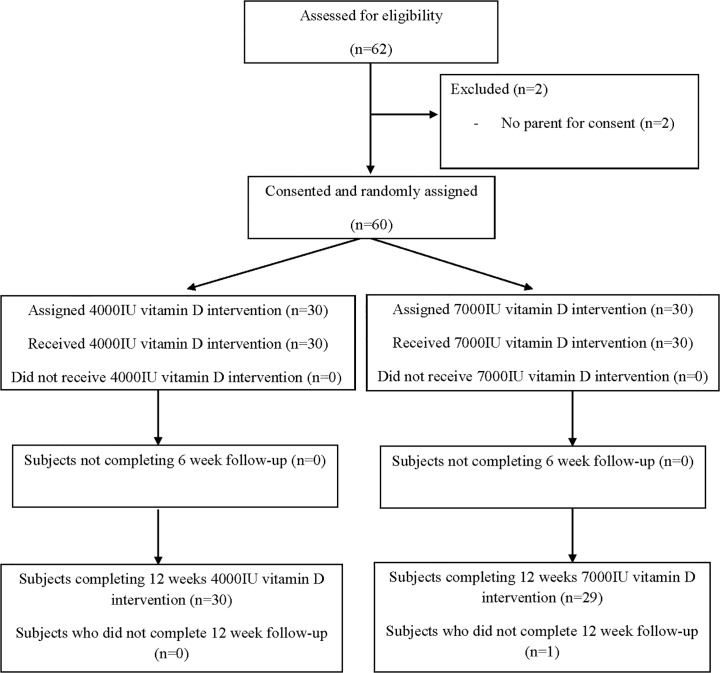
Methods: Sixty subjects randomized within five age groups to either 4000 or 7000 IU per day of D₃ and evaluated for vitamin D, parathyroid hormone, HIV, safety and growth status. Efficacy was defined as serum 25 hydroxy vitamin D (25D) ≥32 ng/mL, and safety as no simultaneous elevation of serum calcium and 25D. Also assessed were HIV plasma viral RNA viral load (VL), CD4%, anti-retroviral therapy (ART) regime, and height-adjusted (HAZ), weight-adjusted (WAZ) and Body Mass Index (BMIZ) Z scores.
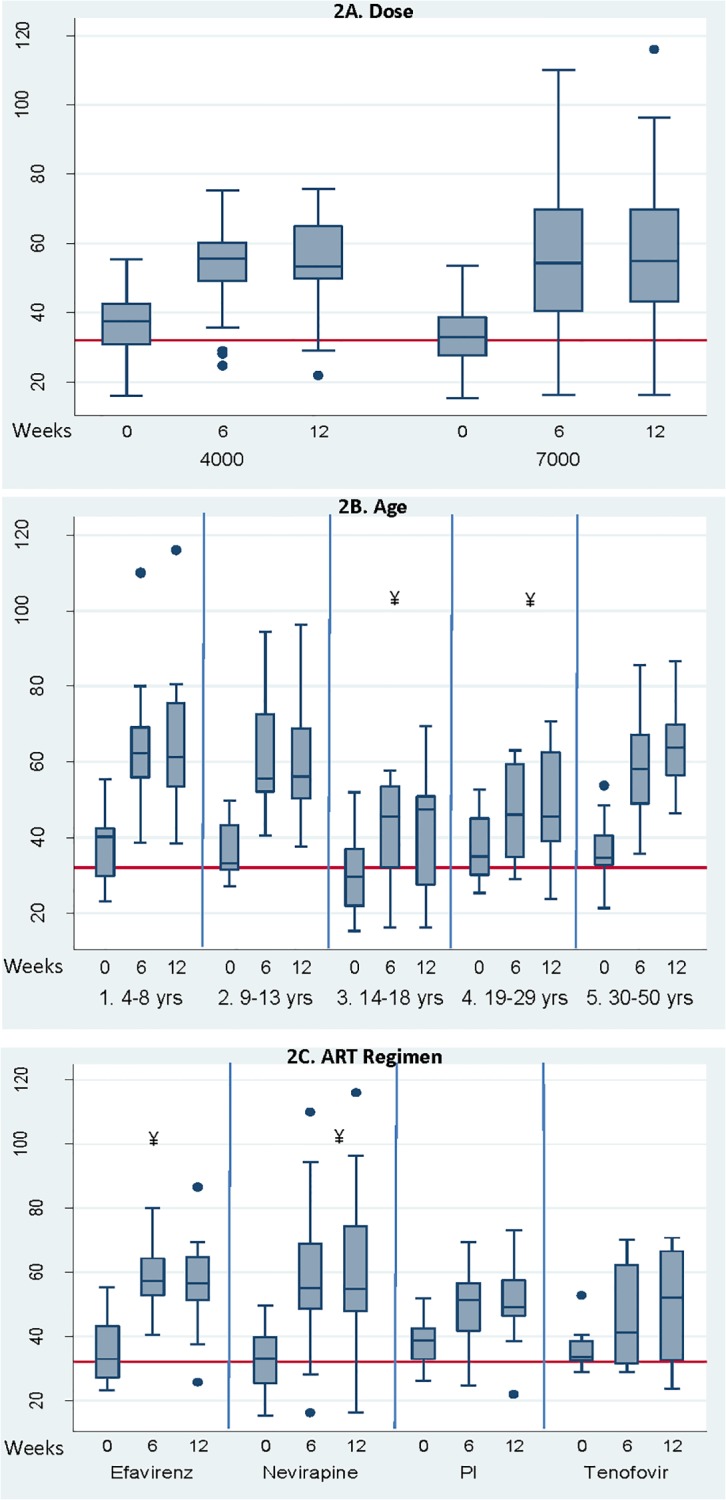
Results: Subjects were 50% male, age (mean±SD) 19.5±11.8 years, CD4% 31.8±10.4, with baseline VL log₁₀ range of <1.4 to 3.8 and VL detectable (>1.4) in 22%. From baseline to 12 weeks, 25D increased from 36±9 ng/ml to 56±18 ng/ml (p<0.0001) and 68% and 90% had 25D ≥32 ng/ml, respectively (p = 0.02). Δ25D was similar by dose. No subjects had simultaneously increased serum calcium and 25D. WAZ and BMIZ improved by 12 weeks (p<0.04). HAZ and CD4% increased and VL decreased in the 7000 IU/d group (p<0.04). Younger (5-13y) and older (30-50y) subjects had greater Δ25D than those 14-29y (26±17 and 28±12 vs. 11±11 ng/ml, respectively, p≤0.001). Δ25D was higher with efavirenz or nevirapine compared to protease inhibitor based treatment (22±12, 27±17, vs. 13±10, respectively, p≤0.03).
Conclusions: In a pilot study in Botswana, 12-week high dose D₃ supplementation was safe and improved vitamin D, growth and HIV status; age and ART regimen were significant effect modifiers.
Trial registration: ClinicalTrials.gov NCT02189902.
Conflict of interest statement
Figures
References
-
- Dao CN, Patel P, Overton ET, Rhame F, Pals SL, et al. (2011) Low vitamin D among HIV-infected adults: prevalence of and risk factors for low vitamin D Levels in a cohort of HIV-infected adults and comparison to prevalence among adults in the US general population. Clinical infectious diseases: an official publication of the Infectious Diseases Society of America 52: 396–405. - PubMed
Publication types
MeSH terms
Substances
Associated data
Grants and funding
LinkOut - more resources
Full Text Sources
Other Literature Sources
Medical
Research Materials
