MR defecography for obstructed defecation syndrome
- PMID: 25709162
- PMCID: PMC4329684
- DOI: 10.4103/0971-3026.150134
MR defecography for obstructed defecation syndrome
Abstract
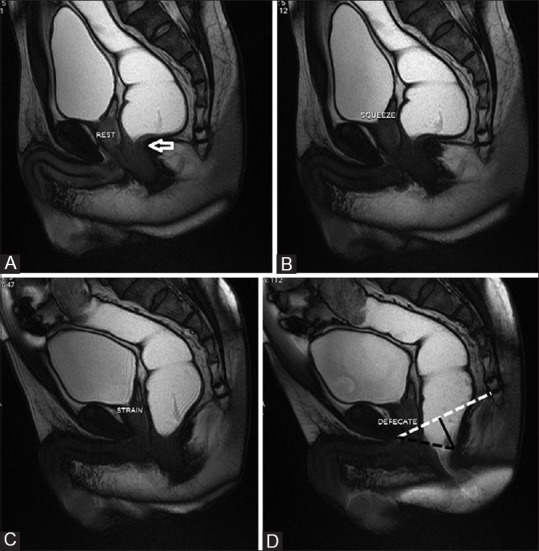
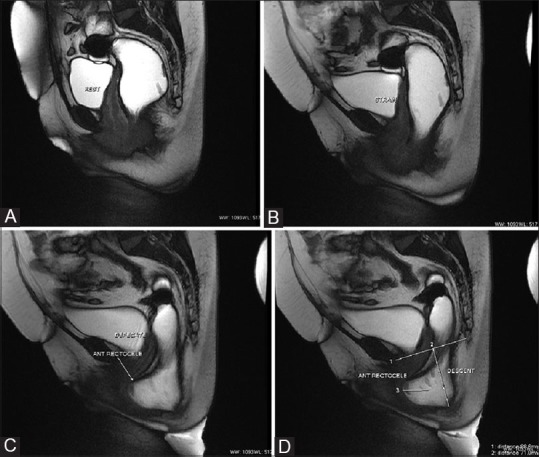
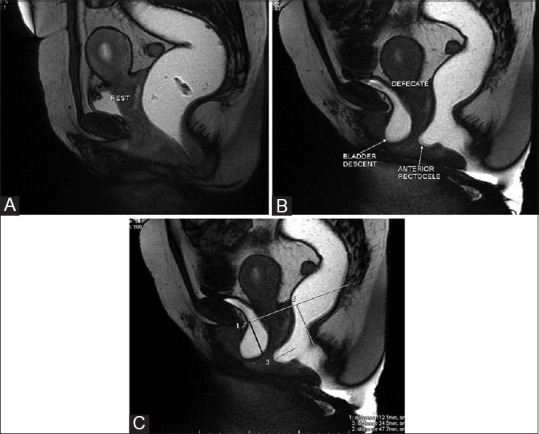
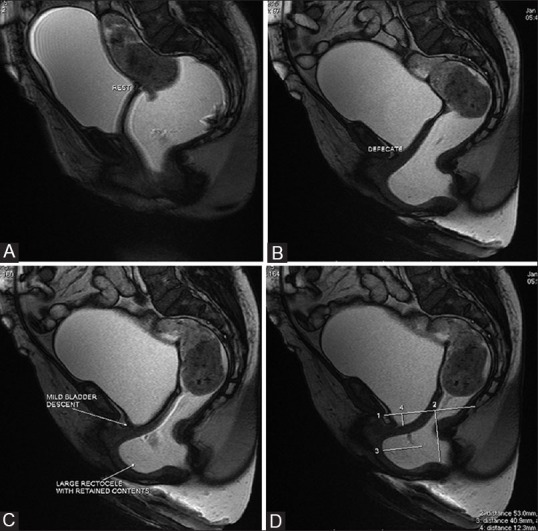
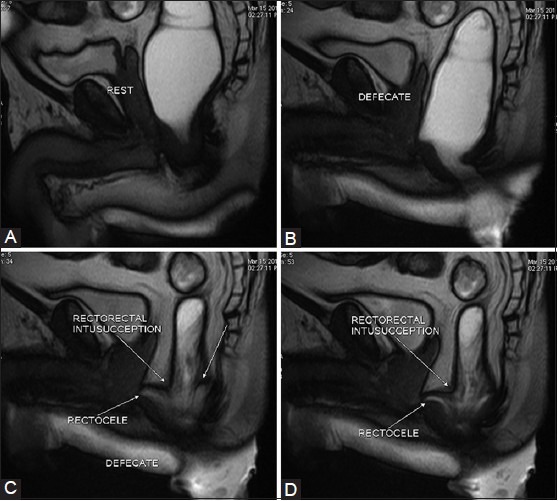
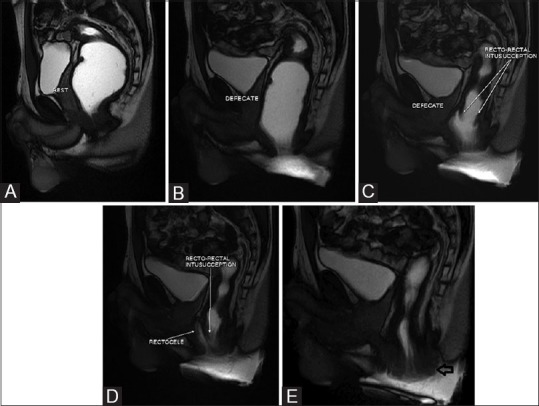
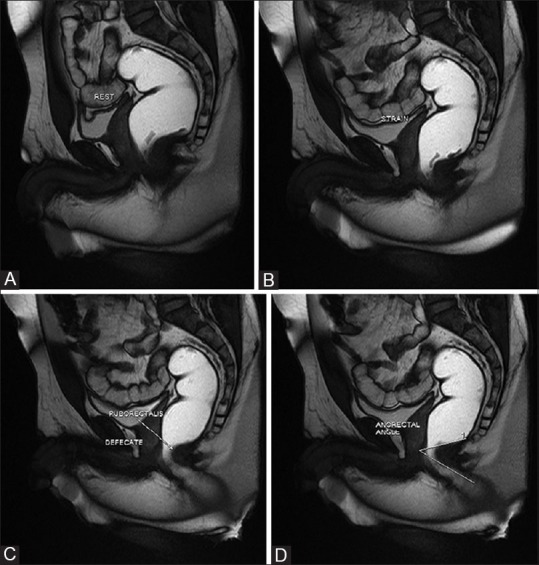
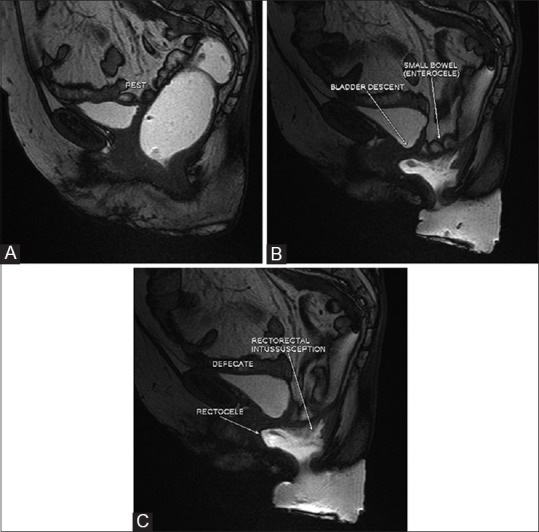
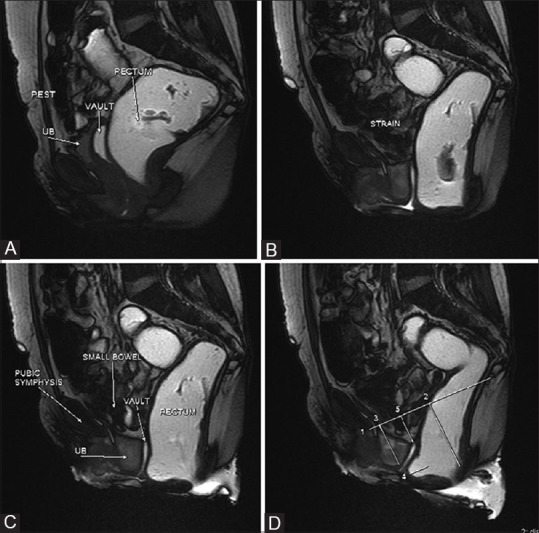
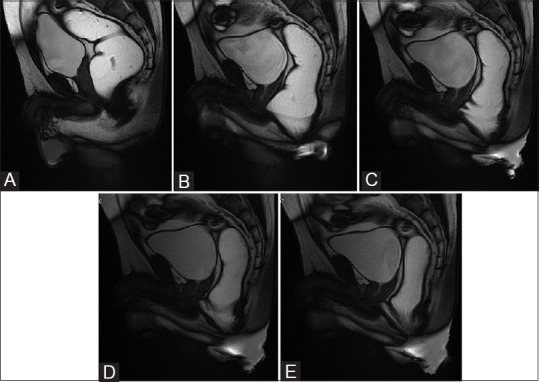
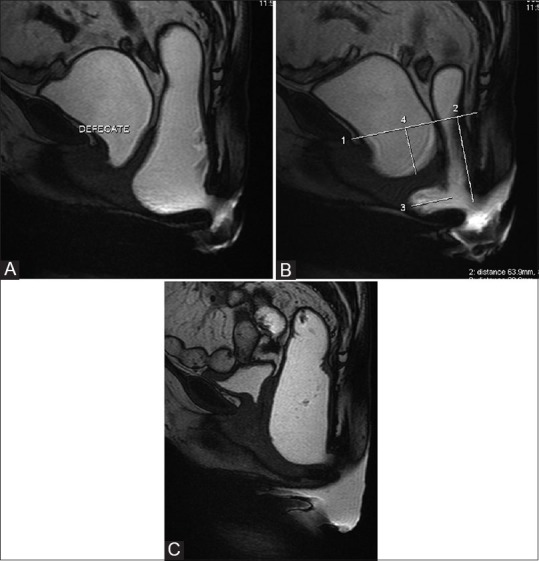
Patients with obstructed defecation syndrome (ODS) form an important subset of patients with chronic constipation. Evaluation and treatment of these patients has traditionally been difficult. Magnetic resonance defecography (MRD) is a very useful tool for the evaluation of these patients. We evaluated the scans and records of 192 consecutive patients who underwent MRD at our center between January 2011 and January 2012. Abnormal descent, rectoceles, rectorectal intussusceptions, enteroceles, and spastic perineum were observed in a large number of these patients, usually in various combinations. We discuss the technique, its advantages and limitations, and the normal findings and various pathologies.
Keywords: Chronic constipation; magnetic resonance defecography; obstructed defecation syndrome; pelvic floor.
Conflict of interest statement
Figures
References
-
- Longstreth GF, Thompson WG, Chey WD, Houghton LA, Mearin F, Spiller RC. Functional bowel disorders. Gastroenterology. 2006;130:1480–91. - PubMed
-
- Sonnenberg A, Koch TR. Physician visits in the United States for constipation: 1958 to 1986. Dig Dis Sci. 1989;34:606–11. - PubMed
-
- Lembo A, Camilleri M. Chronic constipation. N Engl J Med. 2003;349:1360–8. - PubMed
-
- National Institute for Health and Clinical Excellence. Stapled Transanal Rectal Resection for Obstructed Defecation Syndrome. NICE Interventional Procedure Guidance (IPG 351) Issued June 2010. [Last accessed on 2014 Jun 20]. Available from: http://www.nice.org.uk .
-
- Kelvin FM, Maglinte DD, Hale DS, Benson JT. Female pelvic organ prolapse: A comparison of triphasic dynamic MR imaging and triphasic fluoroscopic cystocolpoproctography. AJR Am J Roentgenol. 2000;174:81–8. - PubMed
LinkOut - more resources
Full Text Sources
Other Literature Sources