


Traumatic optic neuropathy: a review
- PMID: 25709751
- PMCID: PMC4329032
- DOI: 10.1055/s-0034-1393734
Traumatic optic neuropathy: a review
Abstract
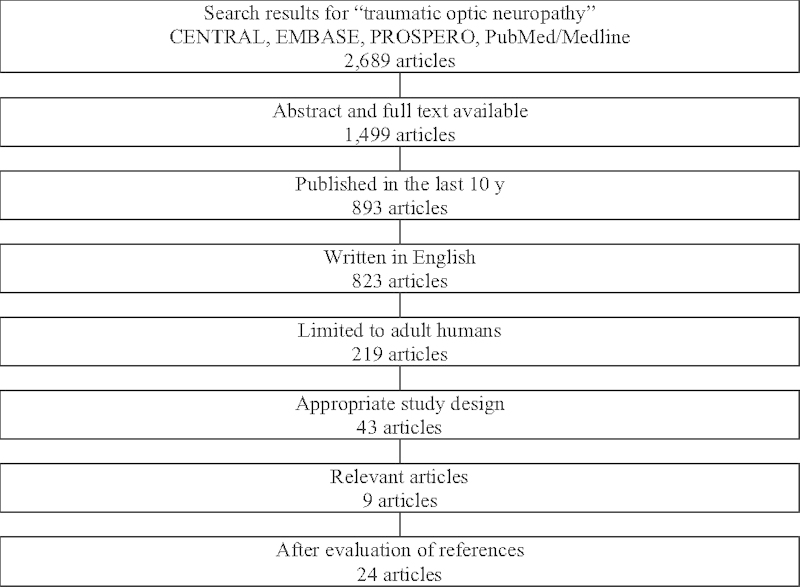
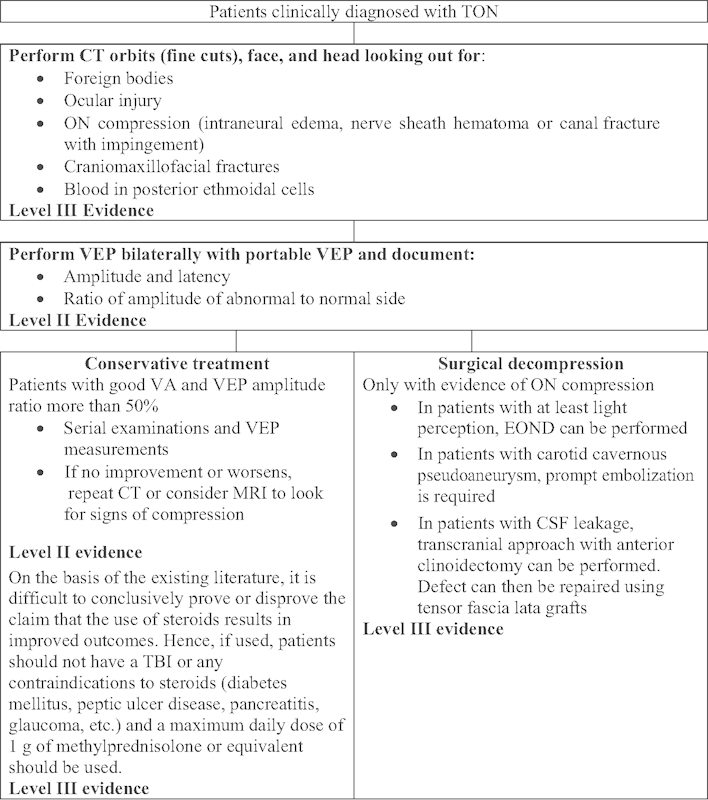
The aim of this article is to evaluate current literature on investigation and management of traumatic optic neuropathy (TON), propose recommendations for diagnosis and management, and explore novel future treatments. TON, though uncommon, causes substantial visual loss. Without clear guidelines, there is much ambiguity regarding its diagnosis and management. Investigation and treatment (conservative, medical, surgical, and combined) vary widely between centers. Electronic databases PubMed, MEDLINE, PROSPERO, CENTRAL, and EMBASE were searched for content that matched "Traumatic optic neuropathy." Articles with abstracts and full text available, published in the past 10 years, written English and limited to human adults, were selected. All study designs were acceptable except case reports and case series with fewer 10 patients. All abstracts were then evaluated for relevance. References of these studies were evaluated and if also relevant, included. A total of 2,686 articles were retrieved and 43 examined for relevance. Of these, 23 articles were included. TON is a clinical diagnosis. Visual-evoked potential is useful in diagnosis and prognosis. Computed tomography demonstrates canal fractures and concomitant injuries. Magnetic resonance images should be reserved for select and stable patients. Conservative treatment is appropriate in mild TON. Steroids are of questionable benefit and may be harmful. Surgery should be reserved for patients with radiological evidence of compression and individualized.
Keywords: corticosteroid therapy; neuroprotection and neuroregeneration; oculofacial trauma; optic nerve decompression; traumatic optic neuropathy.
Figures
References
-
- Steinsapir K D Goldberg R A Traumatic optic neuropathy: an evolving understanding Am J Ophthalmol 20111516928–933., e2 - PubMed
-
- Warner N, Eggenberger E. Traumatic optic neuropathy: a review of the current literature. Curr Opin Ophthalmol. 2010;21(6):459–462. - PubMed
-
- Osborne N N, Chidlow G, Layton C J, Wood J P, Casson R J, Melena J. Optic nerve and neuroprotection strategies. Eye (Lond) 2004;18(11):1075–1084. - PubMed
-
- Steinsapir K D, Goldberg R A. Traumatic optic neuropathy: a critical update. Compr Ophthalmol Update. 2005;6:11–21.
Publication types
LinkOut - more resources
Full Text Sources
Other Literature Sources
Miscellaneous