


Prefrontal cortex markers of suicidal vulnerability in mood disorders: a model-based structural neuroimaging study with a translational perspective
- PMID: 25710122
- PMCID: PMC4445751
- DOI: 10.1038/tp.2015.1
Prefrontal cortex markers of suicidal vulnerability in mood disorders: a model-based structural neuroimaging study with a translational perspective
Abstract
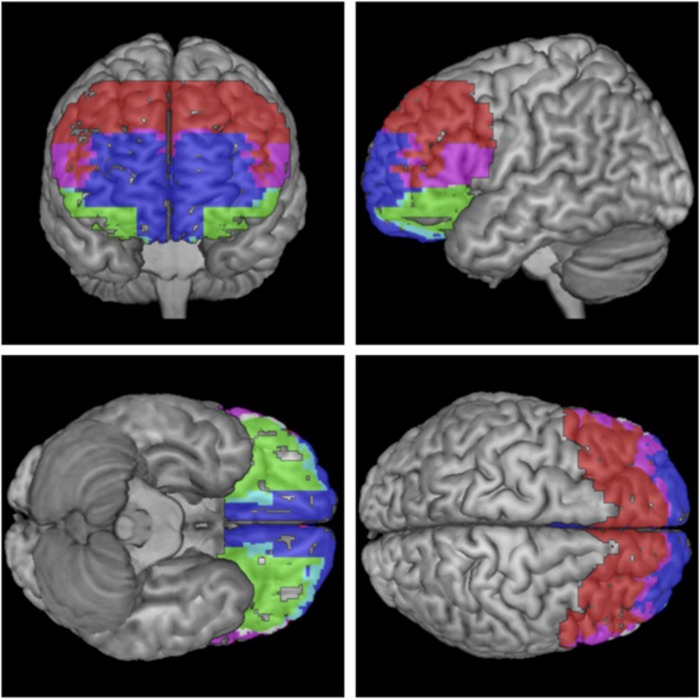
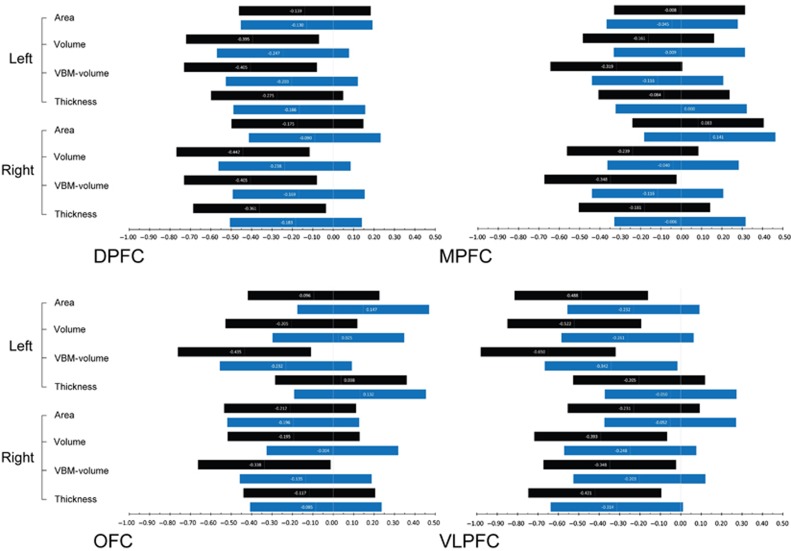
The vulnerability to suicidal behavior has been modeled in deficits in both valuation and cognitive control processes, mediated by ventral and dorsal prefrontal cortices. To uncover potential markers of suicidality based on this model, we measured several brain morphometric parameters using 1.5T magnetic resonance imaging in a large sample and in a specifically designed study. We then tested their classificatory properties. Three groups were compared: euthymic suicide attempters with a past history of mood disorders and suicidal behavior (N=67); patient controls with a past history of mood disorders but not suicidal behavior (N=82); healthy controls without any history of mental disorder (N=82). A hypothesis-driven region-of-interest approach was applied targeting the orbitofrontal cortex (OFC), ventrolateral (VLPFC), dorsal (DPFC) and medial (including anterior cingulate cortex; MPFC) prefrontal cortices. Both voxel-based (SPM8) and surface-based morphometry (Freesurfer) analyses were used to comprehensively evaluate cortical gray matter measure, volume, surface area and thickness. Reduced left VLPFC volume in attempters vs both patient groups was found (P=0.001, surviving multiple comparison correction, Cohen's d=0.65 95% (0.33-0.99) between attempters and healthy controls). In addition, reduced measures in OFC and DPFC, but not MPFC, were found with moderate effect sizes in suicide attempters vs healthy controls (Cohen's d between 0.34 and 0.52). Several of these measures were correlated with suicidal variables. When added to mood disorder history, left VLPFC volume increased within-sample specificity in identifying attempters in a significant but limited way. Our study, therefore, confirms structural prefrontal alterations in individuals with histories of suicide attempts. A future clinical application of these markers will, however, necessitate further research.
Figures
References
-
- Hawton K, van Heeringen K. Suicide. Lancet. 2009;373:1372–1381. - PubMed
-
- Mann JJ, Currier D. A review of prospective studies of biologic predictors of suicidal behavior in mood disorders. Arch Suicide Res. 2007;11:3–16. - PubMed
-
- Mann JJ. Neurobiology of suicidal behaviour. Nat Rev Neurosci. 2003;4:819–828. - PubMed
-
- Jollant F, Lawrence NL, Olie E, Guillaume S, Courtet P. The suicidal mind and brain: a review of neuropsychological and neuroimaging studies. World J Biol Psychiatry. 2011;12:319–339. - PubMed
-
- Oquendo MA, Placidi GP, Malone KM, Campbell C, Keilp J, Brodsky B, et al. Positron emission tomography of regional brain metabolic responses to a serotonergic challenge and lethality of suicide attempts in major depression. Arch Gen Psychiatry. 2003;60:14–22. - PubMed
Publication types
MeSH terms
LinkOut - more resources
Full Text Sources
Other Literature Sources
Medical
Miscellaneous
