Clinical Trial
. 2015 May;56(5):1034-42.
doi: 10.1194/jlr.P052209. Epub 2015 Feb 21.

IL-6 blockade by monoclonal antibodies inhibits apolipoprotein (a) expression and lipoprotein (a) synthesis in humans

Affiliations
Clinical Trial

IL-6 blockade by monoclonal antibodies inhibits apolipoprotein (a) expression and lipoprotein (a) synthesis in humans

Nike Müller et al. J Lipid Res. 2015 May.

Abstract

Lipoprotein (a) [Lp(a)] is a highly atherogenic lipid particle. Although earlier reports suggested that Lp(a) levels are mostly determined by genetic factors, several recent studies have revealed that Lp(a) induction is also caused by chronic inflammation. Therefore, we aimed to examine whether cytokine blockade by monoclonal antibodies may inhibit Lp(a) metabolism. We found that interleukin 6 (IL-6) blockade by tocilizumab (TCZ) reduced Lp(a) while TNF-α-inhibition by adalimumab in humans had no effect. The specificity of IL-6 in regulating Lp(a) was further demonstrated by serological measurements of human subjects (n = 1,153) revealing that Lp(a) levels are increased in individuals with elevated serum IL-6. Transcriptomic analysis of human liver biopsies (n = 57) revealed typical IL-6 response genes being correlated with the LPA gene expression in vivo. On a molecular level, we found that TCZ inhibited IL-6-induced LPA mRNA and protein expression in human hepatocytes. Furthermore, examination of IL-6-responsive signal transducer and activator of transcription 3 binding sites within the LPA promoter by reporter gene assays, promoter deletion experiments, and electrophoretic mobility shift assay analysis showed that the Lp(a)-lowering effect of TCZ is specifically mediated via a responsive element at -46 to -40. Therefore, IL-6 blockade might be a potential therapeutic option to treat elevated Lp(a) serum concentrations in humans and might be a noninvasive alternative to lipid apheresis in the future.

Keywords: acute phase response; inflammation; interleukin; lipoprotein metabolism; therapy of elevated Lp(a).


Figures

Fig. 1.
Fig. 1.
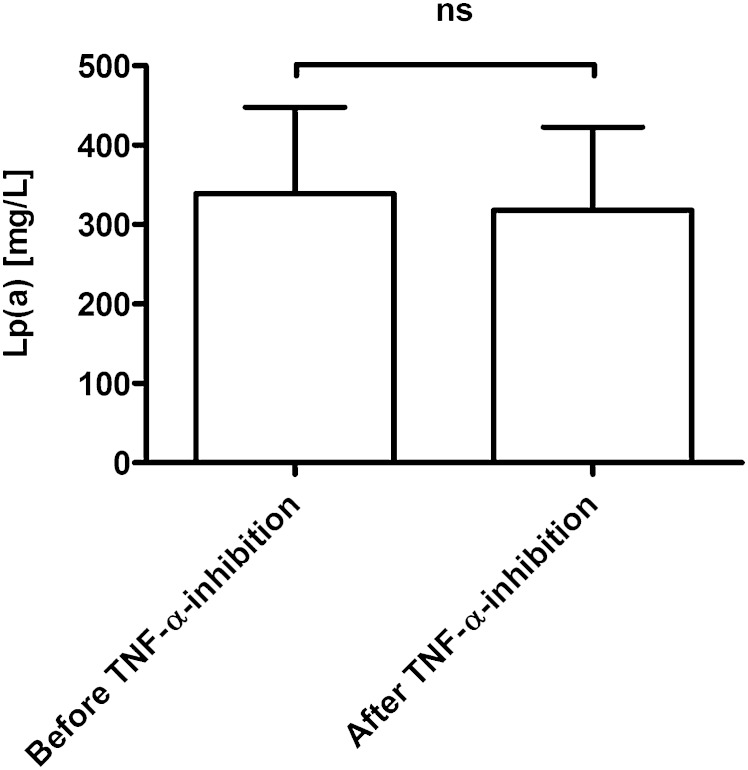
TNF-α-antibody treatment does not decrease Lp(a) serum levels in RA patients. Data are given as means + SEM of patients (n = 12) with RA treated with TNF-α-antibody ADB for a time period of n = 3 months. Statistical significance was tested using Wilcoxon sign-rank test for paired observations; ns, not significant.
Fig. 2.
Fig. 2.
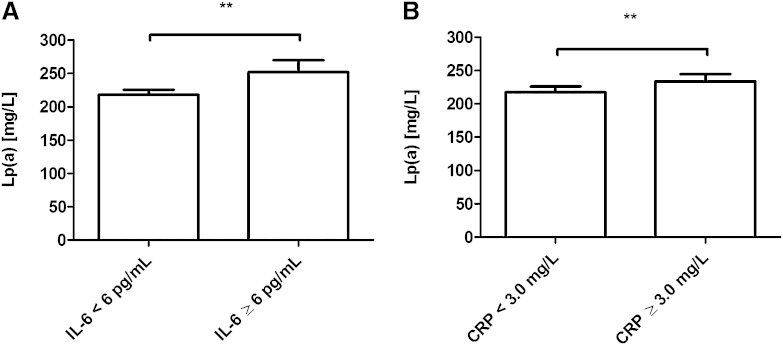
Elevated IL-6 serum levels and those of IL-6 response protein CRP are significantly associated with an increase of Lp(a) in humans in vivo. This association analysis represents significant differences of Lp(a) serum levels in groups with normal (n = 955) and elevated (n = 198) IL-6 serum levels (P = 0.0015) (A). In addition, significant differences of Lp(a) serum levels in groups with normal (n = 680) and elevated (n = 473) CRP serum levels (P = 0.0018) were found (B). CRP is an IL-6-induced acute phase response protein, which suggests a major role of IL-6 regarding the relationship to Lp(a). Data are given as means + SEM, and statistical significance was tested using Mann-Whitney U-test. ** P < 0.01.
Fig. 3.
Fig. 3.
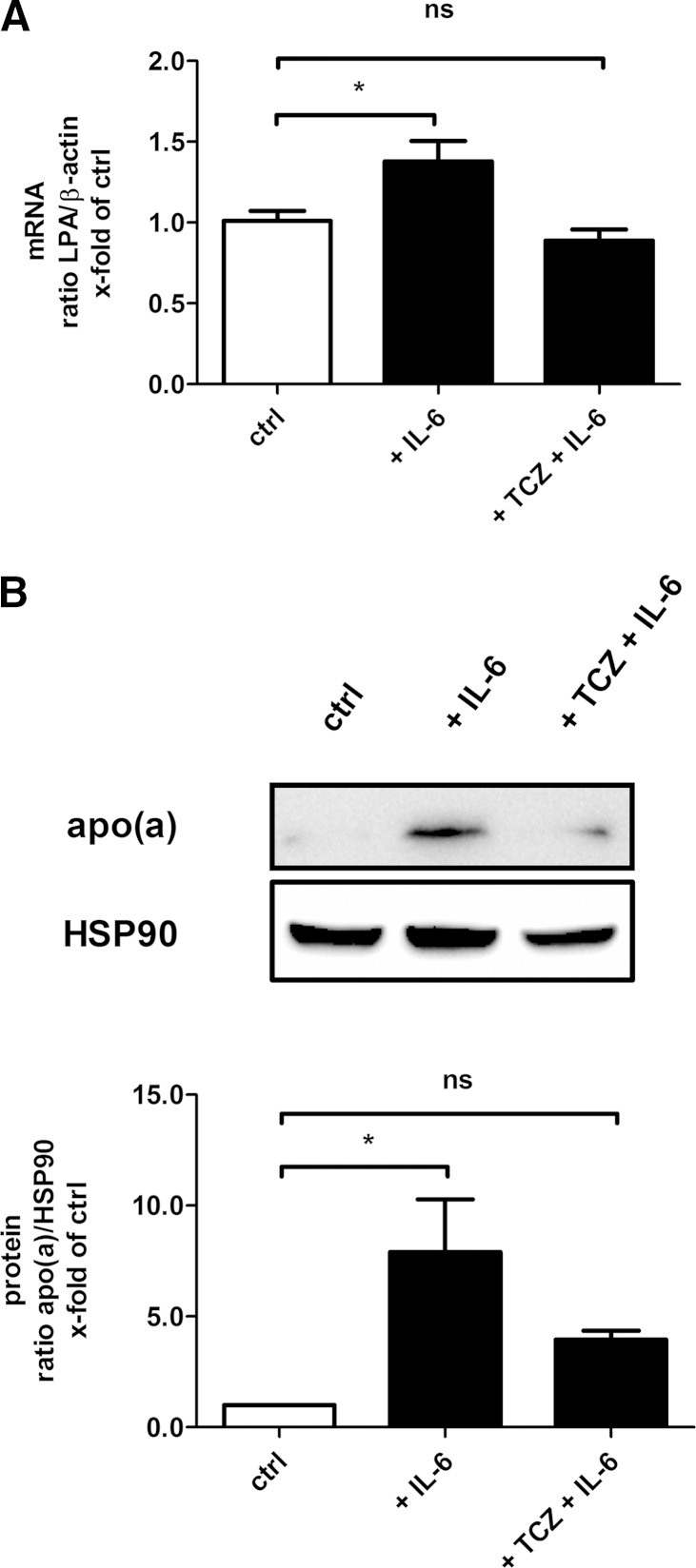
TCZ inhibits IL-6-induced expression of LPA in human hepatocytes. Shown are LPA mRNA (A) and protein (B) expression following IL-6 and TCZ exposure for 12 and 48 h in whole cell extracts of human hepatocytes, respectively. A: β-actin expression served as the housekeeping gene in real-time RT-PCR. Data are expressed in ratios of LPA/β-actin and are given as means + SEM of n = 3 independent experiments in duplicate. B: Detection of heat shock protein 90 (HSP90) expression served as loading control. The shown immunoblot is one representative out of n = 3 independent experiments. Densitometry graph data in this figure are shown as means + SEM. Statistical significances were tested using ANOVA. * P < 0.05; ns, not significant, compared with control (ctrl).
Fig. 4.
Fig. 4.
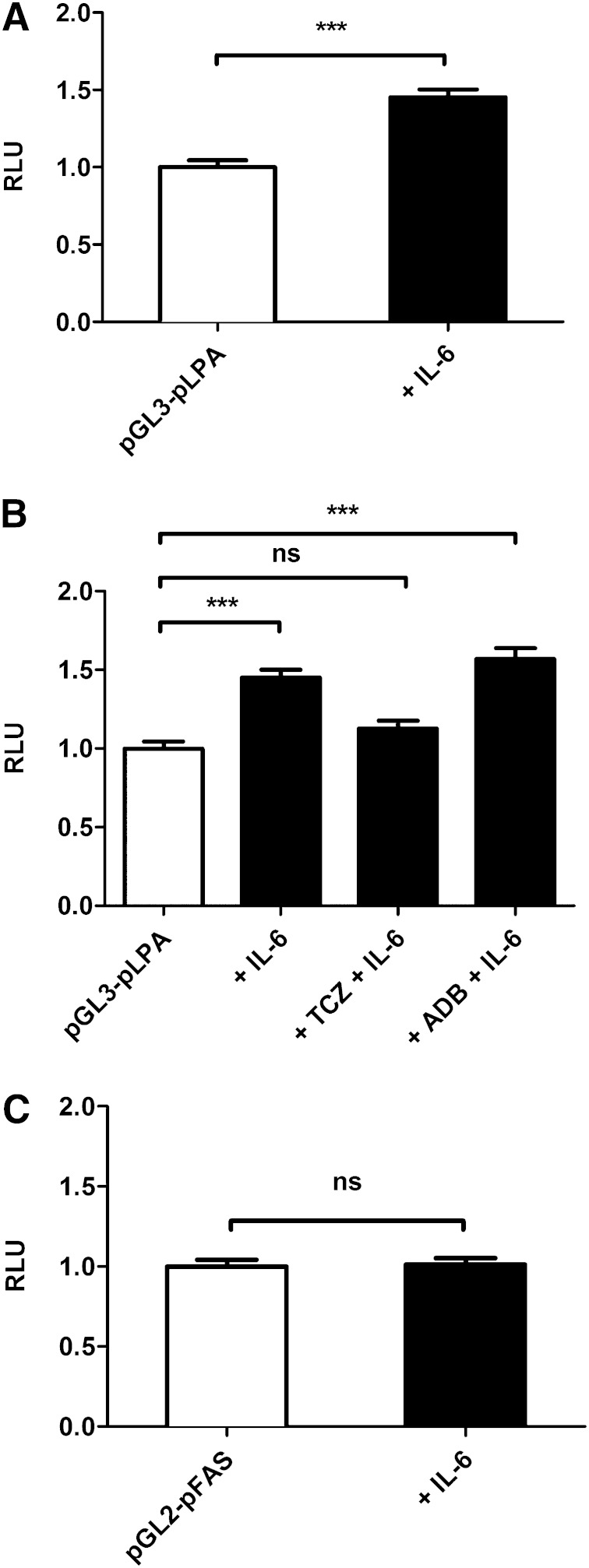
TCZ specifically inhibits LPA promoter activity in human hepatocytes. Shown is LPA (A, B) and FAS (C) promoter activity (RLU) stimulated with IL-6 (A, C) and TCZ or ADB (B) in human hepatocytes. Data are expressed in x-fold of pGL3-pLPA or pGL2-pFAS and are given as means + SEM of n = 5 independent experiments, each performed in duplicate. Statistical significance was tested using Student’s t-test, Mann-Whitney U-test, or Kruskal-Wallis test. *** P < 0.001; ns, not significant, compared with pGL3-pLPA or pGL2-pFAS.
Fig. 5.
Fig. 5.
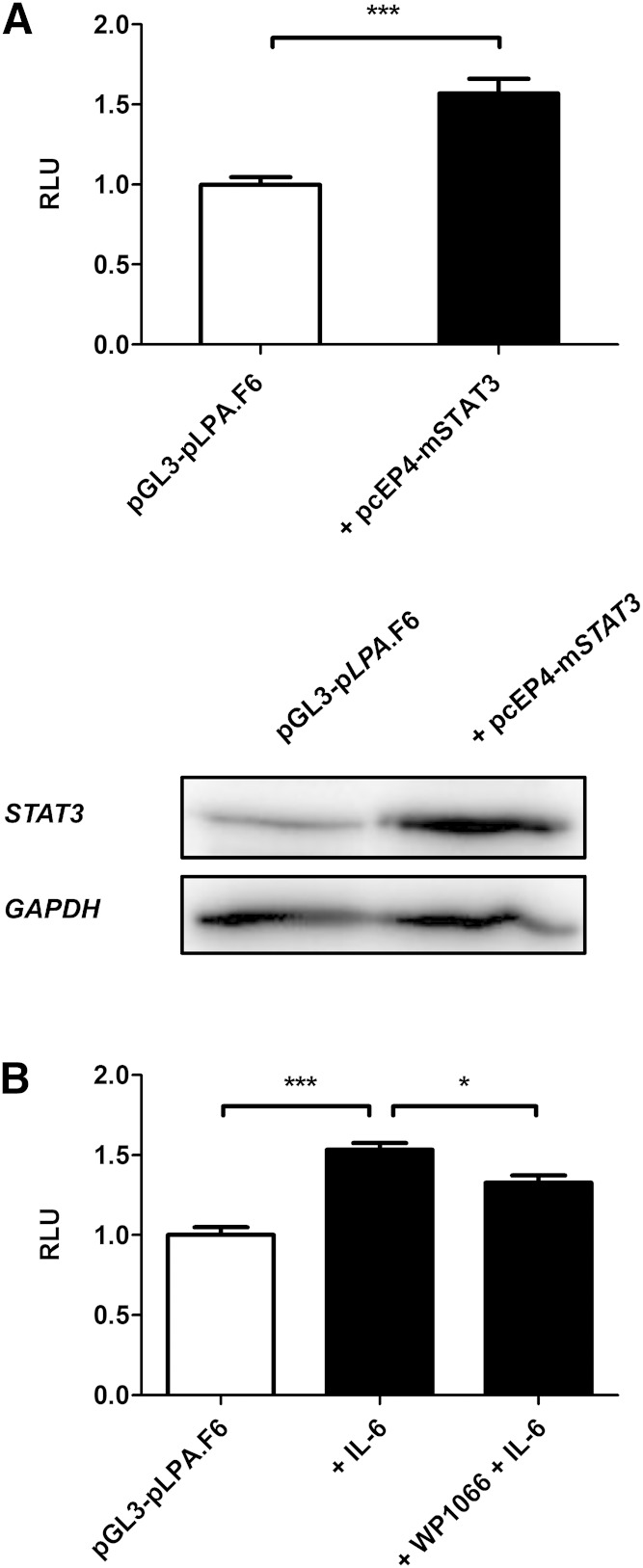
STAT3 overexpression and inhibition regulates LPA promoter activity in human hepatocytes. Shown is LPA promoter activity (RLU) (upper panel) and STAT3 protein expression (lower panel) when STAT3 is overexpressed by introducing a STAT3 overexpression plasmid containing STAT3 cDNA (pcEP4-mSTAT3) in human hepatocytes (A). B: LPA promoter activity in human hepatocytes stimulated with IL-6 and with IL-6 in the presence of STAT3/JAK-2 inhibitor WP1066. All data are expressed in x-fold of pGL3-pLPA.F6 and are given as means + SEM of n = 3 independent experiments, each performed in duplicate. Statistical significance was tested using Student’s t-test and ANOVA. * P < 0.05, *** P < 0.001, compared with pGL3-pLPA.F6.
Fig. 6.
Fig. 6.
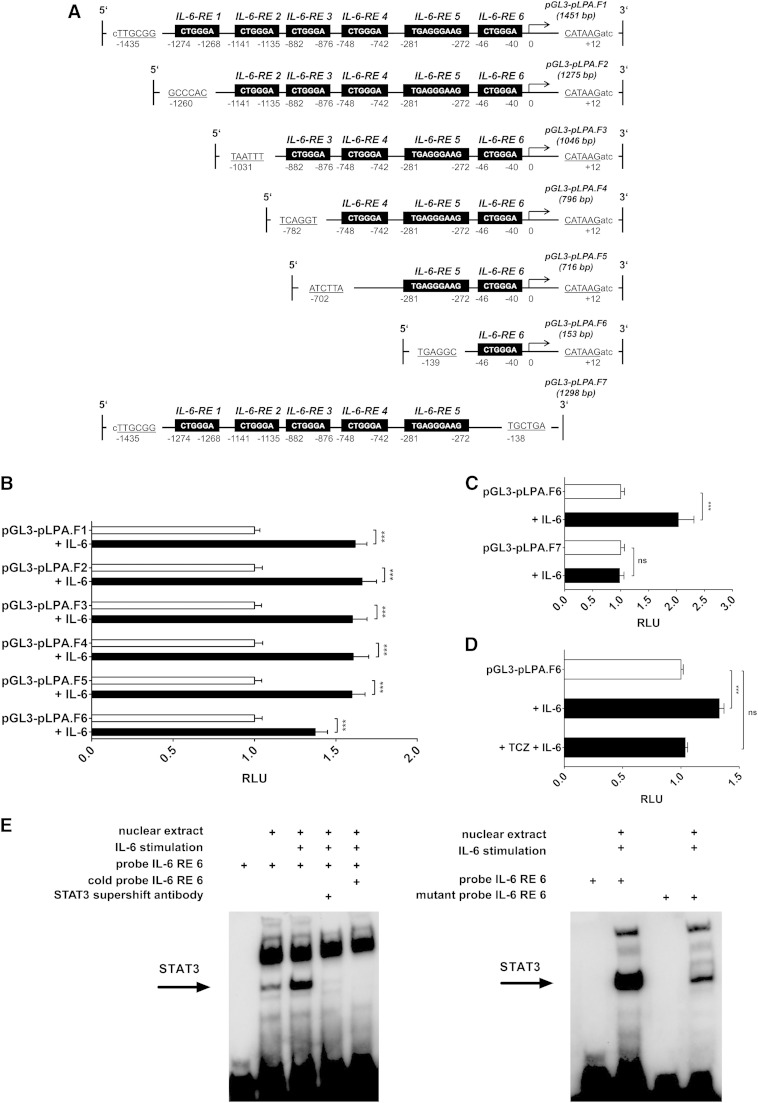
IL-6-RE 6 of LPA promoter confers major transcriptional activity following IL-6-dependent binding of transcription factor STAT3. Shown are IL-6-induced LPA promoter activities (RLU) (B, C) of truncated LPA promoter fragments (A) in human hepatocytes. D: Inhibition of IL-6-induced promoter activity of truncated LPA promoter containing IL-6-RE 6 by TCZ. Data are expressed in x-fold of the respective control (white bar) and are given as means + SEM of at least n = 4 independent experiments, each performed in duplicate. Statistical significance was tested using Student’s t-test or ANOVA. *** P < 0.001; ns, not significant. E: One representative EMSA out of at least n = 3 independent experiments using oligonucleotides being complementary to IL-6-RE 6 of the LPA promoter (left panel) and using oligonucleotides in which the specific STAT3 binding sequence (CTGGGA) of IL-6-RE 6 is mutated (right panel). The STAT3 supershift antibody used specifically blocks the DNA binding domain resulting in disappearance of the STAT3 shift [also see (36)].

References

    1. Berg K. 1963. A new serum type system in man—the Lp system. Acta Pathol. Microbiol. Scand. 59: 369–382. - PubMed
    1. Utermann G. 1989. The mysteries of lipoprotein(a). Science. 246: 904–910. - PubMed
    1. McLean J. W., Tomlinson J. E., Kuang W. J., Eaton D. L., Chen E. Y., Fless G. M., Scanu A. M., Lawn R. M. 1987. cDNA sequence of human apolipoprotein(a) is homologous to plasminogen. Nature. 330: 132–137. - PubMed
    1. Steinmetz A., Utermann G. 1992. [Lipoprotein(a) as a risk factor for arteriosclerosis]. Internist (Berl.). 33: 24–31. German. - PubMed
    1. Utermann G., Weber W. 1983. Protein composition of Lp(a) lipoprotein from human plasma. FEBS Lett. 154: 357–361. - PubMed

Publication types

MeSH terms