


Idiopathic systemic capillary leak syndrome in children
- PMID: 25713284
- PMCID: PMC4338323
- DOI: 10.1542/peds.2014-2268
Idiopathic systemic capillary leak syndrome in children
Abstract
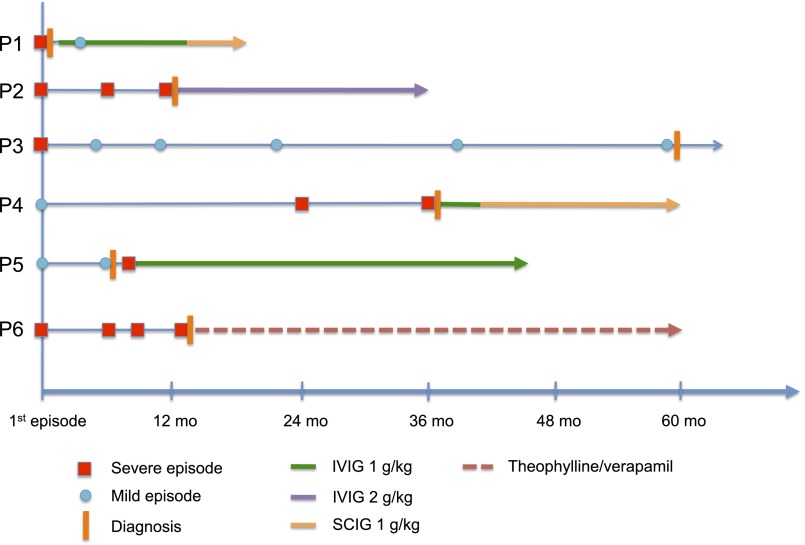
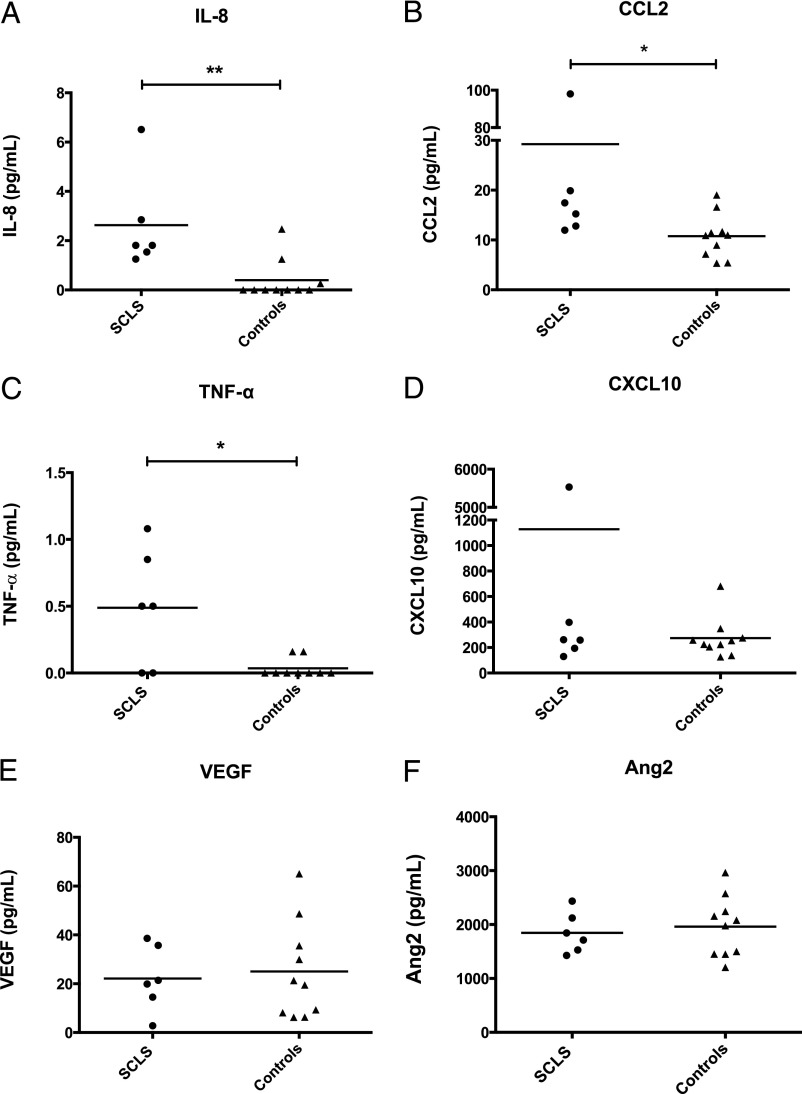
Adult subjects with systemic capillary leak syndrome (SCLS) present with acute and recurrent episodes of vascular leak manifesting as severe hypotension, hypoalbuminemia, hemoconcentration, and generalized edema. We studied clinical disease characteristics, serum cytokine profiles, and treatment modalities in a cohort of children with documented SCLS. Six children with SCLS were recruited from the United States, Australia, Canada, and Italy. Serum cytokines from SCLS subjects and a group of 10 healthy children were analyzed. Children with SCLS (aged 5-11 years old) presented with at least 1 acute, severe episode of hypotension, hypoalbuminemia, and hemoconcentration in the absence of underlying causes for these abnormalities. In contrast to what is observed in adult SCLS, identifiable infectious triggers precipitated most episodes in these children, and none of them had a monoclonal gammopathy. We found elevated levels of chemokine (C-C motif) ligand 2 (CCL2), interleukin-8, and tumor necrosis factor α in baseline SCLS sera compared with the control group. All patients are alive and well on prophylactic therapy, with 4 patients receiving intravenous or subcutaneous immunoglobulins at regular intervals. The clinical manifestations of pediatric and adult SCLS are similar, with the notable exceptions of frequent association with infections and the lack of monoclonal gammopathy. Prophylactic medication, including high dose immunoglobulins or theophylline plus verapamil, appears to be safe and efficacious therapy for SCLS in children.
Keywords: inflammatory cytokines; intravenous immunoglobulin; systemic capillary leak syndrome; vascular hyperpermeability.
Copyright © 2015 by the American Academy of Pediatrics.
Figures
References
-
- Clarkson B, Thompson D, Horwith M, Luckey EH. Cyclical edema and shock due to increased capillary permeability. Am J Med. 1960;29:193–216 - PubMed
-
- Gousseff M, Arnaud L, Lambert M, et al. Capillary Leak Syndrome Registry . The systemic capillary leak syndrome: a case series of 28 patients from a European registry. Ann Intern Med. 2011;154(7):464–471 - PubMed
-
- Foeldvari I, Waida E, Junker AK. Systemic capillary leak syndrome in a child. J Pediatr. 1995;127(5):739–741 - PubMed
Publication types
MeSH terms
Substances
Grants and funding
LinkOut - more resources
Full Text Sources
Other Literature Sources
Medical
