


The acute effect of resistance exercise with blood flow restriction with hemodynamic variables on hypertensive subjects
- PMID: 25713647
- PMCID: PMC4332187
- DOI: 10.2478/hukin-2014-0092
The acute effect of resistance exercise with blood flow restriction with hemodynamic variables on hypertensive subjects
Abstract
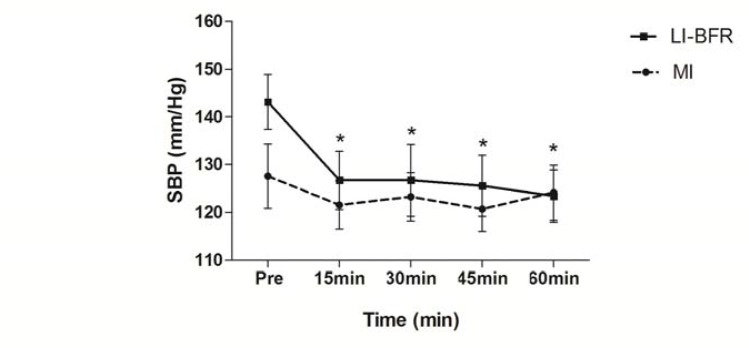
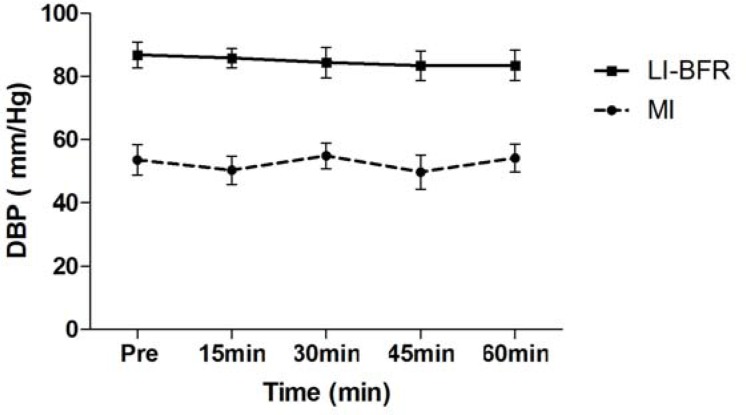
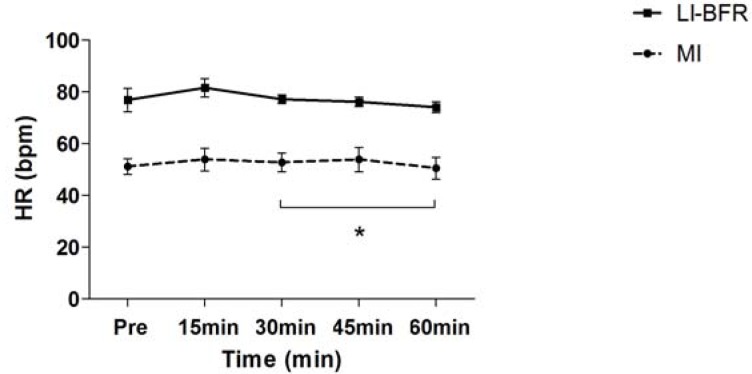
The purpose of this study was to analyze systolic blood pressure (SBP), diastolic blood pressure (DBP) and the heart rate (HR) before, during and after training at moderate intensity (MI, 50%-1RM) and at low intensity with blood flow restriction (LIBFR). In a randomized controlled trial study, 14 subjects (average age 45±9,9 years) performed one of the exercise protocols during two separate visits to the laboratory. SBP, DBP and HR measurements were collected prior to the start of the set and 15, 30, 45 and 60 minutes after knee extension exercises. Repeated measures of analysis of variance (ANOVA) were used to identify significant variables (2 × 5; group × time). The results demonstrated a significant reduction in SBP in the LIBFR group. These results provide evidence that strength training performed acutely alters hemodynamic variables. However, training with blood flow restriction is more efficient in reducing blood pressure in hypertensive individuals than training with moderate intensity.
Keywords: blood pressure; heart rate; hypertension; strength training; vascular occlusion.
Figures
References
-
- Assunção W, Daltro M, Simão R, Polito M, Monteiro W. Acute cardiovascular responses in strenght training conducted in exercises for large and small muscular groups. Rev Bras Med Esporte. 2007;13:118–122.
-
- Brown LE, Weir JP. ASEP procedures recommendation I: accurate assessment of muscular strength and power. J Exerc Physiol. 2001;4:1–21.
-
- Carmo AC, Santana DA, Awad SMN, Navarro F. Systemic blood pressure monitoring in the immediate and delayed acute effect of the exercise resisted moderate in a light individual hypertension. Revista Brasileira de Prescrição e Fisiologia do Exercício. 2007;1:28–38.
-
- Costa JBY, Gerage AM, Gonçalves CGS, Pina FLC, Polito MD. Influence of the training status on the blood pressure behavior after a resistance training session in hypertensive older females. Rev Bras Med Esporte. 2010;16:103–106.
-
- Laurentino G, Ugrinowitsch C, Aihara AY, Fernandes AR, Parcell AC, Ricard M, Tricoli V. Effects of strength training and vascular occlusion. Int J Sports Med. 2008;29:664–667. - PubMed
LinkOut - more resources
Full Text Sources
Other Literature Sources
Medical