


Effect of Selective Muscle Training Using Visual EMG Biofeedback on Infraspinatus and Posterior Deltoid
- PMID: 25713668
- PMCID: PMC4327383
- DOI: 10.2478/hukin-2014-0113
Effect of Selective Muscle Training Using Visual EMG Biofeedback on Infraspinatus and Posterior Deltoid
Abstract
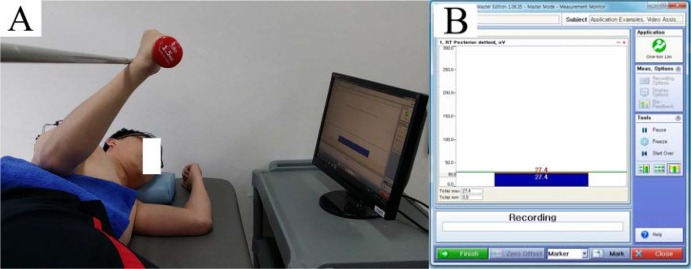
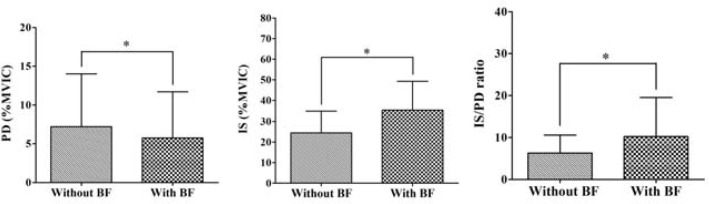
We investigated the effects of visual electromyography (EMG) biofeedback during side-lying shoulder external rotation exercise on the EMG amplitude for the posterior deltoid, infraspinatus, and infraspinatus/posterior deltoid EMG activity ratio. Thirty-one asymptomatic subjects were included. Subjects performed side-lying shoulder external rotation exercise with and without visual EMG biofeedback. Surface EMG was used to collect data from the posterior deltoid and infraspinatus muscles. The visual EMG biofeedback applied the pre-established threshold to prevent excessive posterior deltoid muscle contraction. A paired t-test was used to determine the significance of the measurements between without vs. with visual EMG biofeedback. Posterior deltoid activity significantly decreased while infraspinatus activity and the infraspinatus/posterior activity ratio significantly increased during side-lying shoulder external rotation exercise with visual EMG biofeedback. This suggests that using visual EMG biofeedback during shoulder external rotation exercise is a clinically effective training method for reducing posterior deltoid activity and increasing infraspinatus activity.
Keywords: EMG biofeedback; Infraspinatus; Posterior deltoid; Shoulder external rotation.
Figures
References
-
- Basmajian JV. Biofeedback in rehabilitation: a review of principles and practices. Arch Phys Med Rehabil. 1981;62:469–475. - PubMed
-
- Bitter NL, Clisby EF, Jones MA, Magarey ME, Jaberzadeh S, Sandow MJ. Relative contributions of infraspinatus and deltoid during external rotation in healthy shoulders. J Shoulder Elbow Surg. 2007;16(5):563–568. - PubMed
-
- Burkhart SS. Arthroscopic treatment of massive rotator cuff tears. Clinical results and biomechanical rationale. Clin Orthop Relat Res. 1991;267:45–56. - PubMed
-
- Caldwell C, Sahrmann S, Van Dillen L. Use of a movement system impairment diagnosis for physical therapy in the management of a patient with shoulder pain. J Orthop Sports Phys Ther. 2007;37(9):551–563. - PubMed
LinkOut - more resources
Full Text Sources
Other Literature Sources