


Review
doi: 10.3389/fsurg.2015.00004.
eCollection 2015.
Retroperitoneal liposarcoma: current insights in diagnosis and treatment
Affiliations
- PMID: 25713799
- PMCID: PMC4322543
- DOI: 10.3389/fsurg.2015.00004
Item in Clipboard
Review
Retroperitoneal liposarcoma: current insights in diagnosis and treatment
Front Surg.
.
Abstract
Retroperitoneal liposarcoma (RLS) is a rare, biologically heterogeneous tumor that present considerable challenges due to its size and deep location. As a consequence, the majority of patients with high-grade RLS will develop locally recurrent disease following surgery, and this constitutes the cause of death in most patients. Here, we review current insights and controversies regarding histology, molecular biology, extent of surgery, (neo)adjuvant treatment, and systemic treatment including novel targeted agents in RLS.
Keywords: MDM2; liposarcoma; radiotherapy; sarcoma; surgery.
Figures
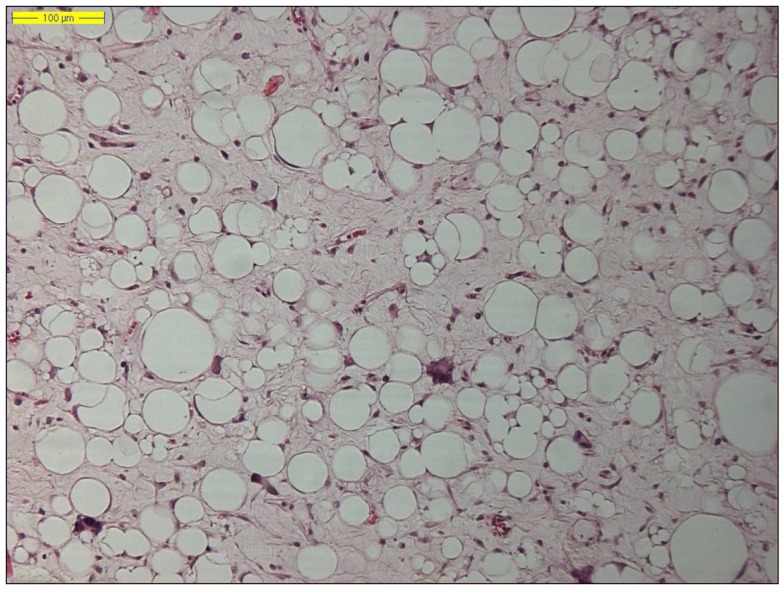
Histology of a lipoma-like well-differentiated liposarcoma (hematoxylin and eosin, original magnification 200×).
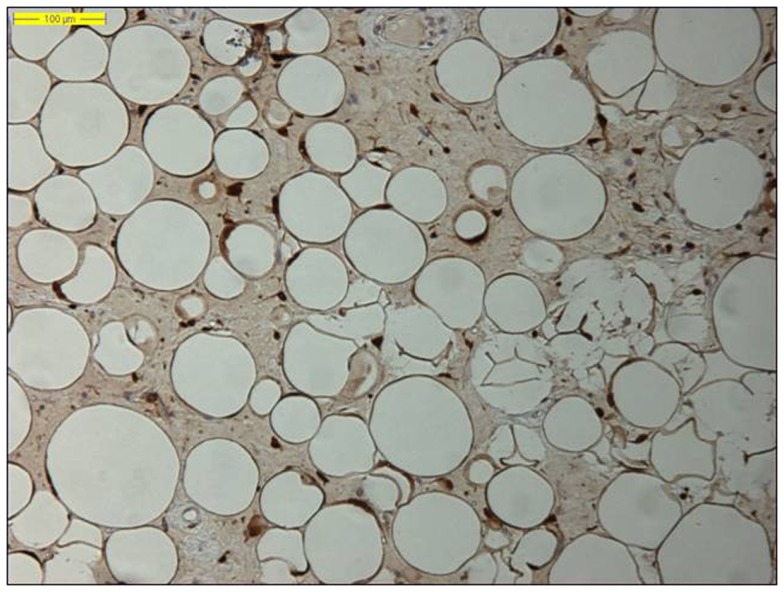
Nuclear MDM2 immunohistochemical overexpression in the atypical adipocytes in a lipoma-like well-differentiated liposarcoma (original magnification 200×).
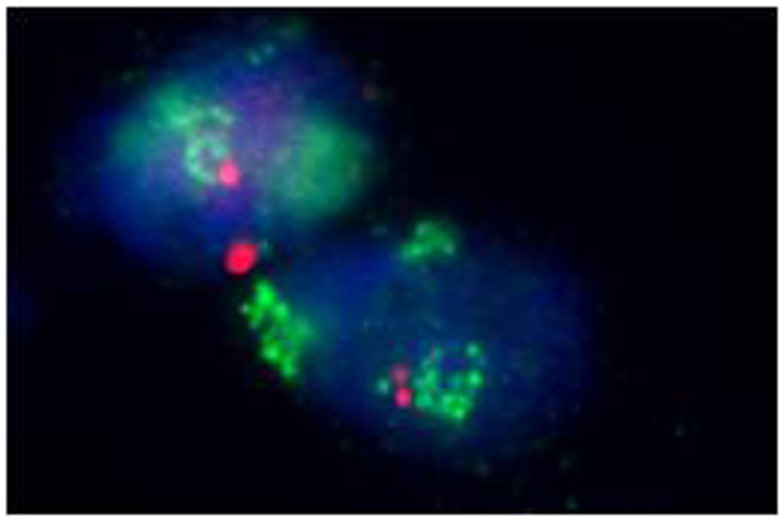
Amplification of the MDM2 gene in a well-differentiated liposarcoma (fluorescence in situ hybridization, FISH).
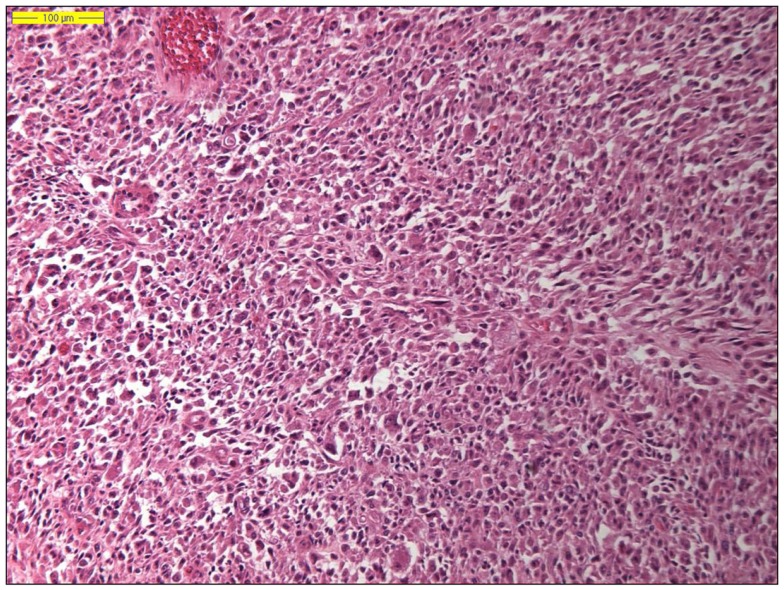
Histology of a dedifferentiated liposarcoma (hematoxylin and eosin, original magnification 100×).
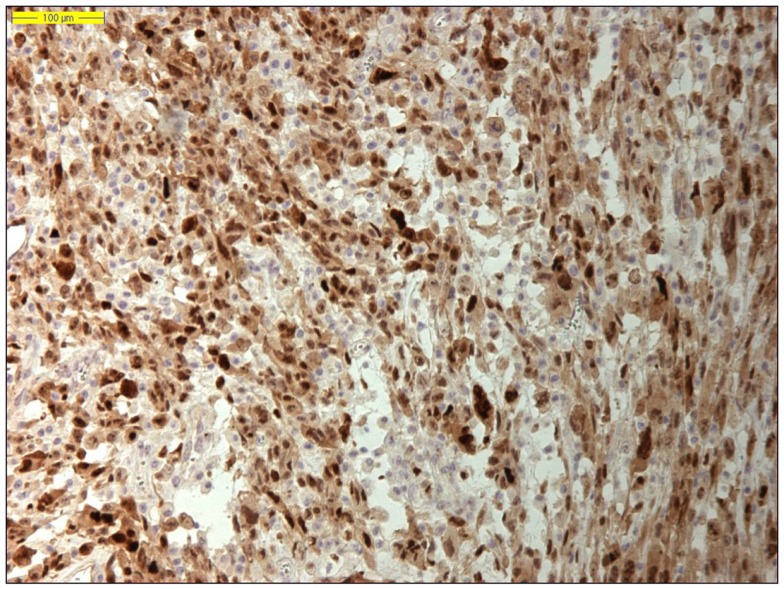
Nuclear MDM2 immunohistochemical overexpression in dedifferentiated liposarcoma (original magnification 200×).

Nuclear CDK4 immunohistochemical overexpression in dedifferentiated liposarcoma (original magnification 200×).
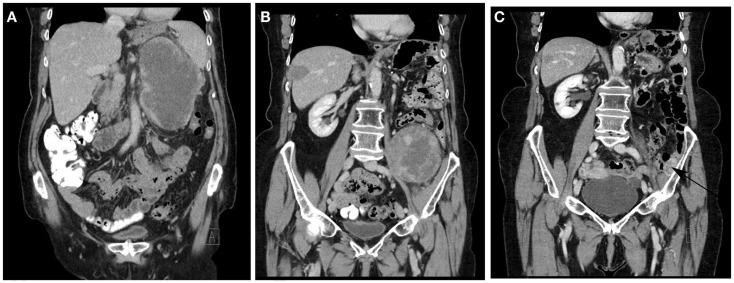
Typical disease course of dedifferentiated liposarcoma in an elderly patient, who presented with a recurrent RLS in February 2011 2 years after primary surgery (A). The patient was treated with neoadjuvant radiotherapy (45 Gy in fractions of 1.8 Gy) and macroscopically completes resection. In May 2012, a solitary metastasis in the right liver lobe (B) was treated with RF ablation. In September 2012, a solitary 1.6 cm metastasis was removed thoracoscopically from the right lower lobe. In May 2013, a second retroperitoneal recurrence developed (B) for which repeat macroscopically complete surgery was performed. In September 2014, a small recurrence was noted against the left iliac bone [(C) arrow] for which additional surgery is planned. No other local or metastatic locations were noted.
References
-
- Mirilas P, Skandalakis JE. Surgical anatomy of the retroperitoneal spaces-part I: embryogenesis and anatomy. Am Surg (2009) 75(11):1091–7. - PubMed
-
- Morgagni J. De sedibus, et causis morborum per anatomen indagatis, Libri quinque. Venetia: Remondinius; (1761).
-
- Lobstein J. Traité d’Anatomie Pathologique. Paris: FG Levrault; (1829).
Publication types
LinkOut - more resources
Full Text Sources
Other Literature Sources
Research Materials
