


Contagious itch: what we know and what we would like to know
- PMID: 25717300
- PMCID: PMC4324061
- DOI: 10.3389/fnhum.2015.00057
Contagious itch: what we know and what we would like to know
Abstract
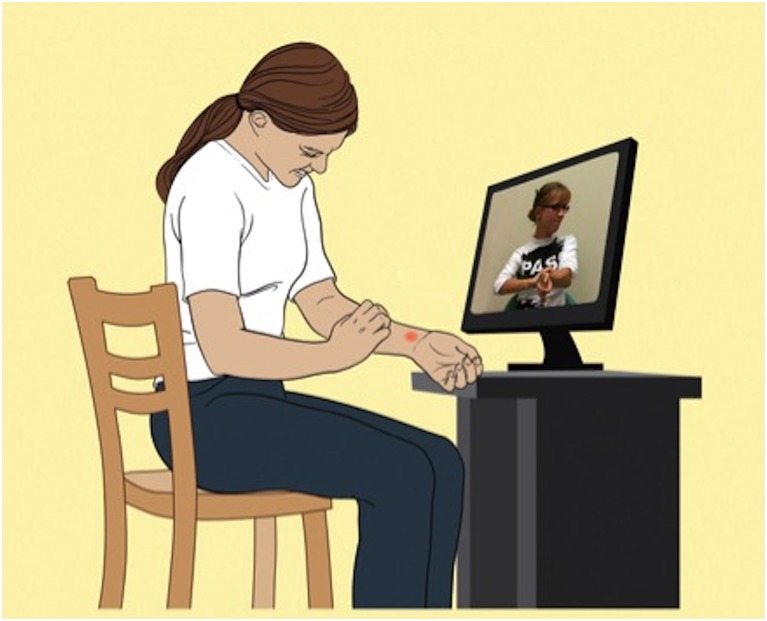
All humans experience itch in the course of their life. Even a discussion on the topic of itch or seeing people scratch can evoke the desire to scratch. These events are coined "contagious itch" and are very common. We and others have shown that videos showing people scratching and pictures of affected skin or insects can induce itch in healthy persons and chronic itch patients. In our studies, patients with atopic dermatitis (AD) were more susceptible to visual itch cues than healthy. Also, personality traits like agreeableness and public self-consciousness were associated with induced scratching in skin patients, while neuroticism correlated with induced itch in healthy subjects. The underlying course of contagious itch is not yet fully understood. It is hypothesized that there are human mirror neurons that are active when we imitate actions and/or negative affect. Until now, there has been only limited data on the mechanisms of brain activation in contagious itch though. We have barely begun to understand the underlying physiological reactions and the triggering factors of this phenomenon. We summarize what we currently know about contagious itch and provide some suggestions what future research should focus on.
Keywords: atopic dermatitis; contagious itch; itch; mirror neurons; psychological factors.
Figures
References
Publication types
LinkOut - more resources
Full Text Sources
Other Literature Sources
Research Materials
