


Potentiation of antimicrobial photodynamic inactivation mediated by a cationic fullerene by added iodide: in vitro and in vivo studies
- PMID: 25723093
- PMCID: PMC4899971
- DOI: 10.2217/nnm.14.131
Potentiation of antimicrobial photodynamic inactivation mediated by a cationic fullerene by added iodide: in vitro and in vivo studies
Abstract
Background: Antimicrobial photodynamic inactivation with fullerenes bearing cationic charges may overcome resistant microbes.
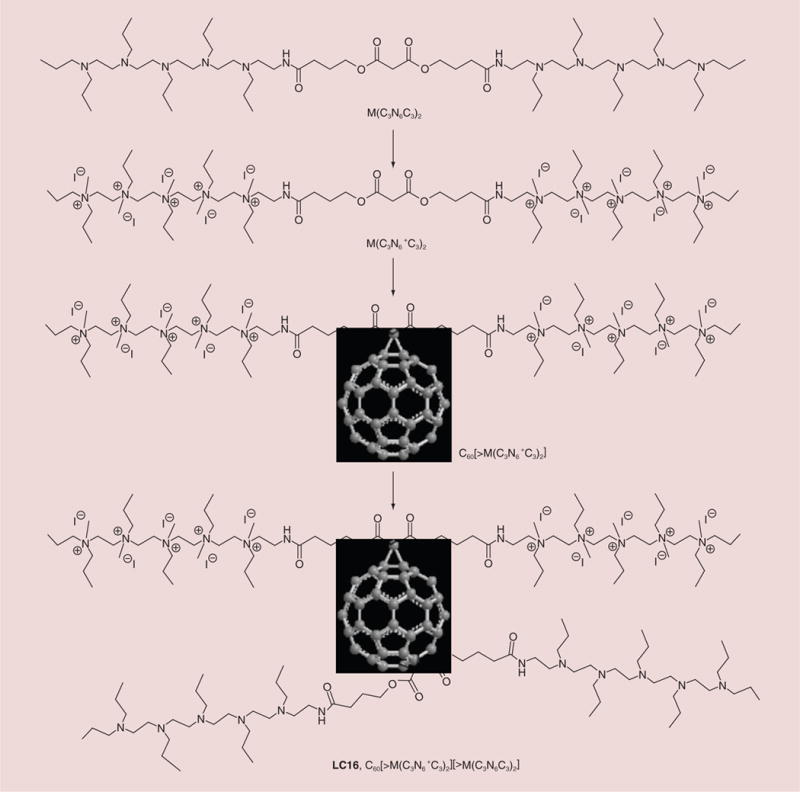
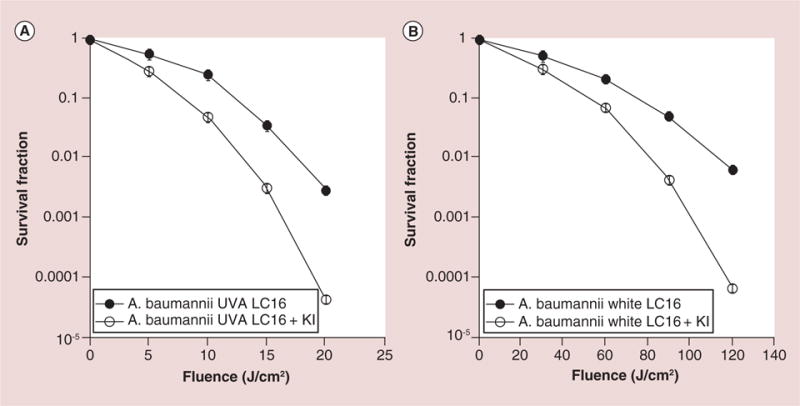
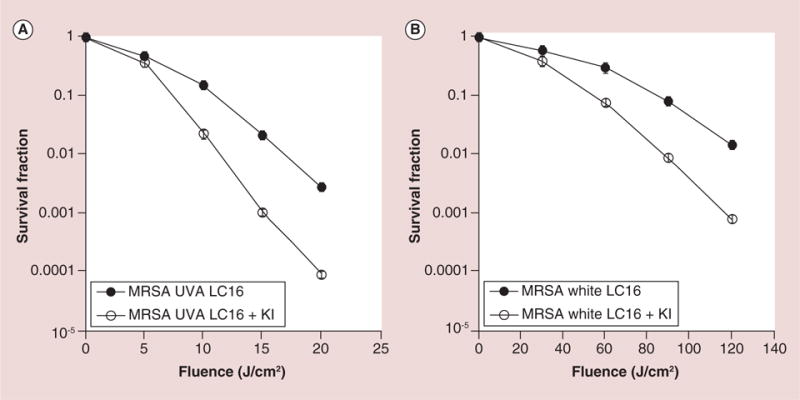
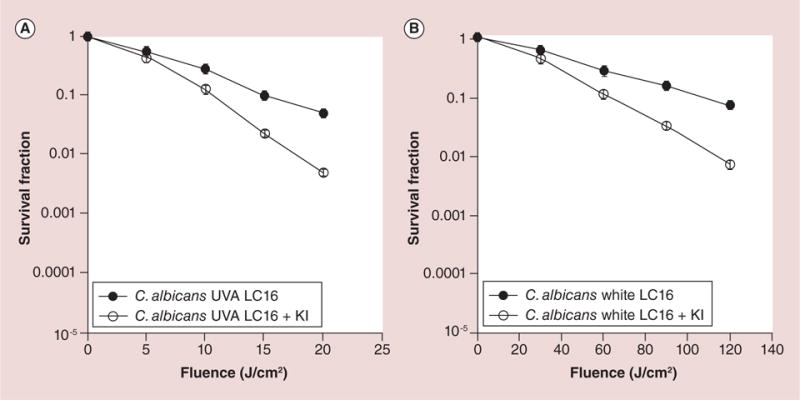
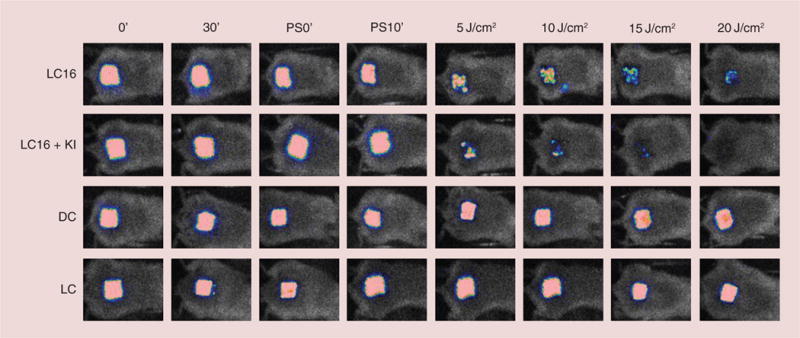
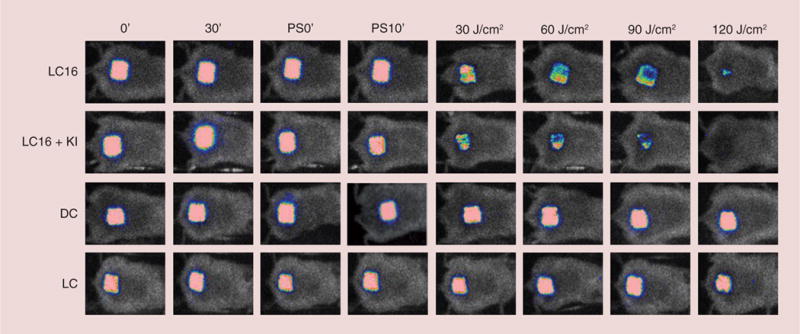
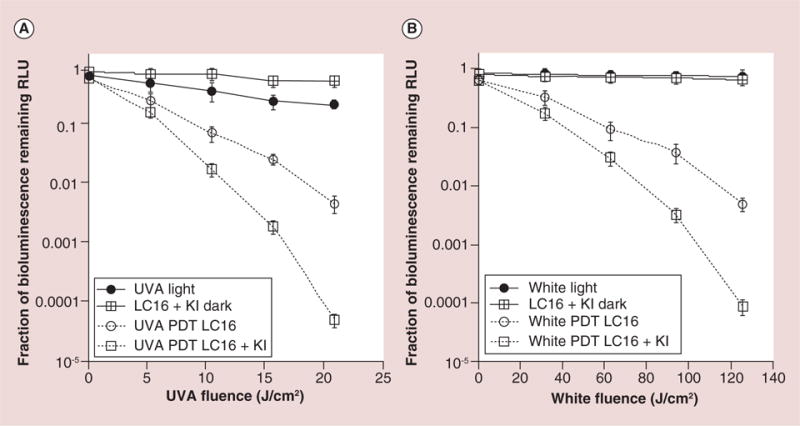
Methods & results: We synthesized C60-fullerene (LC16) bearing decaquaternary chain and deca-tertiary-amino groups that facilitates electron-transfer reactions via the photoexcited fullerene. Addition of the harmless salt, potassium iodide (10 mM) potentiated the ultraviolet A (UVA) or white light-mediated killing of Gram-negative bacteria Acinetobacter baumannii, Gram-positive methicillin-resistant Staphylococcus aureus and fungal yeast Candida albicans by 1-2+ logs. Mouse model infected with bioluminescent Acinetobacter baumannii gave increased loss of bioluminescence when iodide (10 mM) was combined with LC16 and UVA/white light.
Conclusion: The mechanism may involve photoinduced electron reduction of (1)(C60>)* or (3)(C60>)* by iodide producing I· or I2 followed by subsequent intermolecular electron-transfer events of (C60>)-· to produce reactive radicals.
Keywords: antimicrobial photodynamic therapy; bioluminescent bacteria; decacationic fullerene; decatertiary-amine chain; in vivo infection model; iodide potentiation.
Conflict of interest statement
The authors have no other relevant affiliations or financial involvement with any organization or entity with a financial interest in or financial conflict with the subject matter or materials discussed in the manuscript apart from those disclosed.
Figures
References
Publication types
MeSH terms
Substances
Grants and funding
LinkOut - more resources
Full Text Sources
Other Literature Sources
