


Regulation of inflammation and fibrosis by macrophages in lymphedema
- PMID: 25724493
- PMCID: PMC4551121
- DOI: 10.1152/ajpheart.00598.2014
Regulation of inflammation and fibrosis by macrophages in lymphedema
Abstract
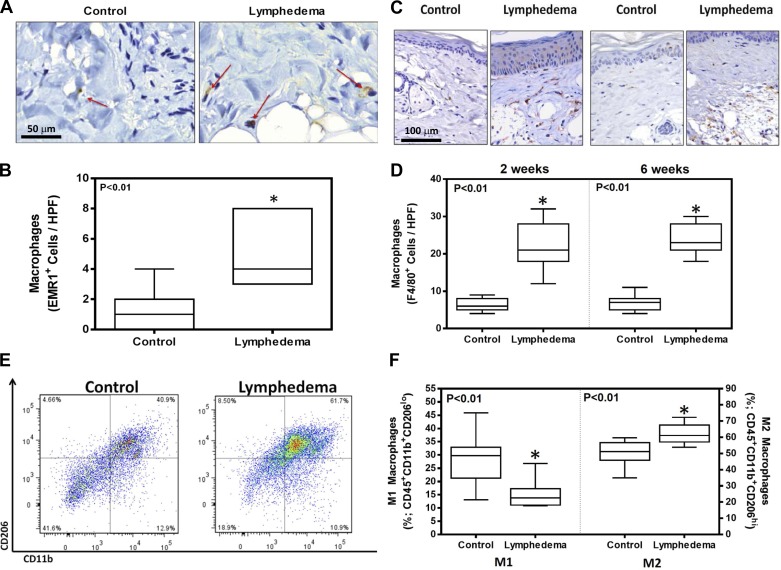
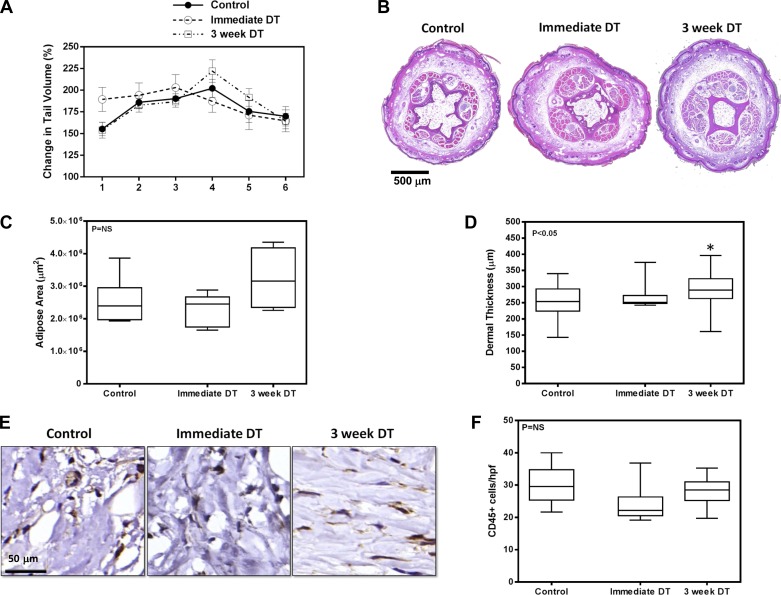
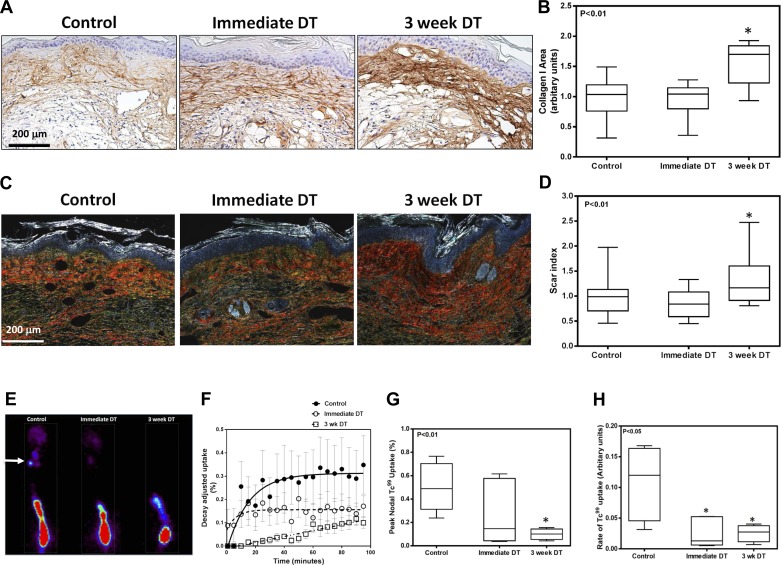
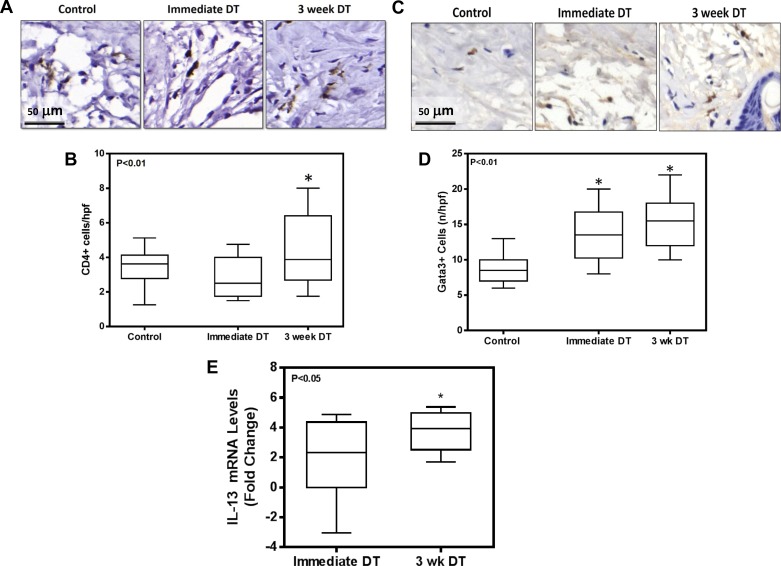
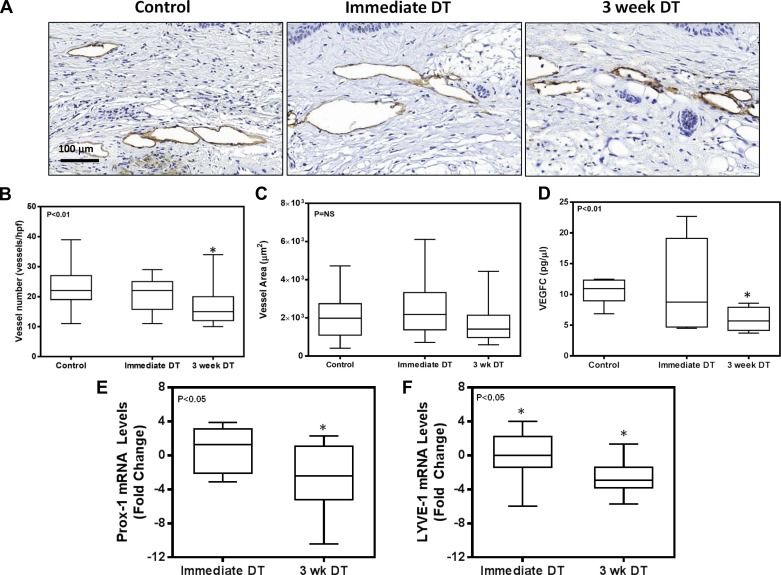
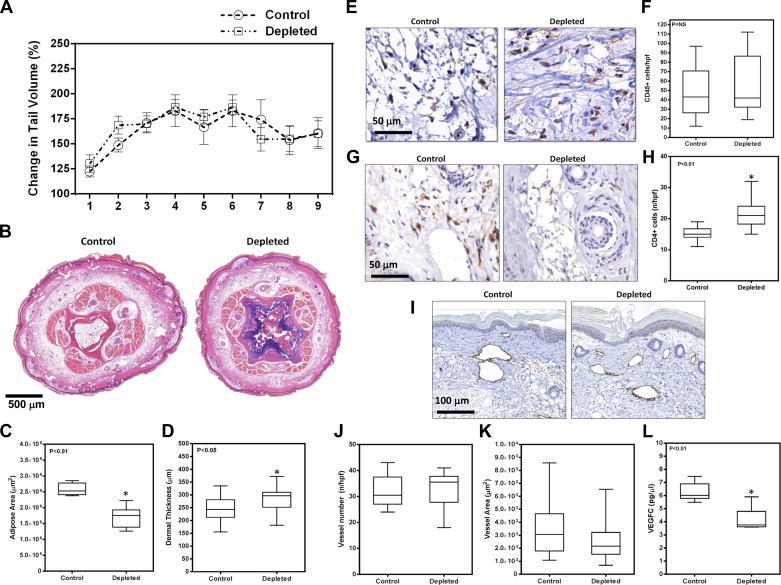
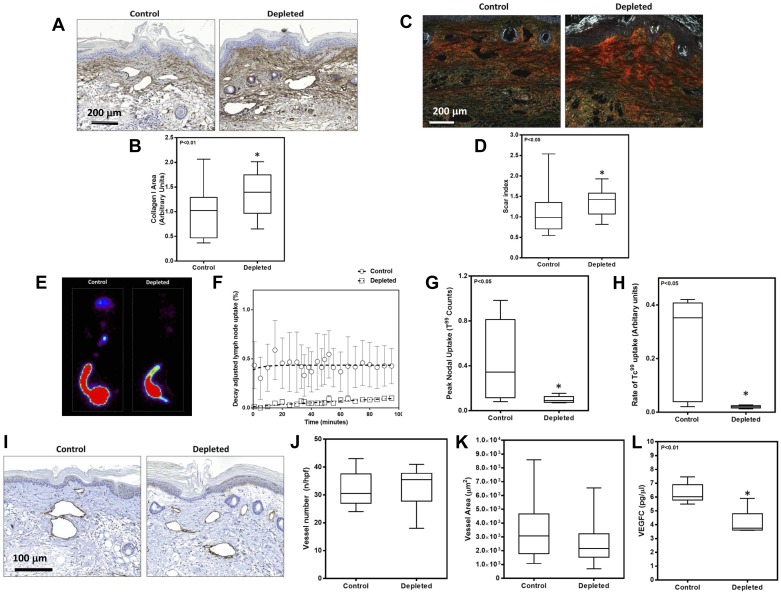
Lymphedema, a common complication of cancer treatment, is characterized by inflammation, fibrosis, and adipose deposition. We have previously shown that macrophage infiltration is increased in mouse models of lymphedema. Because macrophages are regulators of lymphangiogenesis and fibrosis, this study aimed to determine the role of these cells in lymphedema using depletion experiments. Matched biopsy specimens of normal and lymphedema tissues were obtained from patients with unilateral upper extremity breast cancer-related lymphedema, and macrophage accumulation was assessed using immunohistochemistry. In addition, we used a mouse tail model of lymphedema to quantify macrophage accumulation and analyze outcomes of conditional macrophage depletion. Histological analysis of clinical lymphedema biopsies revealed significantly increased macrophage infiltration. Similarly, in the mouse tail model, lymphatic injury increased the number of macrophages and favored M2 differentiation. Chronic macrophage depletion using lethally irradiated wild-type mice reconstituted with CD11b-diphtheria toxin receptor mouse bone marrow did not decrease swelling, adipose deposition, or overall inflammation. Macrophage depletion after lymphedema had become established significantly increased fibrosis and accumulation of CD4(+) cells and promoted Th2 differentiation while decreasing lymphatic transport capacity and VEGF-C expression. Our findings suggest that macrophages home to lymphedematous tissues and differentiate into the M2 phenotype. In addition, our findings suggest that macrophages have an antifibrotic role in lymphedema and either directly or indirectly regulate CD4(+) cell accumulation and Th2 differentiation. Finally, our findings suggest that lymphedema-associated macrophages are a major source of VEGF-C and that impaired macrophage responses after lymphatic injury result in decreased lymphatic function.
Keywords: diphtheria toxin; fibrosis; inflammation; lymphatic function; lymphedema; macrophages.
Copyright © 2015 the American Physiological Society.
Figures

References
-
- Clavin NW, Avraham T, Fernandez J, Daluvoy SV, Soares MA, Chaudhry A, Mehrara BJ. TGF-β1 is a negative regulator of lymphatic regeneration during wound repair. Am J Physiol Heart Circ Physiol 295: H2113–H2127, 2008. - PubMed
-
- Cormier JN, Askew RL, Mungovan KS, Xing Y, Ross MI, Armer JM. Lymphedema beyond breast cancer: a systematic review and meta-analysis of cancer-related secondary lymphedema. Cancer 116: 5138–5149, 2010. - PubMed
Publication types
MeSH terms
Substances
Grants and funding
LinkOut - more resources
Full Text Sources
Other Literature Sources
Medical
Molecular Biology Databases
Research Materials
