. 2015 Mar 2:5:8667.
doi: 10.1038/srep08667.

Using visual lateralization to model learning and memory in zebrafish larvae

Affiliations

Using visual lateralization to model learning and memory in zebrafish larvae

Madelene Åberg Andersson et al. Sci Rep. .

Abstract

Impaired learning and memory are common symptoms of neurodegenerative and neuropsychiatric diseases. Present, there are several behavioural test employed to assess cognitive functions in animal models, including the frequently used novel object recognition (NOR) test. However, although atypical functional brain lateralization has been associated with neuropsychiatric conditions, spanning from schizophrenia to autism, few animal models are available to study this phenomenon in learning and memory deficits. Here we present a visual lateralization NOR model (VLNOR) in zebrafish larvae as an assay that combines brain lateralization and NOR. In zebrafish larvae, learning and memory are generally assessed by habituation, sensitization, or conditioning paradigms, which are all representatives of nondeclarative memory. The VLNOR is the first model for zebrafish larvae that studies a memory similar to the declarative memory described for mammals. We demonstrate that VLNOR can be used to study memory formation, storage, and recall of novel objects, both short and long term, in 10-day-old zebrafish. Furthermore we show that the VLNOR model can be used to study chemical modulation of memory formation and maintenance using dizocilpine (MK-801), a frequently used non-competitive antagonist of the NMDA receptor, used to test putative antipsychotics in animal models.


Figures
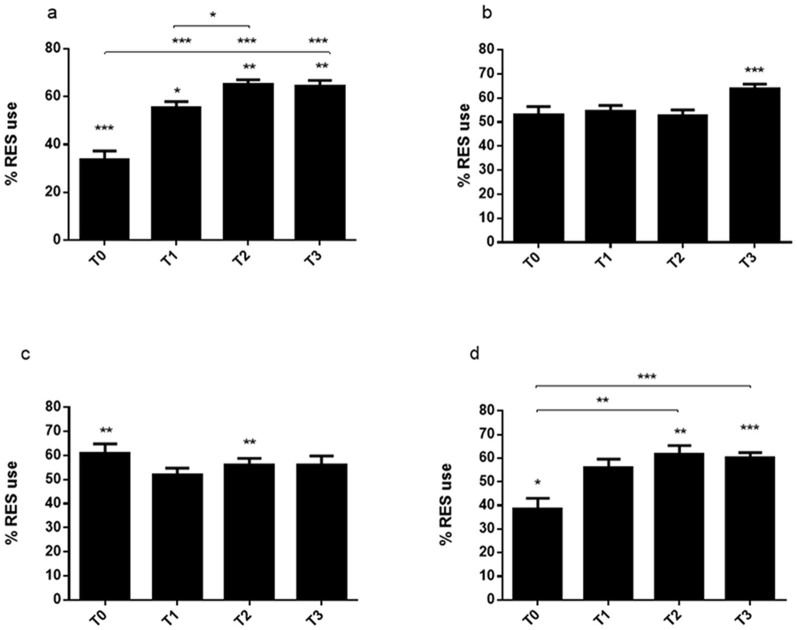
Figure 1
Figure 1. Memory formation and maintenance in 10 dpf zebrafish larvae, measured by visual lateralization in response to a novel object.
Results are presented as mean values over 2 min intervals T0, 0–2 min; T1, 2–4 min; T2 4–6 min; T3, 6–8 min giving a total of 8 minutes per session. LES or RES preferences are marked by significance above the bars in the graphs. (a) RES use when presented with a novel object during the familiarization phase. (b) RES use when novel objects are reintroduced 1 hour after familiarization. Significant RES preference was detected at T3 (t = 6.78, p < 0.001). (c) Mean RES use when viewing a novel object when reintroduced 2 hours post familiarization. Significant RES preferences are observed at T0 (t = 3.09, p = 0.003) and T2 (t = 2.46, p = 0.018). (d) RES use when novel objects are reintroduced 3 hours after initial familiarization. A significant LES preference is detected at T0 (t = −2.52, p = 0.016) and RES preferences at T2 (t = 3.32, p = 0.002) and T3 (t = 4.46, p < 0.001). Significance *p < 0.05, **p < 0.001, ***p < 0.0001, computed using RMANOVA and Turkey's post-hoc test or a single sample t-test, tested against 50%. n = 48. Error bars indicate standard error of mean (SEM).
Figure 2
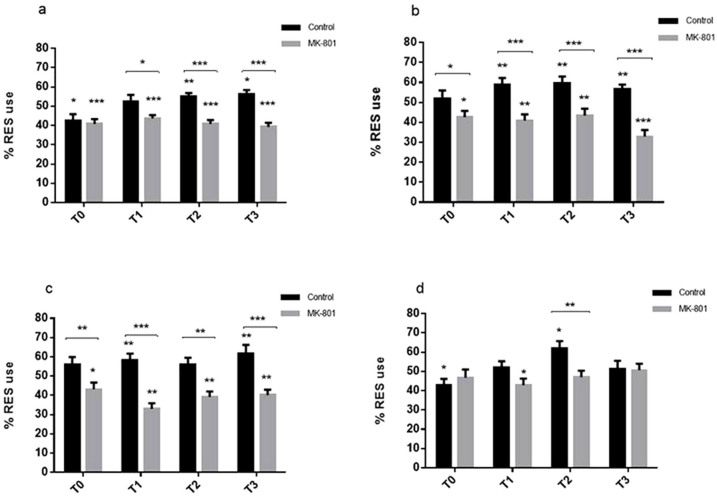
Figure 2. Pharmacologic modulation of NOR visualised by visual lateralization.
0.1 μM MK-801 is inserted into the wells 30 min prior to the familiarization phase. Results are presented as mean values over 2 min intervals: T0, 0–2 min; T1, 2–4 min; T2 4–6 min; T3, 6–8 min, (a total of 8 minutes per session). LES and RES preferences are indicated by significance above the graph bars. (a) RES use during the familiarization phase with novel objects after 30 min incubation in MK-801. Controls had significant LES preference at T0 (t = −2.29, p = 0.029) and RES preference at T2 (t = 2.74, p = 0.010) and T3 (t = 2.51, p = 0.017). MK-801-treated group had significant LES preference at T0, (t = −3.84, p = < 0.001) T1 (t = −3.71, p = < 0.001), T2 (t = −4.82, p < 0.001), and T3 (t = −5.11, p < 0.001). (b) RES use after reintroduction of novel objects (1 hour after familiarization). MK-801 has been present in the wells throughout the experiment. Controls display significant RES preference at T1 (t = 2.79, p = 0.008), T2 (t = 2.91, p = 0.007) and T3 (t = 2.41, p = 0.010) (c) RES during reintroduction of novel objects 2 hours after familiarization. Controls have significant RES preferences at T1 (t = 2.44, p = 0.020), and T3 (t = 2.59, p = 0.014). (d) RES use during novel object reintroduction 3 hours post familiarization. Controls display LES preference at T0 (t = −2.15, p = 0.039) and RES preference is observed at T2 (t = 3.26, p = 0.003). MK- 801 treated individuals display LES preference at T1 (t = −2.04, p = 0.015). Significance *p < 0.05, **p < 0.001, ***p < 0.0001,
Figure 3
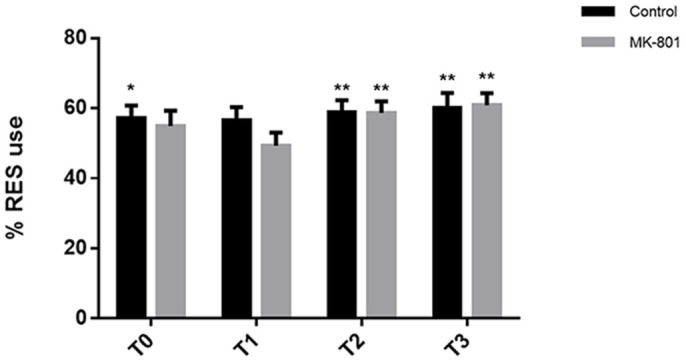
Figure 3. The effects of NMDA receptor antagonist MK-801 (0.1 μM) treatment on long term memory retrieval in 10 dpf zebrafish.
Individuals were familiarized with novel objects for 2 hours in a massed paradigm. Individuals were moved to a fresh media without treatment for 23 hours, after which MK-801 was administered. Reintroduction of the objects occurred 1 hour after MK-801 administration. Controls have a significant RES preference at T0 (t = 2.00, p = 0.051), T2 (t = 3.44, p = 0.022) and T3 (t = 4.26, p = 0.023). MK-801-treated individuals displayed RES preference at T2 (t = 3.23, p = 0.012) and T3 (t = 3.47, p = 0.003). Significance *p < 0.05, **p < 0.001, ***p < 0.0001, computed using single sample t-test tested against 50%. For control and MK-801 treated groups, n = 36. Error bars indicate SEM.
Figure 4
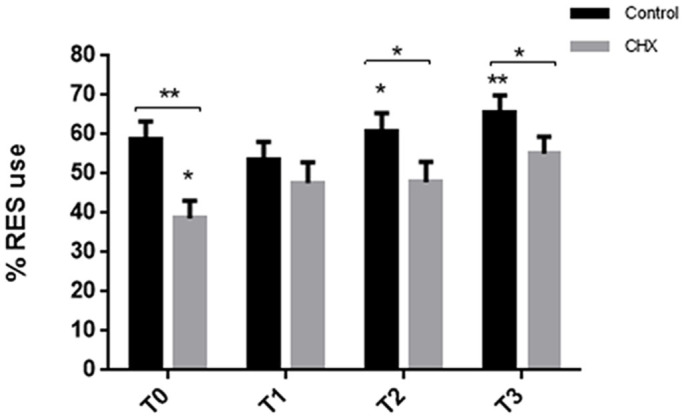
Figure 4. 10 dpf zebrafish larvae demonstrate protein synthesis-dependent long-term NOR.
Controls and CHX treated (10 μM) individuals were familiarized with novel objects for 2 hours in a massed paradigm. Individuals were moved to a fresh media without treatment for 24 hours and then reintroduced with the objects. CHX-treated individuals show LES preference at T0 (t = −2.49, p = 0.018). Controls had RES preferences at T2 (t = 2.46, p = 0.019) and T3 (t = 3.74, p < 0.001). Significance *p < 0.05, **p < 0.001, ***p < 0.0001, computed using a single sample t-test tested against 50%. For control and CHX treated groups, n = 36. Error bars indicate SEM.

References

    1. Brennan C. H. Zebrafish behavioural assays of translational relevance for the study of psychiatric disease. Rev neurosci 22, 37–48 (2011). - PubMed
    1. Izquierdo I. et al. Medina Memory retrieval and its lasting consequences. Neurotox Res 4, 573–593 (2002). - PubMed
    1. Kokel D. & Peterson R. T. Chemobehavioural phenomics and behaviour-based psychiatric drug discovery in the zebrafish. Brief Funct Genomic Proteomic 7, 483–490 (2008). - PMC - PubMed
    1. Maximino C. et al. Measuring anxiety in zebrafish: A critical review. Behav Brain Res 214, 157–171 (2010). - PubMed
    1. Antunes M. & Biala G. The novel object recognition memory: neurobiology, test procedure, and its modifications. Cogn Process 13, 93–110 (2012). - PMC - PubMed

Publication types

MeSH terms