


Detection of respiratory viruses in gargle specimens of healthy children
- PMID: 25728080
- PMCID: PMC7106489
- DOI: 10.1016/j.jcv.2015.01.006
Detection of respiratory viruses in gargle specimens of healthy children
Abstract
Background: Respiratory tract viral infection is one of the most common and important diseases in children. Polymerase chain reaction (PCR) tests are often used to detect viruses in samples, it is difficult to interpret the clinical significance of PCR positivity, which may reflect a past, imminent or active asymptomatic infection due to their high sensitivity. Although single respiratory viruses have been detected in samples from children with symptoms, other respiratory viruses can also be detected simultaneously. However, the clinical importance of these findings for the symptoms is not known.
Objectives: To investigate the prevalence of respiratory viruses among children without any symptoms such as acute respiratory illness and/or fever.
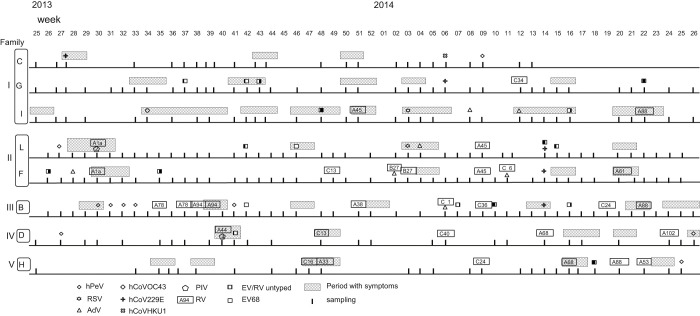
Study design: From week twenty-five 2013 to week twenty-six 2014, gargle samples were collected from children once a week and these samples were subjected to real-time PCR to detect respiratory viruses. On each sampling day, we asked the parents about their children's health condition.
Results: Among the 286 samples collected, 200 were from asymptomatic children. In the asymptomatic condition, human parechovirus, adenovirus, enterovirus, rhinovirus, coronavirus 229E and HKU1 were observed in 45 episodes. In samples from symptomatic children, parainfluenza viruses, respiratory syncytial virus and coronavirus OC43 were detected in addition to those mentioned above.
Conclusions: Various viruses of different species were detected in the specimens from the children regardless of their health status. It might be speculated that host factors such as the function of the immune system influence the clinical outcome of the infection. However, this needs to be studied further.
Keywords: Coinfection; Gargle specimen; Healthy children; Real-time PCR; Respiratory viruses.
Copyright © 2015 Elsevier B.V. All rights reserved.
Figures
References
Publication types
MeSH terms
LinkOut - more resources
Full Text Sources
Other Literature Sources
Miscellaneous
