


Dispensing with marriage: Marital and partnership trends in rural KwaZulu-Natal, South Africa 2000-2006
- PMID: 25729322
- PMCID: PMC4340557
- DOI: 10.4054/DemRes.2009.20.13
Dispensing with marriage: Marital and partnership trends in rural KwaZulu-Natal, South Africa 2000-2006
Abstract
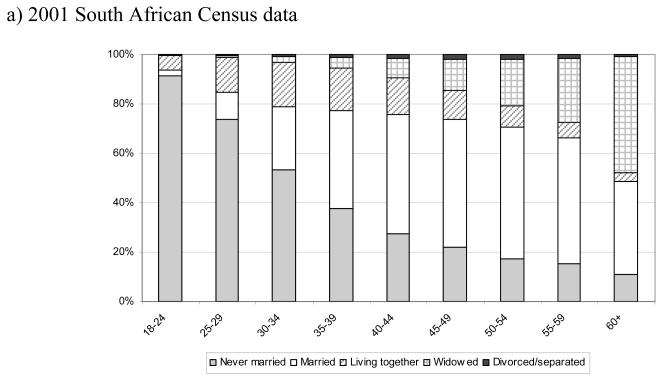
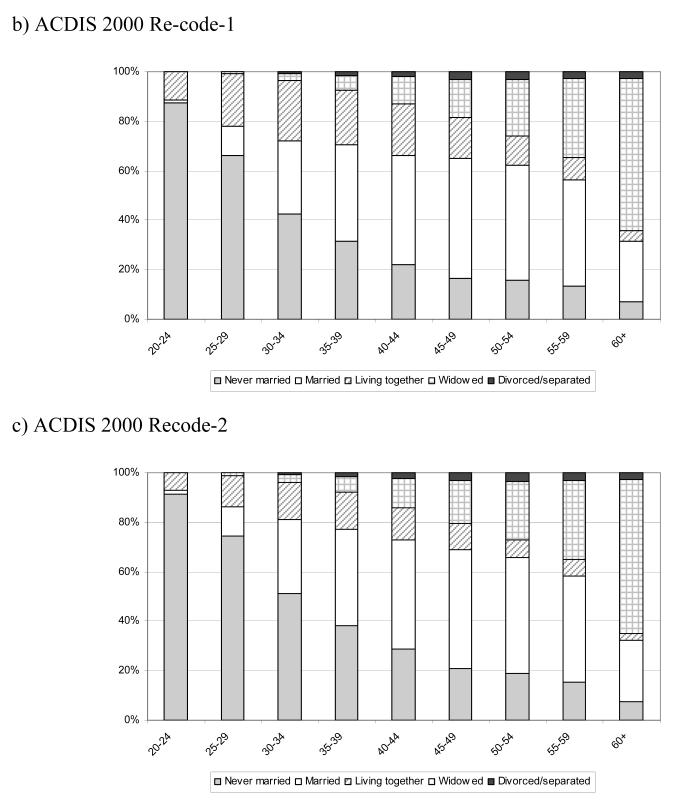
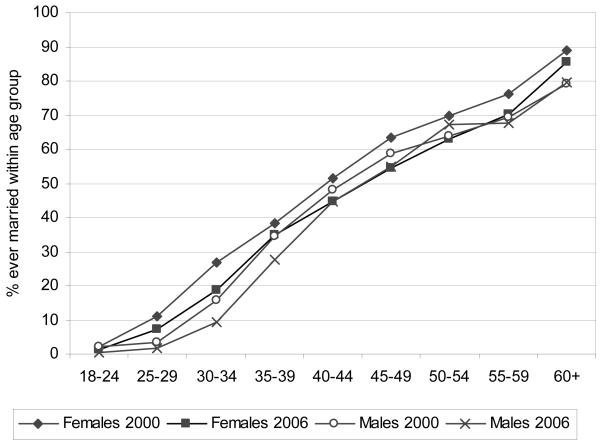
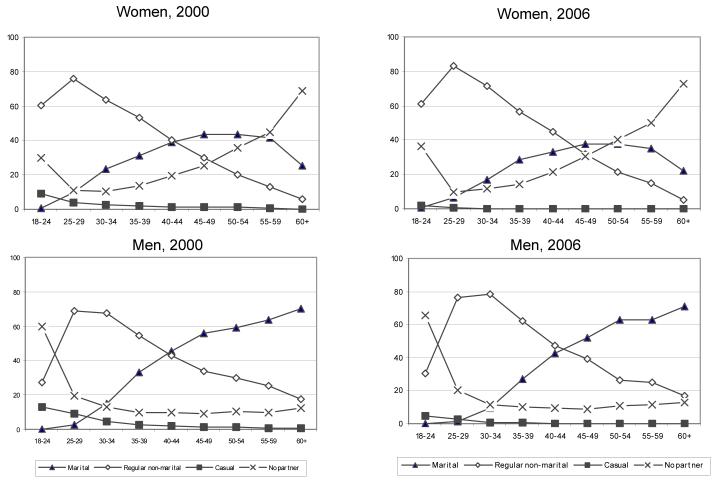
This paper describes marriage and partnership patterns and trends in rural KwaZulu-Natal, South Africa from 2000-2006. The study is based on longitudinal, population-based data collected by the Africa Centre demographic surveillance system. We consider whether the high rates of non-marriage among Africans in South Africa reported in the 1980s were reversed following the political transformation underway by the 1990s. Our findings show that marriage has continued to decline with a small increase in cohabitation among unmarried couples, particularly in more urbanised areas. Comparing surveillance and census data, we highlight problems with the use of the 'living together' marital status category in a highly mobile population.
Figures
References
-
- Bozzoli B. The Meaning of Informal Work: Some Women’s Stories. In: Preston-Whyte E, Rogerson C, editors. South African Informal Economy. Oxford University Press; Cape Town: 1991.
-
- Budlender D, Chobokoane N, Simelane S. Marriage patterns in South Africa: methodological and substantive issues. Southern African Journal of Demography. 2005;9(1):1–26.
-
- Burman S, Preston-Whyte E. Assessing illegitimacy in South Africa. In: Burman S, Preston-Whyte E, editors. Questionable Issue: Ilegitimacy in South Africa. Oxford University Press; Cape Town: 1992.
-
- Burman S, van der Werff N. Rethinking customary law on bridewealth. Social Dynamics. 1993;19(2):111–127. doi:10.1080/02533959308458554.
Grants and funding
LinkOut - more resources
Full Text Sources