


Society of Behavioral Medicine position statement: early care and education (ECE) policies can impact obesity prevention among preschool-aged children
- PMID: 25729461
- PMCID: PMC4332904
- DOI: 10.1007/s13142-014-0297-5
Society of Behavioral Medicine position statement: early care and education (ECE) policies can impact obesity prevention among preschool-aged children
Abstract
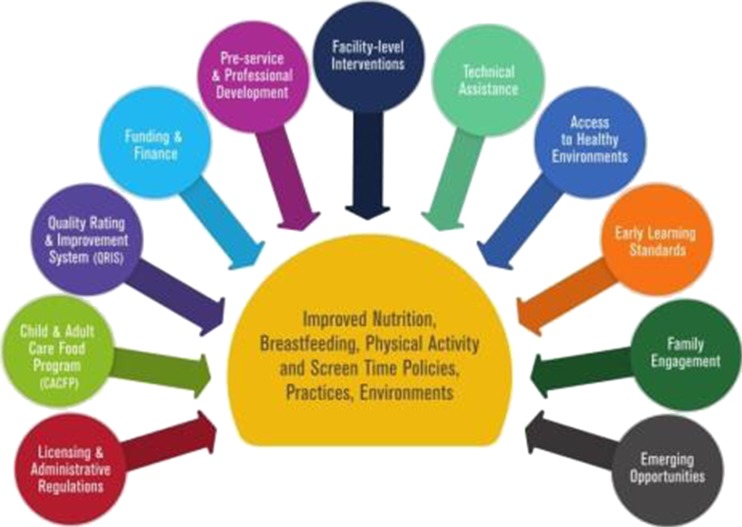
The Society of Behavioral Medicine (SBM) urges policymakers to help prevent childhood obesity by improving state regulations for early care and education (ECE) settings related to child nutrition, physical activity, and screen time. More than three quarters of preschool-aged children in the USA attend ECE settings, and many spend up to 40 h per week under ECE care. ECE settings provide meals and snacks, as well as opportunities for increasing daily physical activity and reducing sedentary screen time. However, many states' current policies do not adequately address these important elements of obesity prevention. A growing number of cities and states, child health organizations, medical and early childhood associations, and academic researchers are beginning to identify specific elements of policy and regulations that could transform ECE settings into environments that contribute to obesity prevention. Let's Move! Child Care recommends a set of straightforward regulations addressing nutrition, physical activity, and screen time in ECE settings. These emerging models provide local and state leaders with concrete steps to implement obesity prevention initiatives. We provide a set of recommendations based upon these models that will help state and local policymakers to improve current policies in ECE settings.
Keywords: Child care; Early care and education; Health Policy; Obesity; Prevention.
References
-
- National Center for Education Statistics, “Early childhood program participation survey of the national household education surveys program (ECPP-NHES:2012),” available at < http://nces.ed.gov/programs/digest/d09/tables/dt09_044.asp > (last visited June 19, 2014).
Grants and funding
LinkOut - more resources
Full Text Sources
Other Literature Sources
