


Androgen receptor non-nuclear regulation of prostate cancer cell invasion mediated by Src and matriptase
- PMID: 25730905
- PMCID: PMC4466655
- DOI: 10.18632/oncotarget.3119
Androgen receptor non-nuclear regulation of prostate cancer cell invasion mediated by Src and matriptase
Abstract
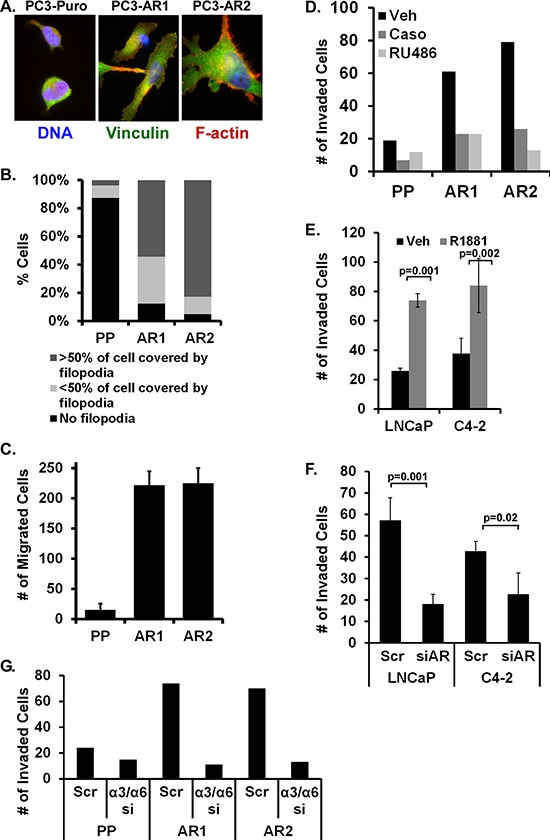
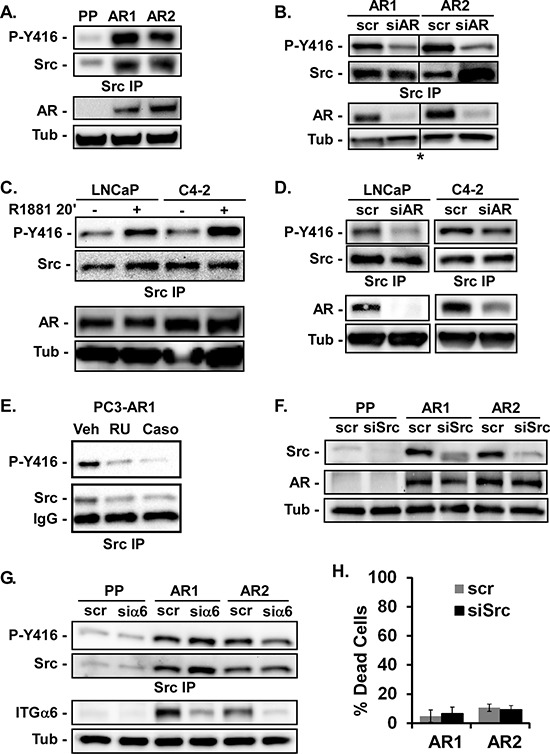
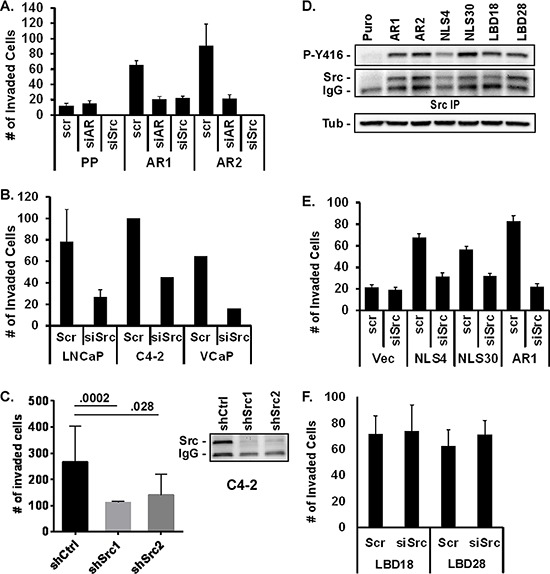
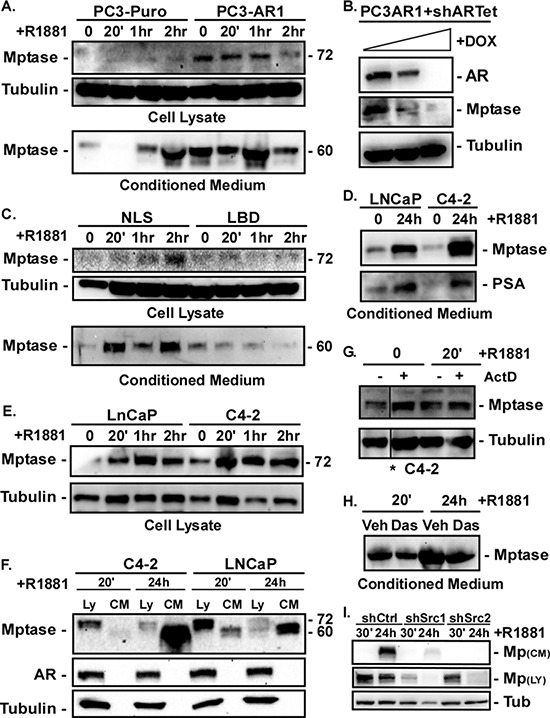
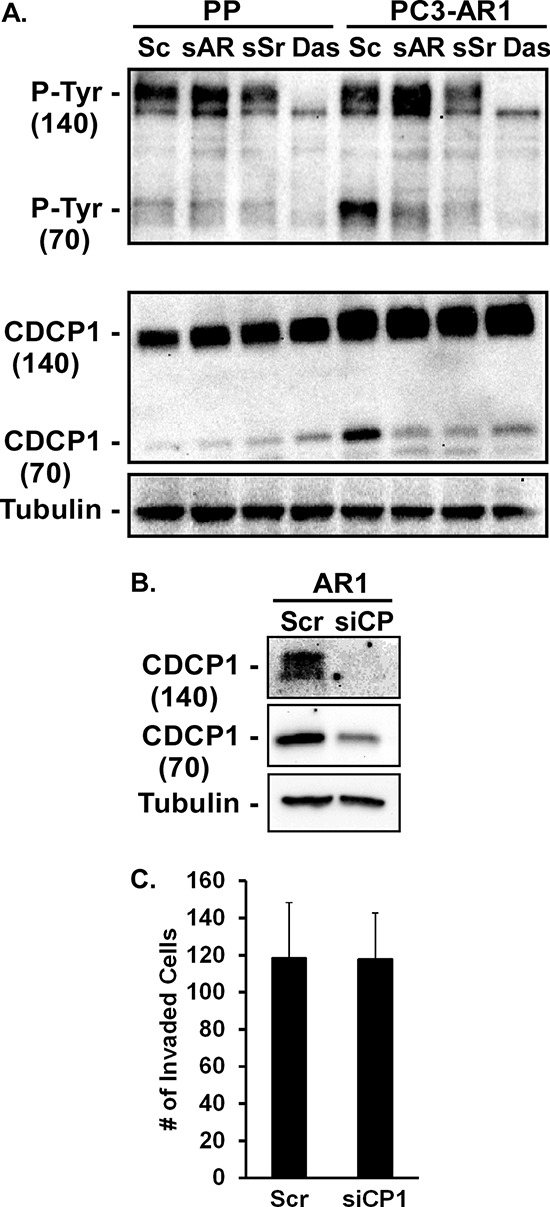
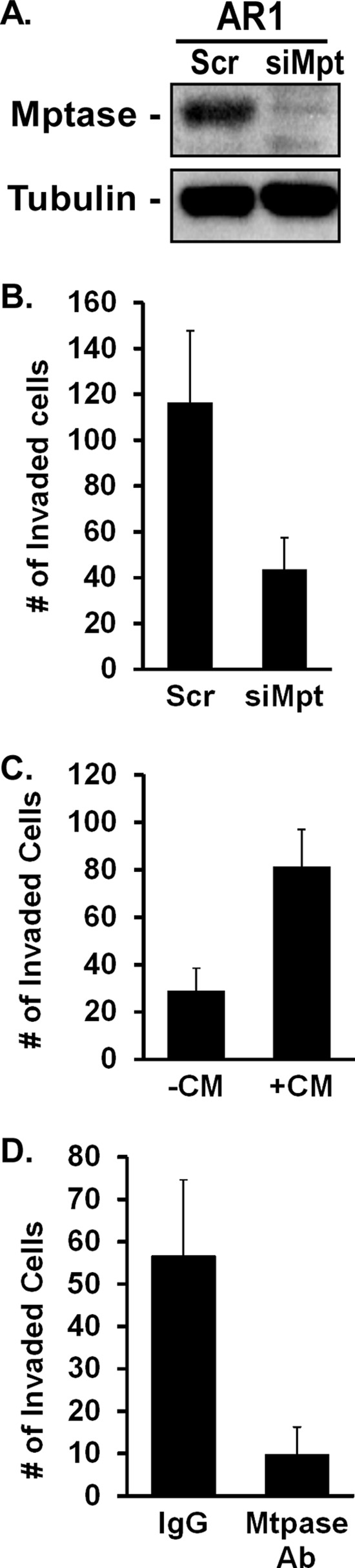
Castration-resistant prostate cancers still depend on nuclear androgen receptor (AR) function despite their lack of dependence on exogenous androgen. Second generation anti-androgen therapies are more efficient at blocking nuclear AR; however resistant tumors still develop. Recent studies indicate Src is highly active in these resistant tumors. By manipulating AR activity in several different prostate cancer cell lines through RNAi, drug treatment, and the use of a nuclear-deficient AR mutant, we demonstrate that androgen acting on cytoplasmic AR rapidly stimulates Src tyrosine kinase via a non-genomic mechanism. Cytoplasmic AR, acting through Src enhances laminin integrin-dependent invasion. Active Matriptase, which cleaves laminin, is elevated within minutes after androgen stimulation, and is subsequently shed into the medium. Matriptase activation and shedding induced by cytoplasmic AR is dependent on Src. Concomitantly, CDCP1/gp140, a Matriptase and Src substrate that controls integrin-based migration, is activated. However, only inhibition of Matriptase, but not CDCP1, suppresses the AR/Src-dependent increase in invasion. Matriptase, present in conditioned medium from AR-stimulated cells, is sufficient to enhance invasion in the absence of androgen. Thus, invasion is stimulated by a rapid but sustained increase in Src activity, mediated non-genomically by cytoplasmic AR, leading to rapid activation and shedding of the laminin protease Matriptase.
Keywords: Src; castration-resistant; metastasis; nongenomic AR signaling; prostate cancer.
Conflict of interest statement
The authors declare no conflict of interest.
Figures
References
-
- Agoulnik IU, Vaid A, Bingman WE, 3rd, Erdeme H, Frolov A, Smith CL, Ayala G, Ittmann MM. Weigel Role of SRC-1 in the promotion of prostate cancer cell growth and tumor progression. Cancer Res. 2005;65:7959–7967. - PubMed
-
- Feldman BJ, Feldman D. The development of androgen-independent prostate cancer. Nat Rev Cancer. 2001;1:34–45. - PubMed
-
- Seruga B, Tannock IF. Intermittent androgen blockade should be regarded as standard therapy in prostate cancer. Nat Clin Pract Oncol. 2008;5:574–576. - PubMed
-
- van Soest RJ, van Royen ME, de Morree ES, Moll JM, Teubel W, Wiemer EA, Mathijssen RH, de Wit R, van Weerden WM. Cross-resistance between taxanes and new hormonal agents abiraterone and enzalutamide may affect drug sequence choices in metastatic castration-resistant prostate cancer. Eur J Cancer. 2013;49:3821–3830. - PubMed
Publication types
MeSH terms
Substances
Grants and funding
LinkOut - more resources
Full Text Sources
Other Literature Sources
Medical
Research Materials
Miscellaneous
