


Heart rate is associated with progression of atrial fibrillation, independent of rhythm
- PMID: 25732748
- PMCID: PMC4453487
- DOI: 10.1136/heartjnl-2014-307043
Heart rate is associated with progression of atrial fibrillation, independent of rhythm
Abstract
Objective: Atrial fibrillation (AF) often progresses from paroxysmal or persistent to more sustained forms, but the rate and predictors of AF progression in clinical practice are not well described.
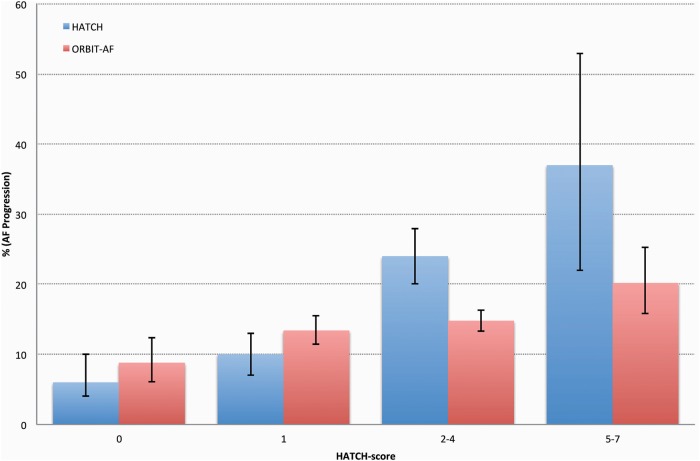
Methods: Using the Outcomes Registry for Better Informed Treatment of AF, we analysed the incidence and predictors of progression and tested the discrimination and calibration of the HATCH (hypertension, age, TIA/stroke, chronic obstructive pulmonary disease, heart failure) and CHA₂DS₂VASc scores for identifying AF progression.
Results: Among 6235 patients with paroxysmal or persistent AF at baseline, 1479 progressed, during follow-up (median 18 (IQR 12-24) months). These patients were older and had more comorbidities than patients who did not progress (CHADS₂ 2.3±1.3 vs 2.1±1.3, p<0.0001). At baseline, patients with AF progression were more often on a rate control as opposed to a rhythm control strategy (66 vs 56%, p<0.0001) and had higher heart rate (72(64-80) vs 68(60-76) bpm, p<0.0001). The strongest predictors of AF progression were AF on the baseline ECG (OR 2.30, 95% CI 1.95 to 2.73, p<0.0001) and increasing age (OR 1.16, 95% CI1.09 to 1.24, p<0.0001, per 10 increase), while patients with lower heart rate (OR 0.84, 95% CI 0.79 to 0.89, p<0.0001, per 10 decrease ≤80) were less likely to progress. There was no significant interaction between rhythm on baseline ECG and heart rate (p=0.71). The HATCH and CHA₂DS₂VASc scores had modest discriminatory power for AF progression (C-indices 0.55 (95% CI 0.53 to 0.58) and 0.55 (95% CI 0.52 to 0.57)).
Conclusions: Within 1.5 years, almost a quarter of the patients with paroxysmal or persistent AF progress to a more sustained form. Progression is strongly associated with heart rate, and age.
Published by the BMJ Publishing Group Limited. For permission to use (where not already granted under a licence) please go to http://group.bmj.com/group/rights-licensing/permissions.
Figures
References
Publication types
MeSH terms
LinkOut - more resources
Full Text Sources
Other Literature Sources
Medical
