


The HIV-1 transgenic rat model of neuroHIV
- PMID: 25733103
- PMCID: PMC4753047
- DOI: 10.1016/j.bbi.2015.02.020
The HIV-1 transgenic rat model of neuroHIV
Abstract
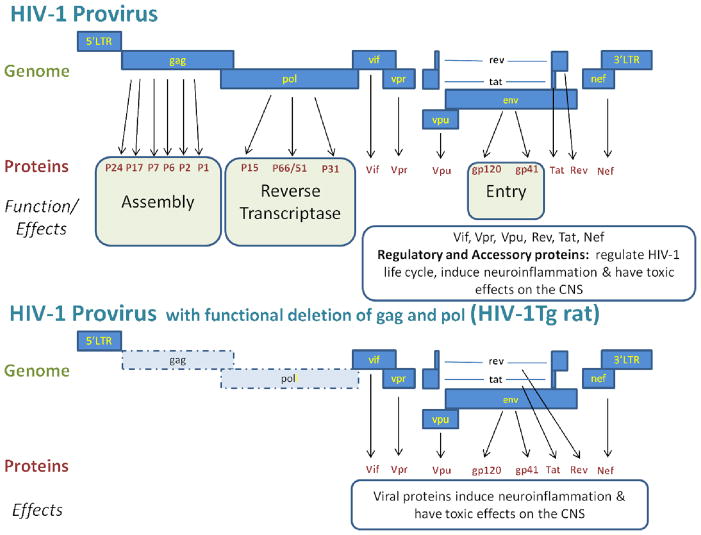
Despite the ability of current combination anti-retroviral therapy (cART) to limit the progression of HIV-1 to AIDS, HIV-positive individuals continue to experience neuroHIV in the form of HIV-associated neurological disorders (HAND), which can range from subtle to substantial neurocognitive impairment. NeuroHIV may also influence substance use, abuse, and dependence in HIV-positive individuals. Because of the nature of the virus, variables such as mental health co-morbidities make it difficult to study the interaction between HIV and substance abuse in human populations. Several rodent models have been developed in an attempt to study the transmission and pathogenesis of the HIV-1 virus. The HIV-1 transgenic (HIV-1Tg) rat is a reliable model of neuroHIV because it mimics the condition of HIV-infected patients on cART. Research using this model supports the hypothesis that the presence of HIV-1 viral proteins in the central nervous system increases the sensitivity and susceptibility of HIV-positive individuals to substance abuse.
Keywords: HIV-1 transgenic rat; NeuroHIV; Substance abuse.
Copyright © 2015 The Authors. Published by Elsevier Inc. All rights reserved.
Figures
References
-
- Acharjee SNF, Stemkowski PL, Olechowski C, Cohen EA, Ballanyi K, Kerr B, Pardo C, Smith PA, Power C. HIV-1 viral protein R causes peripheral nervous system injury associated with in vivo neuropathic pain. FASEB journal: official publication of the Federation of American Societies for Experimental Biology. 2010;24(11):4343–4353. - PubMed
-
- Aller MA, Arias JL, et al. Neuro-immune-endocrine functional system and vascular pathology. Med Hypotheses. 2001;57(5):561–569. - PubMed
Publication types
MeSH terms
Grants and funding
LinkOut - more resources
Full Text Sources
Other Literature Sources
Medical
