


Thromboxane prostanoid receptors enhance contractions, endothelin-1, and oxidative stress in microvessels from mice with chronic kidney disease
- PMID: 25733239
- PMCID: PMC4990073
- DOI: 10.1161/HYPERTENSIONAHA.115.05244
Thromboxane prostanoid receptors enhance contractions, endothelin-1, and oxidative stress in microvessels from mice with chronic kidney disease
Abstract
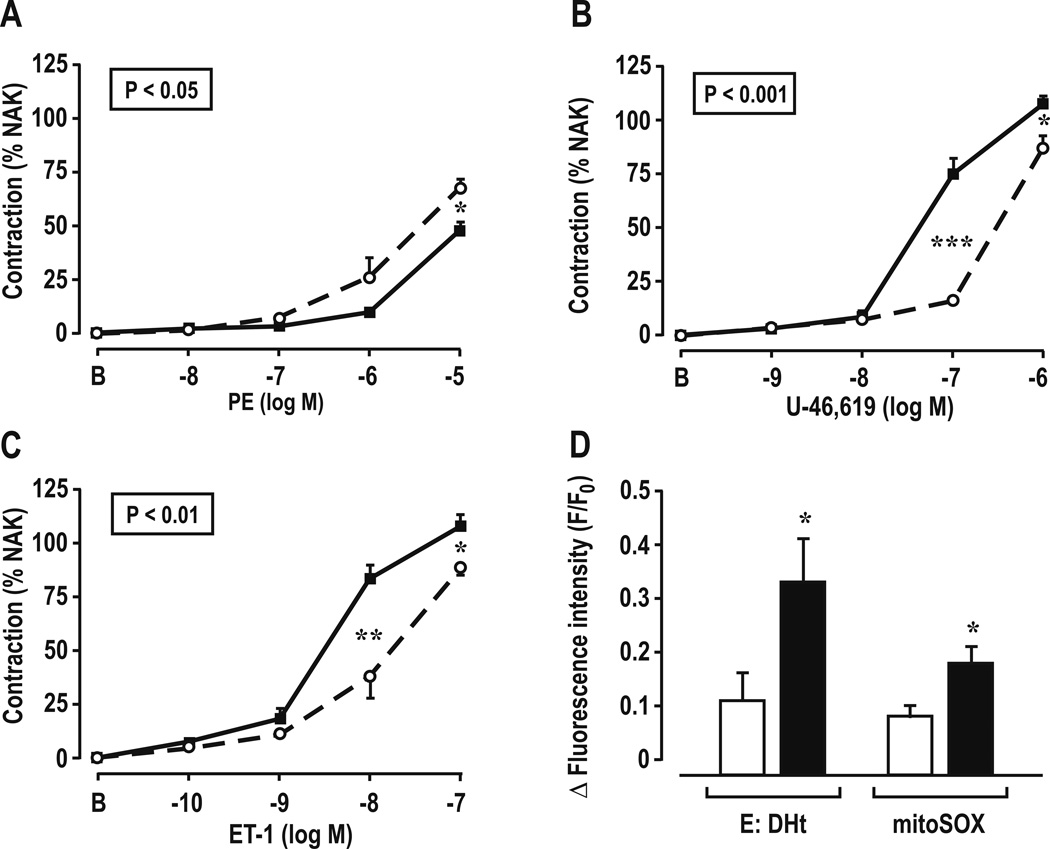
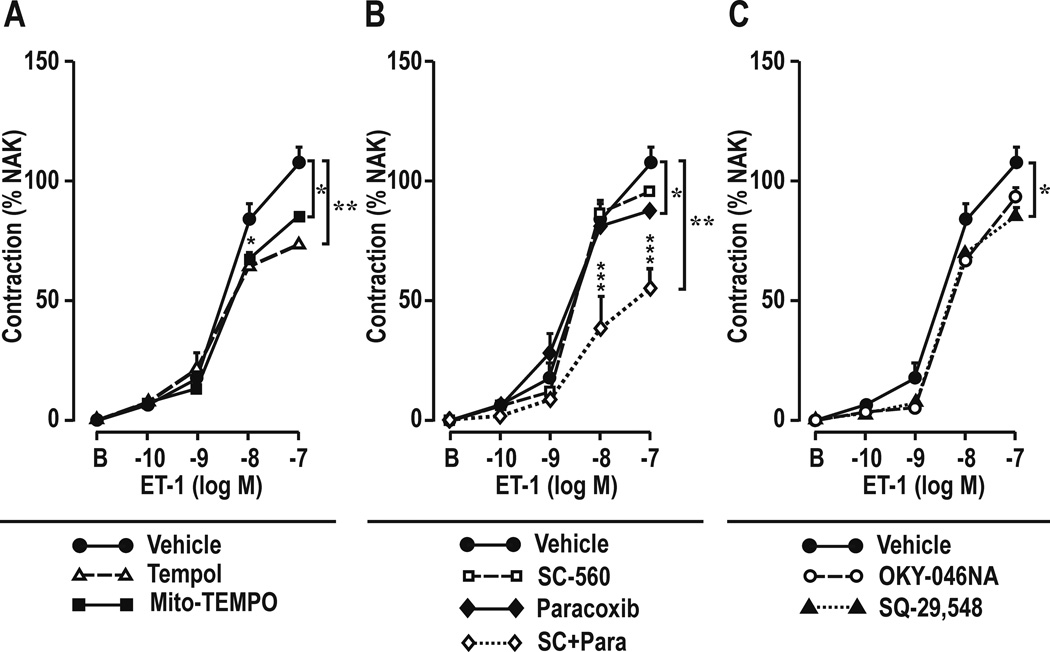
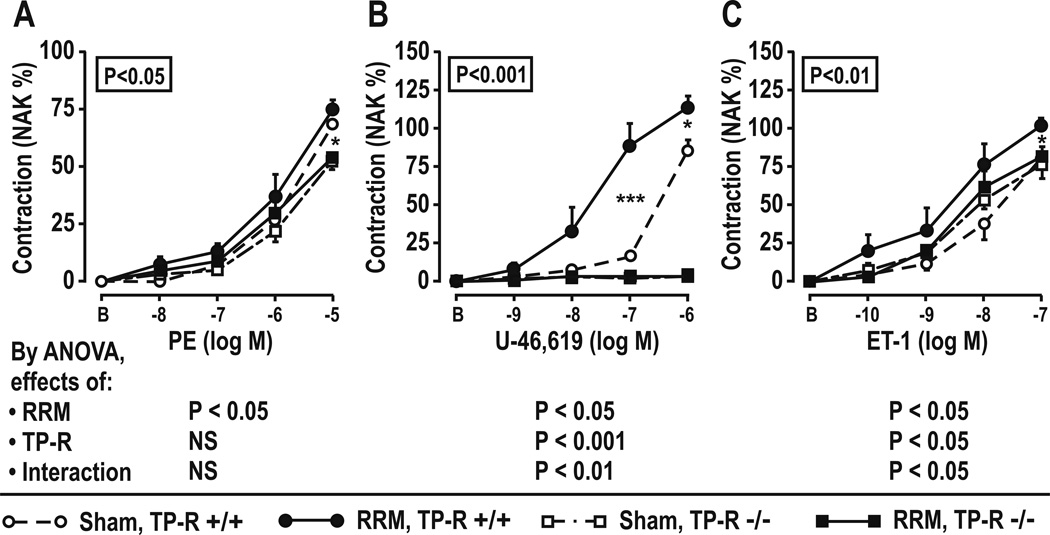
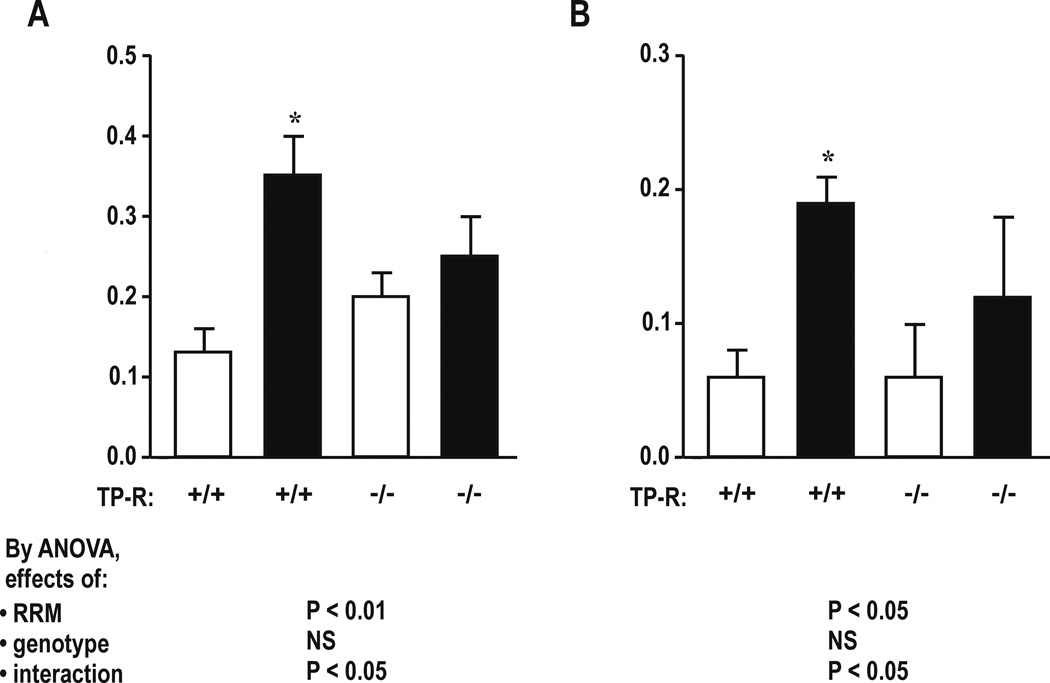
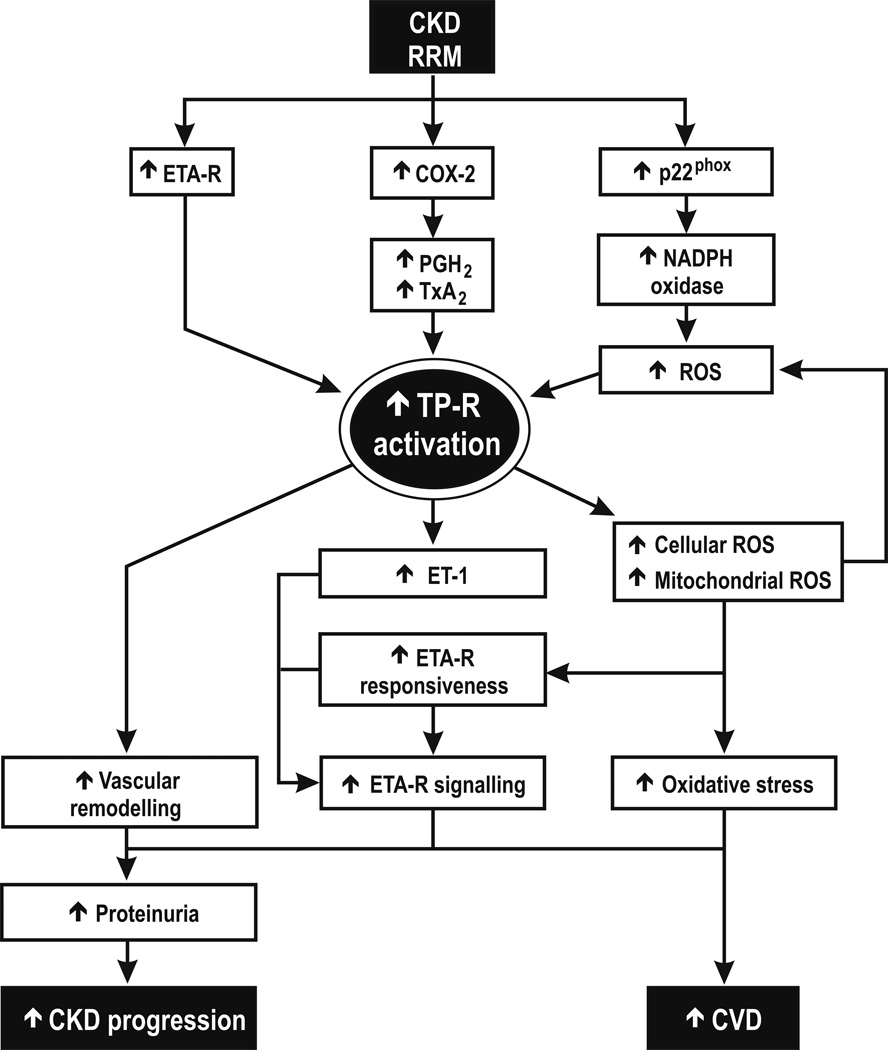
Cardiovascular disease is frequent in chronic kidney disease and has been related to angiotensin II, endothelin-1 (ET-1), thromboxane A2, and reactive oxygen species (ROS). Because activation of thromboxane prostanoid receptors (TP-Rs) can generate ROS, which can generate ET-1, we tested the hypothesis that chronic kidney disease induces cyclooxygenase-2 whose products activate TP-Rs to enhance ET-1 and ROS generation and contractions. Mesenteric resistance arterioles were isolated from C57/BL6 or TP-R+/+ and TP-R-/- mice 3 months after SHAM-operation (SHAM) or surgical reduced renal mass (RRM, n=6/group). Microvascular contractions were studied on a wire myograph. Cellular (ethidium: dihydroethidium) and mitochondrial (mitoSOX) ROS were measured by fluorescence microscopy. Mice with RRM had increased excretion of markers of oxidative stress, thromboxane, and microalbumin; increased plasma ET-1; and increased microvascular expression of p22(phox), cyclooxygenase-2, TP-Rs, preproendothelin and endothelin-A receptors, and increased arteriolar remodeling. They had increased contractions to U-46,619 (118 ± 3 versus 87 ± 6, P<0.05) and ET-1 (108 ± 5 versus 89 ± 4, P<0.05), which were dependent on cellular and mitochondrial ROS, cyclooxygenase-2, and TP-Rs. RRM doubled the ET-1-induced cellular and mitochondrial ROS generation (P<0.05). TP-R-/- mice with RRM lacked these abnormal structural and functional microvascular responses and lacked the increased systemic and the increased microvascular oxidative stress and circulating ET-1. In conclusion, RRM leads to microvascular remodeling and enhanced ET-1-induced cellular and mitochondrial ROS and contractions that are mediated by cyclooxygenase-2 products activating TP-Rs. Thus, TP-Rs can be upstream from enhanced ROS, ET-1, microvascular remodeling, and contractility and may thereby coordinate vascular dysfunction in chronic kidney disease.
Keywords: cyclooxygenase; mitochondria; oxidative stress; thromboxane; vascular remodeling.
© 2015 American Heart Association, Inc.
Figures
References
-
- Santoro A, Mandreoli M. Chronic renal disease and risk of cardiovascular morbidity-mortality. Kidney Blood Press Res. 2014;39:142–146. - PubMed
-
- Landray MJ, Emberson JR, Blackwell L, Dasgupta T, Zakeri R, Morgan MD, Ferro CJ, Vickery S, Ayrton P, Nair D, Dalton RN, Lamb EJ, Baigent C, Townend JN, Wheeler DC. Prediction of esrd and death among people with ckd: The chronic renal impairment in birmingham (crib) prospective cohort study. Am J Kidney Dis. 2010;56:1082–1094. - PMC - PubMed
-
- Cohen DL, Townsend RR. Hypertension and kidney disease: What do the data really show? Curr Hypertens Rep. 2012;14:462–467. - PubMed
Publication types
MeSH terms
Substances
Grants and funding
LinkOut - more resources
Full Text Sources
Medical
Research Materials
