Comparative Study
. 2015 May;18(5):637-46.
doi: 10.1038/nn.3980. Epub 2015 Mar 3.

Single-cell analysis reveals transcriptional heterogeneity of neural progenitors in human cortex

Affiliations
Comparative Study

Single-cell analysis reveals transcriptional heterogeneity of neural progenitors in human cortex

Matthew B Johnson et al. Nat Neurosci. 2015 May.

Abstract

The human cerebral cortex depends for its normal development and size on a precisely controlled balance between self-renewal and differentiation of diverse neural progenitor cells. Specialized progenitors that are common in humans but virtually absent in rodents, called outer radial glia (ORG), have been suggested to be crucial to the evolutionary expansion of the human cortex. We combined progenitor subtype-specific sorting with transcriptome-wide RNA sequencing to identify genes enriched in human ORG, which included targets of the transcription factor neurogenin and previously uncharacterized, evolutionarily dynamic long noncoding RNAs. Activating the neurogenin pathway in ferret progenitors promoted delamination and outward migration. Finally, single-cell transcriptional profiling in human, ferret and mouse revealed more cells coexpressing proneural neurogenin targets in human than in other species, suggesting greater neuronal lineage commitment and differentiation of self-renewing progenitors. Thus, we find that the abundance of human ORG is paralleled by increased transcriptional heterogeneity of cortical progenitors.


Figures
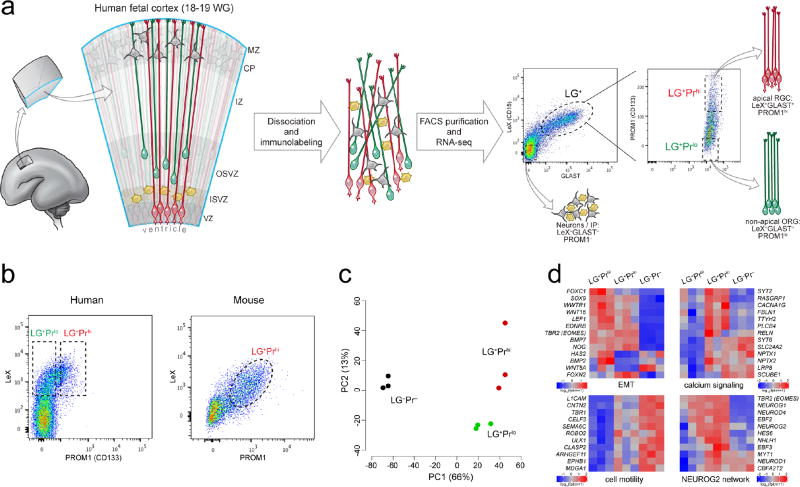
Figure 1
Figure 1. Transcriptional profiling of isolated human radial glial cells distinguishes apical from non-apical subpopulations
a, Workflow and strategy for FACS isolation of human RGC subpopulations by cell surface marker expression. LeX and GLAST are used as pan-RGC markers (LG+) while PROM1 is used to select apical (Prhi) and non-apical (Prlo) subpopulations from within the LG+ pool. WG, weeks of gestation. b, Human LG+ cells are predominantly LG+Prlo (~80%) whereas virtually all mouse LG+ cells are LG+Prhi (>95%) consistent with the relative abundance of ORG in humans and their paucity in mouse. c, Principle component (PC) analysis of transcriptome-wide gene expression estimates (FPKM) across three biological replicates of FACS-separated subpopulations reveals major gene expression differences between LG+ progenitors and LG cells (first PC, x-axis), as well as between LG+Prhi apical and LG+Prlo non-apical radial glial subtypes (second PC, y-axis). d, Differential expression between LG+Prhi apical and LG+Prlo non-apical RGC subpopulations included genes involved in calcium signaling, epithelial-to-mesenchymal transition (EMT), and cell migration and motility, as well as several members of a proneural transcription factor network regulated by the transcription factor NEUROG2.
Figure 2
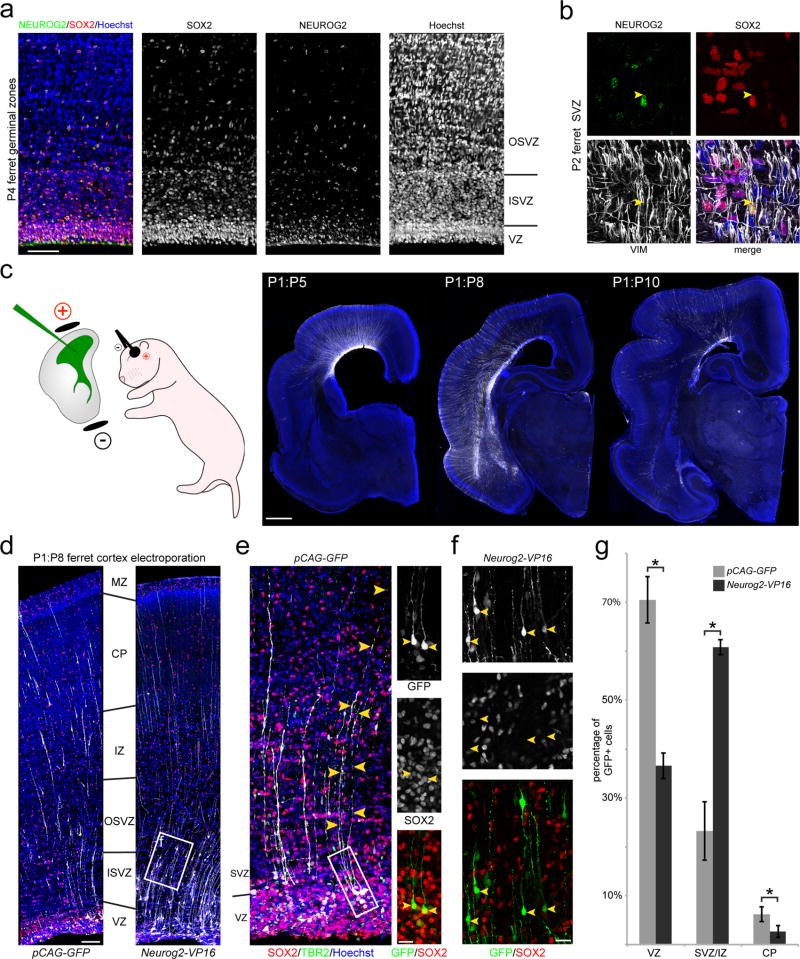
Figure 2. NEUROG2 regulates progenitor morphology and molecular identity in thedeveloping cortex of the gyrencephalic ferret
a, Co-expression of RGC marker SOX2 and proneural marker NEUROG2 in developing ferret cortex. Numerous SOX2+NEUROG2+ cells are found in both the VZ and SVZ at early postnatal ages, when these germinal zones are populated respectively by large numbers of apical and non-apical RGC producing neurons destined for the upper cortical layers. b, Higher magnification of SOX2+NEUROG2+ progenitors in the SVZ co-expressing the RGC neurofilament protein Vimentin (VIM), which labels the basal radial process (yellow arrowhead). c, Genetic manipulation of apical RGC is achieved by in vivo intraventricular injection and electroporation in neonatal ferret kits. After several days post-electroporation (DPE), GFP+ cells are observed throughout the developing cortical wall, with GFP+ radial fibers extending from the germinal zones to the pial surface and newborn neurons migrating through the SVZ and intermediate zone (IZ) into the cortical plate (CP). d, Littermates electroporated at postnatal day 1 and harvested 7 days later (P1:P8) with NEUROG2 gain-of-function (pCAG-Neurog2-VP16) or GFP control (pCAG-GFP) expression constructs, analyzed for the distribution of GFP+ cells and their co-expression of SOX2. ISVZ, inner SVZ; OSVZ, outer SVZ; MZ, marginal zone. e, At all survival time-points, we identified numerous GFP+SOX2+ apical RGC in the VZ as well as occasional GFP+SOX2+ ORG with soma at the VZ/SVZ border (insets). f, Higher magnification of the boxed area from (d) shows GFP+ cells in the SVZ/IZ that are SOX2-negative with the morphology of radially migrating newborn neurons. g, At 7 to 9 DPE, NEUROG2 gain-of-function induced a significant shift of GFP+ cells from the VZ into the SVZ/IZ compared to the control (asterisk denotes p < 0.05, paired t-test; exact p-values: VZ=0.026, SVZ/IZ=0.026, CP=0.034; n=3 animals per condition; 3–4 brain sections counted per animal; data represented as mean ± SEM), with a concomitant loss of RGC morphology and SOX2 expression, demonstrating that the NEUROG2 proneural network promotes delamination of daughter cells from the ventricular surface, migration into the SVZ, and neuronal differentiation. Scale bars: 50 µm (a), 1 mm (c), 100 µm (d), 20 µm (e,f).
Figure 3
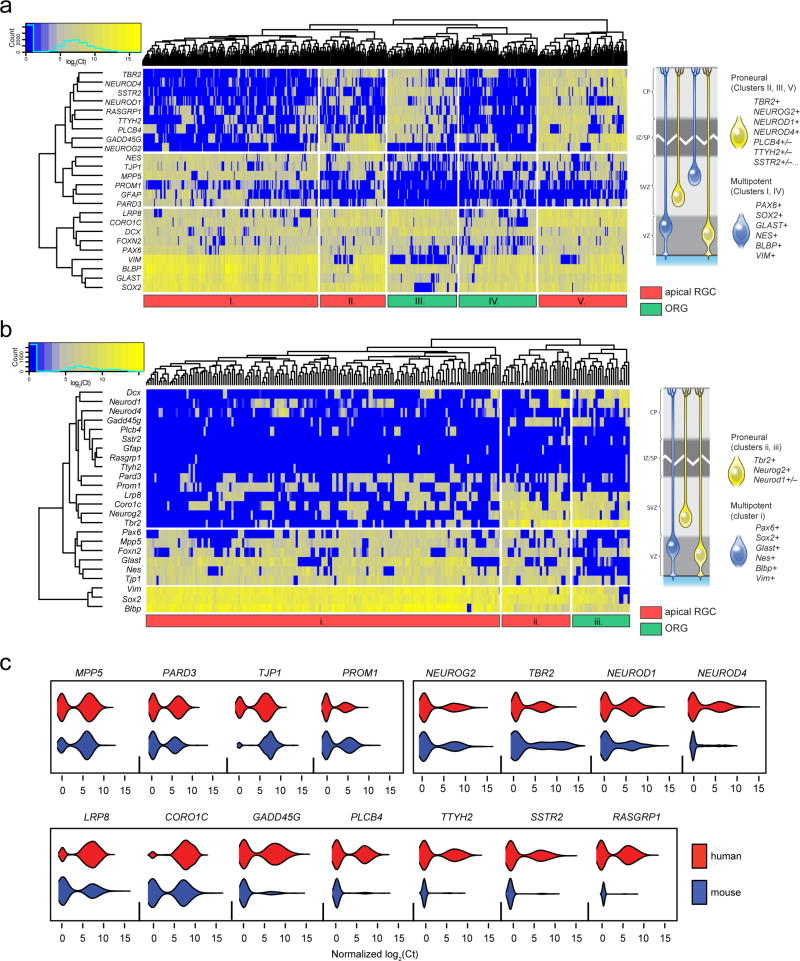
Figure 3. Single-cell gene expression of human and mouse progenitors reveals species-specific RGC subpopulations
a, Multiplexed gene expression profiling of 546 single human RGC reveals distinct transcriptional states defined by the presence or absence of transcripts encoding apical membrane-specific proteins, proneural transcription factors downstream of NEUROG2 such as NEUROD1 and NEUROD4, and additional LG+Prlo-enriched genes such as TTYH2 and PLCB4. Hierarchical clustering and heatmap representation of single-cell qRT-PCR data (left) indicates the co-expression patterns of these genes, and a schematic representation (right) of the four main subpopulations of RGC identified: “multipotent” RGC (blue) are found as subsets of both the apical (cluster I) and non-apical RGC (cluster IV), as are the “proneural” NEUROG2/TBR2+ RGC (clusters II, III, V). In addition, proneural RGC can be further subdivided according to their expression of downstream factors and additional LG+Prlo-enriched genes (e.g., compare clusters II and V). b, The same genes assayed in 226 RGC from E16-E17 mouse cortex yield only three subpopulations: apical multipotent (i); apical proneural (ii); and non-apical proneural (iii). Schematic representation of these subpopulations (right) highlights the major species differences, namely, the mouse has fewer non-apical cells overall; few if any multipotent (NEUROG2TBR2) non-apical cells, suggesting the absence of a significant subpopulation of proliferative ORG; and very few cells expressing other human subset-enriched genes (e.g., TTYH1, PLCB4). c, Violin plots of gene expression distributions for apical complex, NEUROG2 network, and ORG-enriched genes in human and mouse single RGC. Several ORG-enriched genes appear to be abundantly expressed in subsets of human but not mouse RGC including NEUROD4, GADD45G, PLCB4, TTYH2, SSTR2, RASGRP1.
Figure 4
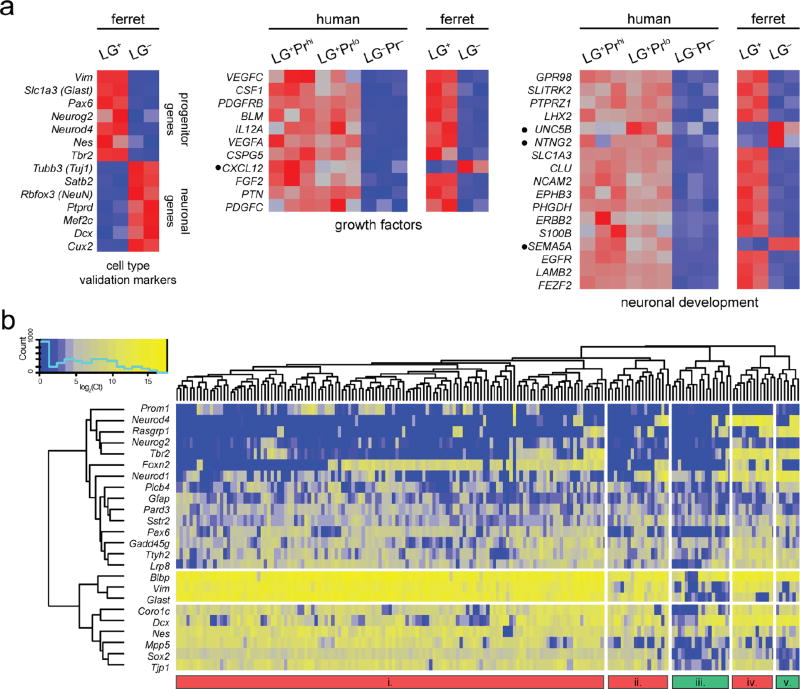
Figure 4. Population-level whole-transcriptome RNA-seq and single-cell expression analysis of ferret RGC
a, Expression heatmaps of known progenitor and neuronal marker genes, as well as selected human RGC-enriched gene sets, from LG+ and LG cells isolated by FACS from the P2 developing ferret cortex (n=2). Enrichment of classic RGC markers and a high degree of similarity between gene sets enriched in human and ferret LG+ cells validate the use of LeX and Glast to select RGC from the developing ferret cortex. Notably, however, several genes (black bullets) show distinct expression patterns between the two species (e.g., CXCL12, UNC5B, NTNG2, SEMA5A), suggesting that certain growth factor and other pathways may be expressed in a species-specific manner in RGC. b, Single-cell gene expression profiling of 185 single ferret LG+ progenitors was performed using the same gene panel as shown in Figure 3 for human and mouse RGC. As in humans, a substantial fraction of ferret cells in clusters i, iv, and v co-express both RGC markers and Tbr2/Neurog2, consistent with our immunohistochemcial analysis of NEUROG2 expression in the ferret (Fig. 2a) and suggesting this “proneural” RGC transcriptional state is conserved. Similar to human RGC, a subset of these proneural cells also express the downstream factors NEUROD1 and NEUROD4. However, some human ORG-enriched genes (e.g. Rasgrp1) are expressed in fewer ferret RGC, while others (e.g. Plcb4, Sstr2, Gadd45g, Ttyh2) appear more homogenous across all cells. Interestingly, Foxn2, which was detected in nearly all human RGC, appears to mark a distinct subpopulation of ferret apical RGC (clusters i and iv). Overall, while ferret RGC exhibit more diversity of transcriptional states than mouse and generally more similarity to human, they are nonetheless distinct in their relative proportions and composition.
Figure 5
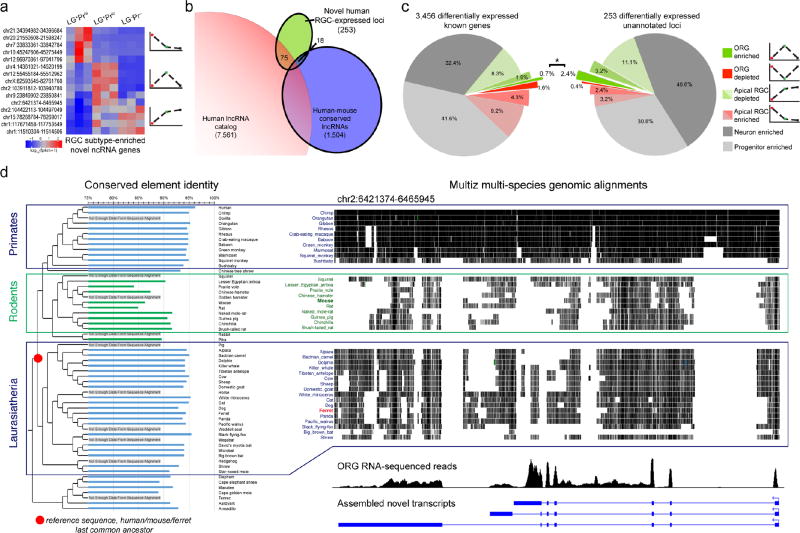
Figure 5. Novel transcripts detected by RNA-seq include previously unknown lncRNAs with distinct RGC subtype expression patterns and evolutionary conservation
a, Differential expression patterns of selected ncRNA loci, including several novel multi-exon lncRNAs (Table 3). b, Intersection of 253 differentially expressed non-reference loci from our RNA-seq analysis with previous catalogs of human non-coding RNA genes revealed a number of reported human lncRNAs, and a smaller number of human-mouse conserved lncRNAs. c, A significantly greater proportion of novel differentially expressed transcripts were specifically enriched in LG+Prlo non-apical progenitors (2.4%), compared to known genes (0.7%; p=0.012, Fisher’s exact test), implicating this evolutionarily dynamic gene class in the regulation of the ORG progenitor subpopulation, which is greatly expanded in humans. d, Comparative genomics analysis of novel ORG-enriched lncRNAs was performed by comparing conserved elements from within each genomic locus from 58 species to a computed ancestral sequence for the Laurasiatherian last common ancestor (LCA) of human, ferret, and mouse, the three species examined in this study (see Table 3). Here, we show a detailed example from a human ORG-enriched lncRNA gene located on chromosome 2. At left is shown the percent identity of each species’ conserved elements from this locus to the LCA sequence, which demonstrates that rodents (highlighted in green) show a highly divergent sequence compared to both primates and other more distantly related groups, including carnivores. The panel at right illustrates multi-species genomic alignments to the same human locus for primates, rodents, and other Laurasiatherian species (top), with the human ORG RNA-seq reads (middle) and assembled transcripts (bottom), illustrating the greater sequence divergence of rodents compared to either non-human primates or other more distant Laurasiatherian species. Similar results were found for several other ORG-enriched lncRNA transcripts, as summarized in Table 3 (% ID columns). These findings are consistent with the interpretation that functional transcripts were present at these loci in the Laurasiatherian LCA, and are either highly divergent or lost in the rodent lineage. This scenario of ORG-expressed transcript divergence in rodents, which are mostly lissencephalic and lack large numbers of ORG, is consistent with the recent suggestion that gyrencephaly is an ancestral mammalian trait,.

References

    1. Florio M, Huttner WB. Neural progenitors, neurogenesis and the evolution of the neocortex. Development. 2014;141:2182–2194. - PubMed
    1. Gorski JA, et al. Cortical excitatory neurons and glia, but not GABAergic neurons, are produced in the Emx1-expressing lineage. J Neurosci. 2002;22:6309–6314. - PMC - PubMed
    1. Kowalczyk T, et al. Intermediate neuronal progenitors (basal progenitors) produce pyramidal-projection neurons for all layers of cerebral cortex. Cereb Cortex. 2009;19:2439–2450. - PMC - PubMed
    1. Smart IHM, Dehay C, Giroud P, Berland M, Kennedy H. Unique morphological features of the proliferative zones and postmitotic compartments of the neural epithelium giving rise to striate and extrastriate cortex in the monkey. Cereb Cortex. 2002;12:37–53. - PMC - PubMed
    1. Fietz SA, et al. OSVZ progenitors of human and ferret neocortex are epithelial-like and expand by integrin signaling. Nat Neurosci. 2010;13:690–699. - PubMed

Publication types

MeSH terms

Substances

Associated data