


Total serum cholesterol, atherogenic indices and their longitudinal association with depressive symptoms among US adults
- PMID: 25734511
- PMCID: PMC4354360
- DOI: 10.1038/tp.2015.4
Total serum cholesterol, atherogenic indices and their longitudinal association with depressive symptoms among US adults
Abstract
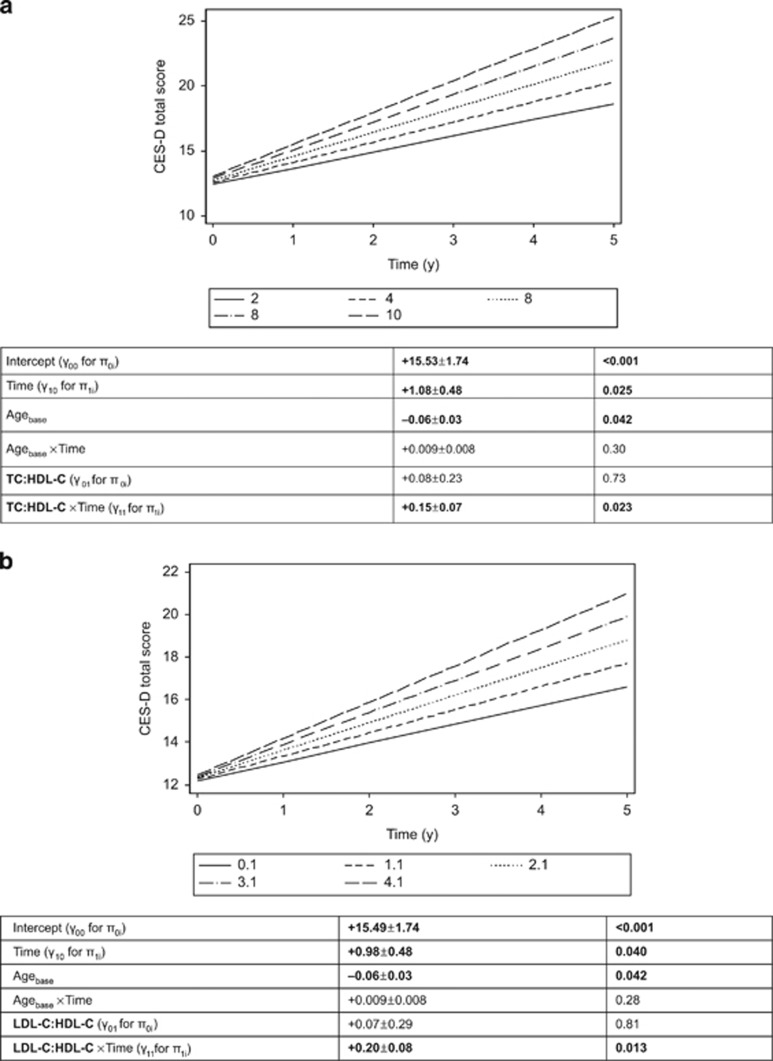
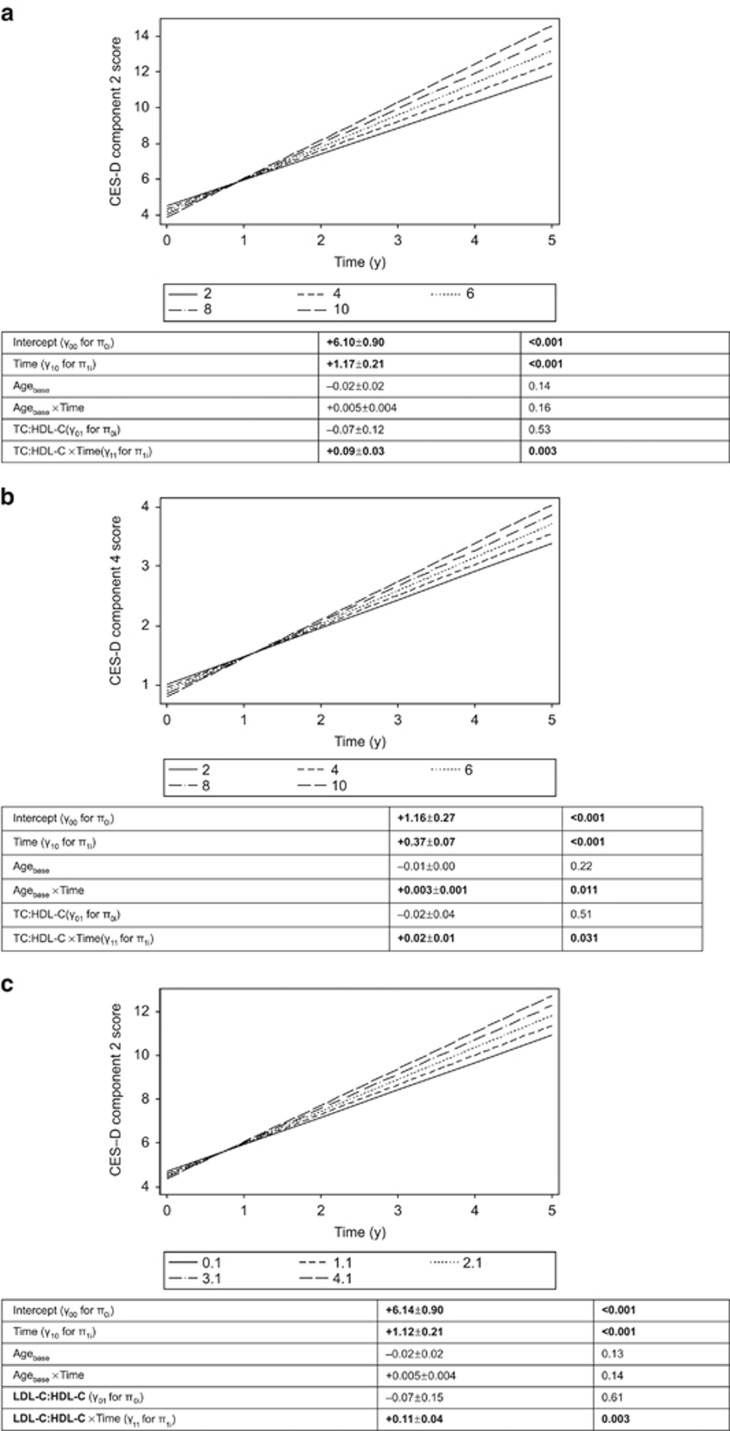
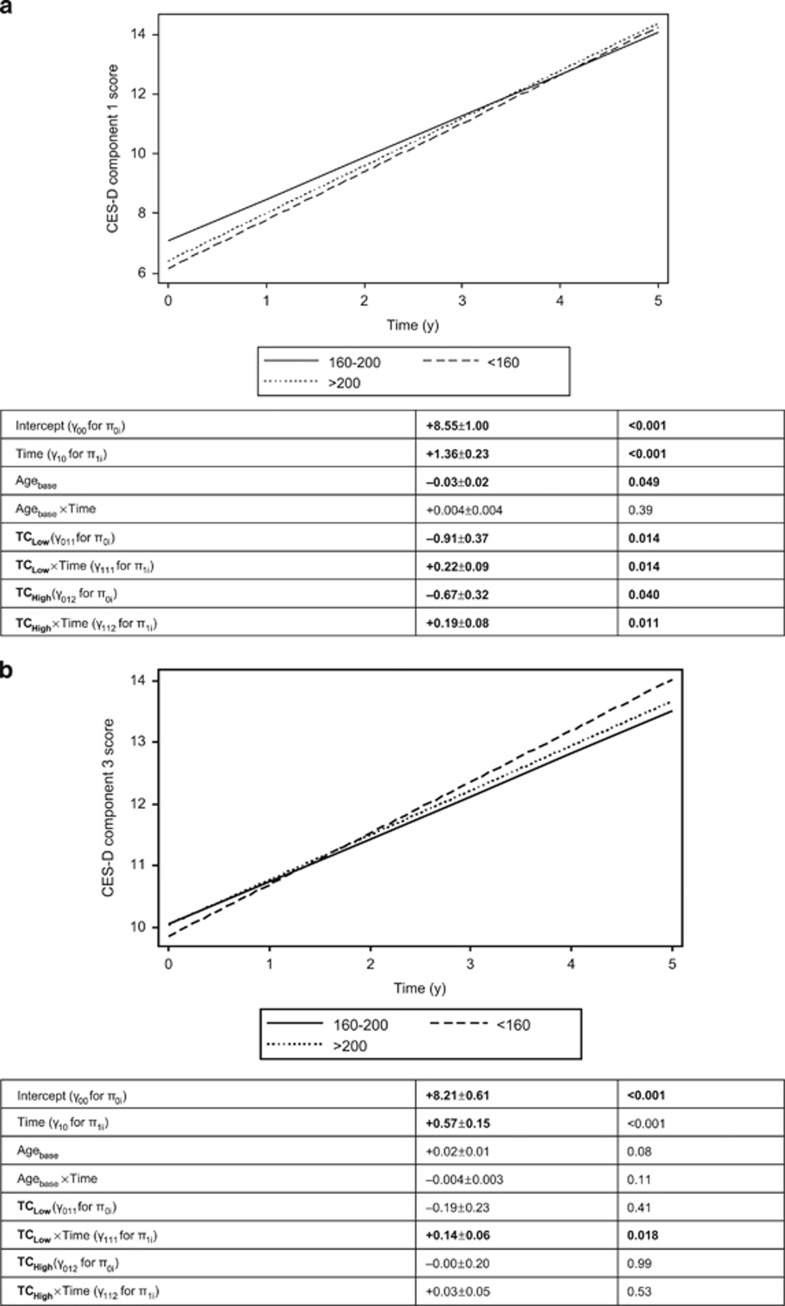
Serum cholesterol, both total and lipoprotein fractions, has been associated with mid- and late-life depression. Using longitudinal data on a large and ethnically diverse sample of urban adults, the associations of serum lipid profile measured by high or low total cholesterol (TC; >200 mg dl(-1); <160 mg dl(-1)) and by atherogenic indices, namely high total cholesterol and low-density lipoprotein cholesterol relative to high-density lipoprotein cholesterol, with change in total and domain-specific depressive symptoms over time were examined. Findings were compared by sex. (Hypothesis 1) In addition, baseline depressive symptoms as predictors for longitudinal change in lipid profile trajectory were tested. (Hypothesis 2) Mixed-effects regression analyses stratified by sex was used. Sample sizes of participants (n) and repeated observations (n') were: Hypothesis 1 (Men: n=826 ; n'=1319; Women: n=1099 ; n'=1817); Hypothesis 2 (Men: n=738; n'=1230; Women: n=964; n'=1678). As hypothesized, a higher level of atherogenic indices was linked to faster increase in depressive symptom scores, particularly depressed affect and interpersonal problems, though this relationship was found only among women. Among men a U-shaped relationship between baseline TC and longitudinal increase in somatic complaints and a direct link between low TC and longitudinal putative improvement in positive affect was found. On excluding statin users among women, low TC was associated with slower increase in depressed affect over time, whereas high TC was associated with faster increase in interpersonal problems. In summary, atherogenic indices were directly linked to faster increase in depressive symptoms among women only. More studies are needed to explain these sex-specific associations.
Figures
References
-
- Judd LL, Akiskal HS, Maser JD, Zeller PJ, Endicott J, Coryell W, et al. A prospective 12-year study of subsyndromal and syndromal depressive symptoms in unipolar major depressive disorders. Arch Gen Psychiatry. 1998;55:694–700. - PubMed
-
- Keller MB, Lavori PW, Mueller TI, Endicott J, Coryell W, Hirschfeld RM, et al. Time to recovery, chronicity, and levels of psychopathology in major depression. A 5-year prospective follow-up of 431 subjects. Arch Gen Psychiatry. 1992;49:809–816. - PubMed
-
- Kessler RC, McGonagle KA, Zhao S, Nelson CB, Hughes M, Eshleman S, et al. Lifetime and 12-month prevalence of DSM-III-R psychiatric disorders in the United States. Results from the National Comorbidity Survey. Arch Gen Psychiatry. 1994;51:8–19. - PubMed
-
- Olusi SO, Fido AA. Serum lipid concentrations in patients with major depressive disorder. Biol Psychiatry. 1996;40:1128–1131. - PubMed
-
- Maes M, Smith R, Christophe A, Vandoolaeghe E, Van Gastel A, Neels H, et al. Lower serum high-density lipoprotein cholesterol (HDL-C) in major depression and in depressed men with serious suicidal attempts: relationship with immune-inflammatory markers. Acta Psychiatr Scand. 1997;95:212–221. - PubMed
Publication types
MeSH terms
Substances
Grants and funding
LinkOut - more resources
Full Text Sources
Other Literature Sources
Medical
Research Materials
